The Problem
Fast, Fluctuating Loads Outrun Conventional Correction
Steady loads are easy to correct. The hard problem is the load that changes by the second. Spot welders fire in bursts. Overhead cranes and lifts swing between hoisting and regeneration. Large motors and pumps slam the network on every start. Arc furnaces draw a violently variable, often unbalanced current. Each of these throws a sudden surge of reactive power at your supply and pulls it back just as fast.
Your network feels every swing as a dip in voltage — voltage flicker — that ripples across the site. Lights pulse, sensitive controls trip or fault, drives report under-voltage, and product quality on precision lines drifts. Meanwhile the reactive swings drag your power factor up and down through the day, so a monthly average looks acceptable while the peaks quietly set your demand charge and stress every cable and transformer in between.
Why Traditional Kit Struggles
Switched Capacitors React in Steps and Seconds
A capacitor bank corrects reactive power in fixed blocks, switched in and out by contactors. That works for a slowly varying base load, but it has three structural limits against fast loads. First, it’s stepped — it can only add or remove whole blocks, never the exact var the load needs at that instant, so you are perpetually a little over- or under-corrected. Second, it’s slow — sensing, contactor operation, and settling take hundreds of milliseconds to seconds, while a welder or motor start is over in a cycle or two. The flicker has already happened before the bank responds.
Third, and most serious, a capacitor placed on a network carrying harmonics can form a resonant circuit with the supply impedance. On a plant full of drives and non-linear loads that resonance can amplify the very harmonics you already have — overheating the capacitors, blowing fuses, and in the worst case destroying the bank. Detuned reactors mitigate this but add cost, loss, and complexity, and still leave you stepped and slow.
The Solution
The Static-Var-Generator Function, Solid-State and Real-Time
The HarmoniQ Sigma performs the role of a static var generator (SVG) — solid-state, dynamic reactive power compensation with no contactors, no steps, and no capacitor bank to resonate. Power electronics synthesise exactly the reactive current the network needs and inject it continuously, tracking the load thousands of times a second and responding in milliseconds rather than seconds.
Because it is generated rather than switched, compensation is infinitely variable: the Sigma follows a welder strike, a crane hoist, or a motor start as it happens, cancelling the reactive swing before it becomes visible flicker. It can correct phase-by-phase to rebalance unbalanced loads, and because it carries no capacitor bank it cannot resonate with your harmonics — it lives comfortably on exactly the drive-heavy, non-linear network that defeats switched capacitors. And it does this network-wide, so stable, balanced current reaches every downstream board, cable, and motor.
If your need is general, steady-state power factor on a stable load rather than fast dynamic swings, see Power Factor Correction — the same Sigma, configured for continuous correction. For the full product and how the Sigma fits the wider HarmoniQ system, see the product overview.
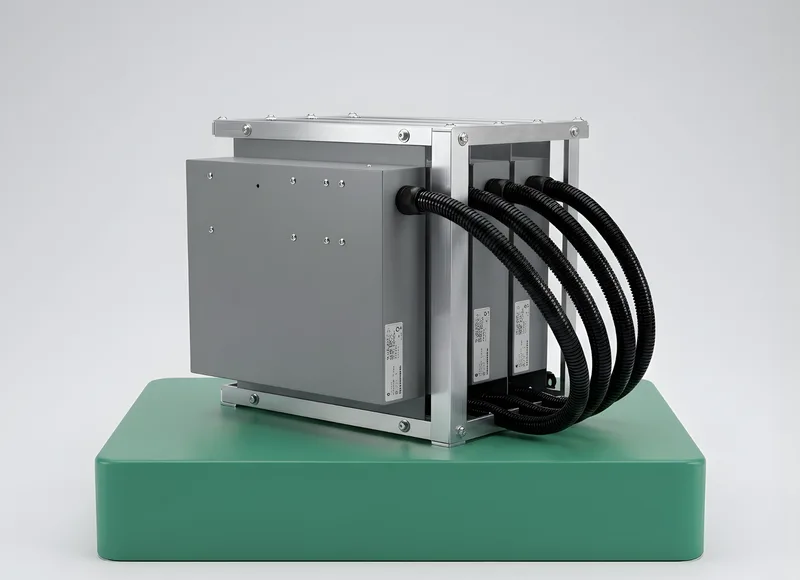
The static-var-generator function, solid-state. Millisecond, infinitely-variable reactive compensation that tracks the fastest fluctuating loads — welders, cranes, lifts, arc furnaces, large motor starts — with phase-by-phase balancing and zero resonance risk. No contactors, no switched steps, no moving parts to wear. Sized to your site and installed in parallel at the switchboard.
SVG vs capacitor bank vs STATCOM — how they compare + Read more− Close
The three technologies solve the same underlying problem — supplying reactive power — but at different speeds, granularities, and scales.
| Characteristic | Capacitor bank (SVC) | Static var generator (SVG) | STATCOM |
|---|---|---|---|
| Response time | Hundreds of ms – seconds | Milliseconds | Milliseconds |
| Control | Fixed steps (blocks) | Infinitely variable | Infinitely variable |
| Tracks fast/fluctuating loads | No — lags the load | Yes | Yes |
| Resonance with harmonics | Risk — needs detuning | None | None |
| Phase-by-phase balancing | No | Yes | Typically yes |
| Typical scale | LV / site | LV / site — behind the meter | MV / utility & grid-scale |
| Best fit | Slow, steady base load | Fast, fluctuating site loads | Transmission / grid support |
In short: a capacitor bank (a switched static var compensator, or SVC) is the cheap, slow, stepped option for a steady base load. A STATCOM is the same fast, dynamic principle as an SVG but built at medium-voltage, utility and transmission scale. The static var generator is the right tool behind your own meter — STATCOM-class speed and granularity, sized and priced for an industrial or commercial low-voltage network. That is the function the HarmoniQ Sigma delivers.
The Impact
What Stopping the Swings Is Worth
| Metric | Before | After HarmoniQ | Improvement |
|---|---|---|---|
| Voltage flicker (Pst) | Above limit | Within limit | Flicker resolved |
| Power factor under load swings | 0.78 & swinging | 0.98 & steady | +25.6% |
| Peak demand (kVA) | 2,300 | 1,900 | −17.4% |
| Flicker-related stoppages & reject product | Recurring | Eliminated | −100% |
| Indicative annual saving | £60,000–£110,000 | demand + losses + avoided downtime | |
Every site’s load profile, flicker severity, and tariff are different. Our engineers will measure your reactive swings and flicker, then model the exact stabilisation, demand reduction, and saving for your specific connection — get in touch for a site assessment.
Beyond the Flicker
Steadier Voltage, Longer Equipment Life, Released Capacity
Cancelling the reactive swings does more than stop the lights pulsing. Stable, balanced voltage means sensitive controls and drives stop nuisance-tripping, precision processes hold tolerance, and you cut the reject product and unplanned stoppages that flicker quietly causes. Removing the surplus reactive current frees real capacity on your existing connection — often enough to add load or defer a utility upgrade. Lower, balanced current means lower I²R losses and cooler cables and transformers, extending the life of assets you already own. And every kilowatt-hour you stop wasting is a measurable Scope 2 carbon reduction that supports your ESG reporting and net-zero roadmap.