The Problem
Your Electricity Bill Is Lying to You
Your manufacturing plant runs motors, VFDs, CNC machines, welders, and compressors around the clock. Every one of these loads distorts the electrical current flowing through your facility. The result? 10–20% of the electricity you pay for never does useful work. It becomes heat — in your cables, your transformers, and your motor windings.
You won’t see it on your utility bill as a separate line item. It shows up as higher consumption, demand penalties, reactive power charges, and equipment that fails years before it should. Most facilities don’t even know it’s happening.
What Causes It
The Hidden Impact of Non-Linear Loads
Clean electricity flows as a smooth 50/60 Hz sine wave. But VFDs, rectifiers, CNC machines, and LED lighting draw current in sharp, non-linear pulses that distort this waveform. These distortions are called harmonics, and they ripple through your entire electrical network.
The effects compound across your facility: cables run hotter, transformers lose capacity, motors overheat, and sensitive equipment — PLCs, quality-control instruments, CNC controllers — starts misbehaving. Nuisance trips, calibration drift, and unexplained downtime are often power quality problems in disguise.
How harmonics work — the technical detail + Read more− Close
A standard 6-pulse VFD produces characteristic harmonics at orders 6k ± 1 (5th, 7th, 11th, 13th…). The 5th harmonic alone can reach 20–25% of fundamental current. When dozens of VFDs, welders, and CNC machines operate on the same bus, aggregate current THD of 15–30% is common. This causes I²R heating losses in every conductor, forces transformer derating (K-factors of 8–15 in typical plants), and creates resonance risk with any capacitor banks installed for power factor correction.
The Solution
How HarmoniQ Works
HarmoniQ uses a patented approach rooted in narrowband tuning engineering — fundamentally different from capacitor banks that only correct at the meter point. Our system samples your electrical network 20,000 times per second and dynamically adjusts to maintain clean, efficient power on every circuit.
The result: electricity reaches your equipment in its purest form, at exactly 50/60 Hz, without the distortion that wastes energy and damages machines. No moving parts. No maintenance. No risk to your operations.
Performs 20,000 impedance adjustments per second, stabilising voltage during motor starts, compressor cycling, and process changeovers. Protects CNC machines, PLCs, and quality-control instruments from the voltage disturbances that cause nuisance trips and calibration drift.
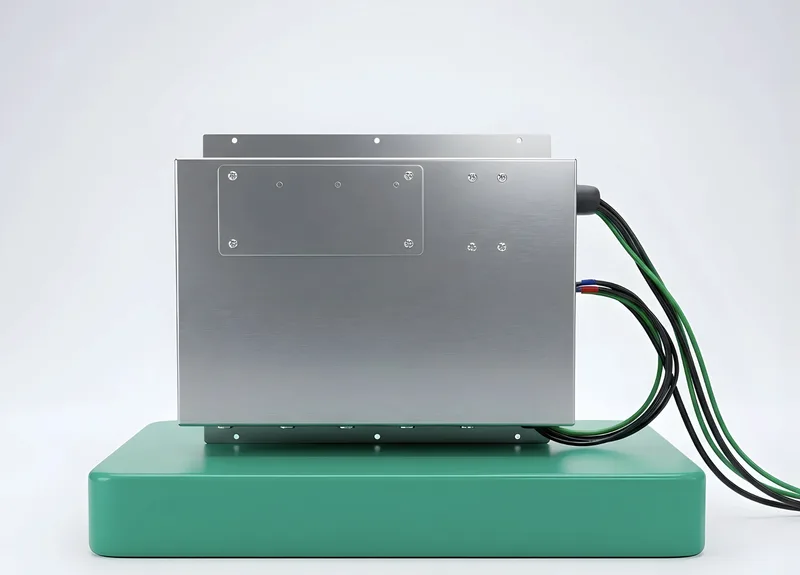
Eliminates harmonic distortion up to the 51st order in real time, reducing facility THD to below 5% (IEEE 519 compliant). Responds to load changes in under 100 microseconds. Extends motor and transformer life by eliminating the harmonic heating that accelerates insulation breakdown.
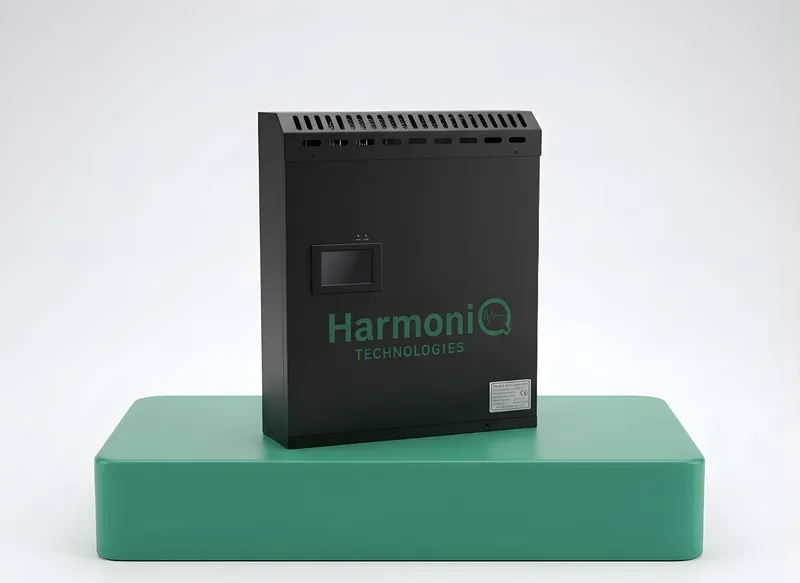
Optimises power factor to 0.98+ across the entire network — not just at the meter. Unlike capacitor banks that only correct at the incoming feed, the Sigma ensures cleaner current reaches every downstream device. Zero resonance risk.
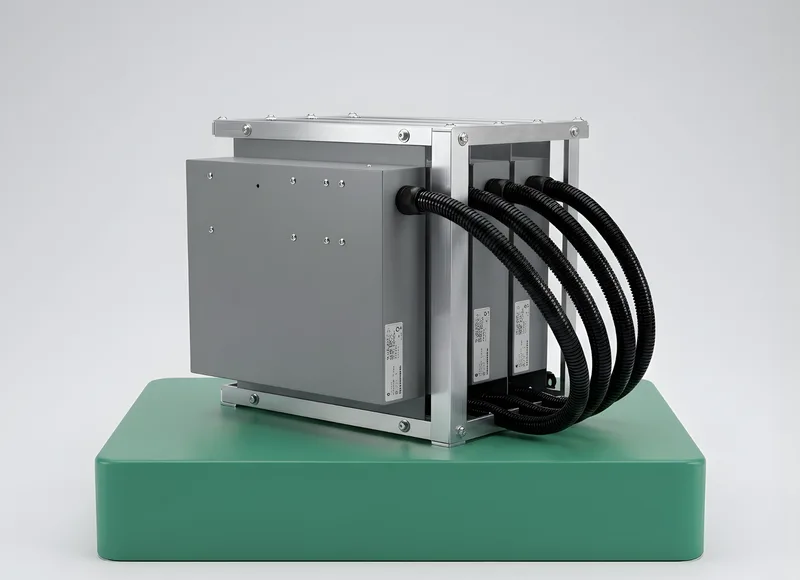
What makes this different from capacitor banks? + Read more− Close
Capacitor banks correct power factor at the incoming feed — the meter point. This avoids utility penalties, which is why many plants install them. But the dirty current still flows through every cable, motor, and transformer inside the network. Your equipment still draws that distorted, reactive, unbalanced current — still overheats, still wastes energy, still ages prematurely. The meter looks better; the network does not.
HarmoniQ is fundamentally different. It cleans the current across the entire network — at every distribution board, every motor control centre, every branch circuit. The equipment downstream actually receives cleaner power, draws less current, and runs cooler. This is what delivers the real energy savings and equipment life extension that capacitor banks alone cannot.
The Impact
What This Means for Your Plant
| Metric | Before | After HarmoniQ | Improvement |
|---|---|---|---|
| Power factor | 0.78 | 0.98 | +25.6% |
| Voltage THD | 6.2% | 2.8% | −55% |
| Current THD | 25% | 4.5% | −82% |
| Peak demand (kVA) | 3,077 | 2,449 | −20.4% |
| Annual electricity cost | $990,000 | $815,000 | −$175,000 |
Every facility is different. Our engineers will model the exact savings, deployment costs, and timeline for your specific site — get in touch for a site assessment.
Beyond the Bill
Protecting Your Equipment & Meeting ESG Targets
The savings on your electricity bill are just the start. Clean power extends the life of every motor, transformer, and drive in your plant by 20–35%. That means fewer emergency shutdowns, lower maintenance costs, and capital expenditure deferred for years.
Every kilowatt-hour you stop wasting is a kilowatt-hour of carbon you stop emitting. A typical manufacturing facility saves 85 tonnes of CO₂ per year — equivalent to taking 18 cars off the road, or planting roughly 4,100 trees. These are measurable Scope 2 reductions that support Science Based Targets, CDP reporting, and your net-zero roadmap.