
Power Quality for Food & Beverage
The compressors, drives and filling lines in your plant waste electricity before it reaches them, and HarmoniQ stops that waste at its source, without stopping production.
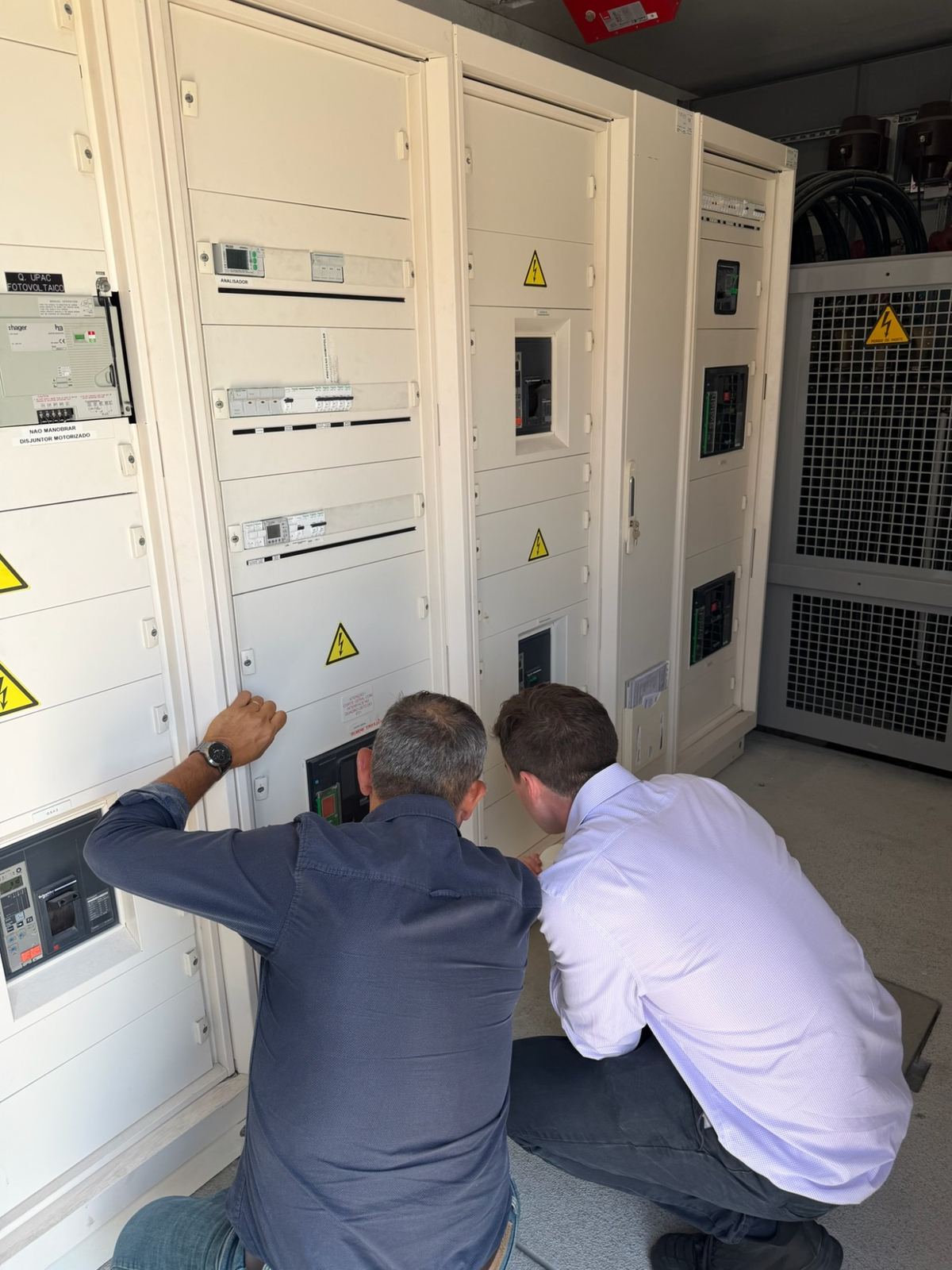
Compressors and Filling Lines Share One Network
Your plant runs refrigeration compressors, mixers, filling lines and clean-in-place pumps, many of them on variable-speed drives. Between them they distort the current flowing through your facility, unbalance it, and draw current that does no work, so part of every kilowatt-hour you pay for never does useful work. It becomes heat, in your cables, your transformers and your motor windings.
It doesn't appear on your bill as a line of its own. It shows up as higher consumption, power-factor penalties, capacity charges, and refrigeration plant and motors that fail years before they should.
10–20%
Typical saving in kilowatt-hours on a food and beverage plant's low-voltage loads, by preventing the losses before they occur
Where the Waste Starts in a Food and Beverage Plant
Three problems account for most of it, and each has a unit that sits where the problem starts.
Harmonic distortion
Compressor and process drives
Variable-speed drives on the refrigeration compressors, pumps and filling lines draw current in sharp pulses. The 5th and 7th harmonics ripple through the plant, heating cables and transformers and upsetting the servo drives and weighing systems on the same supply.
FittedHarmoniQ Delta, at the drives
Reactive power
Compressors, pumps and mixers
Induction motors draw current that does no work but still has to be supplied. Refrigeration runs around the clock, and clean-in-place cycles bring more motors on at once, inflating the apparent power you are billed for and the capacity you have to reserve.
FittedHarmoniQ Alpha at each machine, HarmoniQ Sigma at the incomer
Phase imbalance
Packaging and single-phase equipment
Single-phase packaging, labelling and control equipment leaves the three phases uneven. The difference flows down the neutral and sets up counter-rotating fields in your motors: heat without torque.
FittedHarmoniQ Alpha, at the load
Same Machines. Less Power.
With the waste prevented, the same plant makes the same product on fewer kilowatt-hours. With power-factor penalties gone and capacity charges lower too, that can take up to 25% off your total electricity bill where all three apply.
- Energy savings · kWh
- 10–20%
- Power factor
- 0.98+
- Equipment life · Arrhenius
- 2–4×
- Operational disruption
- 0
What We Hear, and the Reality
We hear
“Our fill-accuracy problems are mechanical, not electrical.”
The reality
They may be, and the way to find out is to measure. The drives that distort the current in your plant share a supply with the servo drives and weighing systems on your lines. If accuracy drifts as the compressors cycle, the supply is worth ruling out. Our engineers measure the network before anything is fitted.
We hear
“We're under margin pressure. We can't take on electrical work.”
The reality
Margin pressure is the reason to look. The saving is in kilowatt-hours, and the on/off test proves it at your own meter before any annual figure is quoted. Installation causes no disruption, and it changes nothing about your products, your process or your headcount.
We hear
“Our retailer audits don't cover power quality.”
The reality
Not directly. But retailer programmes increasingly ask suppliers about energy use and emissions, and fewer kilowatt-hours is a result the meter can prove. HarmoniQ prevents the waste, so the saving is electricity you no longer consume.
Three Steps. Zero Disruption.
01 · Assess
Measure the network
Our engineers measure your network and show you where energy is being wasted across the compressors, drives and filling lines, before anything is fitted.
02 · Install
Fit alongside your circuits
Each unit goes in where its problem starts, connected in parallel, with production running.
03 · Prove
Test it on and off
The on/off test proves the saving at your own meter, before any annual figure is quoted.
See What HarmoniQ Can Do for Your Plant
Our engineers will measure your site and show you exactly where energy is being wasted, and how much of it HarmoniQ can prevent.