The Cost of Power
Moderate, Subsidised Tariffs — but Billed in kVA, in the Heat
Unlike Britain or Germany, the UAE does not have a high unit price to point at. Tariffs are moderate and partly subsidised: a Dubai commercial site pays on the order of $0.10–0.12 per kWh once the fuel surcharge is included, an Abu Dhabi commercial site closer to $0.054/kWh, and a typical industrial site somewhere around $0.06–0.08/kWh. By European standards those are low numbers. So the honest case for power quality in the Emirates is not a punishing tariff — it is that the bill is billed in kVA, that every wasted ampere runs through cables and transformers in 45 °C-plus ambient heat, that harmonics on a cooling- and data-centre-heavy grid threaten compliance, and that connection capacity is precious on a network adding gigawatts of demand.
Because tariffs are modest, the lever that matters most here is not the energy line at all — it is the kVA demand charge and the capacity it consumes. Large commercial and industrial customers are billed not only for the energy they use (kWh) but for the peak apparent power (kVA) their site draws. When power factor is poor, that demand figure is inflated by reactive current that does no useful work — so you pay for capacity you never actually use, and you run out of usable headroom on a connection you have already paid to install. On the higher Dubai and Sharjah tariffs the energy and loss saving is a genuine bonus; on Abu Dhabi’s lower rate, capacity and compliance carry the case.
| Who pays | Typical price | Notes |
|---|---|---|
| Commercial (Dubai / Sharjah, incl. fuel surcharge) | ~$0.10–0.12/kWh | Among the higher Gulf rates — here a real energy saving is on the table too |
| Commercial (Abu Dhabi, no surcharge) | ~$0.054/kWh | Lower — capacity release and harmonic compliance carry the case |
| Industry (typical) | ~$0.06–0.08/kWh | Above Saudi Arabia and Qatar; loss reduction is non-trivial |
| Households (DEWA residential slabs, Dubai) | ~23–38 fils/kWh (~$0.06–0.10) + ~6 fils surcharge | Homes and businesses pay similar, low unit rates — the UAE simply has cheap power |
Commercial, industrial and Abu Dhabi tariffs are drawn from the emirate utility schedules and price-comparison sources (2025); the residential figure is DEWA’s published domestic slab tariff for Dubai (23, 28, 32 and 38 fils/kWh across rising consumption bands, plus a fuel surcharge of roughly 6 fils/kWh and 5% VAT). Tariffs are set by each emirate utility (DEWA, EWEC/ADDC–AADC, SEWA, EtihadWE), differ between emirates and are revised periodically — verify the current rate, slab and surcharge against your own utility, e.g. the DEWA slab tariff, at the time of reading. Prices are unit rates and exclude site-specific kVA demand charges; USD conversions use the pegged rate of AED 3.6725/USD.
How You’re Billed
A UAE Industrial Bill Is Billed in kVA, Not Just kWh
The headline rate per kWh is only part of the story. A large metered UAE site pays for the energy itself, for a fuel surcharge on each unit (in Dubai and Sharjah), for VAT — and, critically for power quality, for the peak apparent power it draws, in kVA. That kVA demand charge is the line that moves directly when you correct power factor, because reactive current inflates kVA without delivering any real work.
| Component | What it is | Cut by power quality? |
|---|---|---|
| Energy (kWh) | The units you consume, at the emirate’s tariff | Indirectly — lower network and in-plant losses |
| Fuel surcharge | A per-kWh surcharge added by DEWA and SEWA (Abu Dhabi applies none) | Indirectly — it scales with the units you use |
| VAT | 5% federal VAT on the bill | No |
| Peak demand charge (kVA) | A charge on the peak apparent power your site draws from the network | Yes — lower kVA means a lower charge |
| Reactive-energy charge (kVArh) | No standalone kVArh penalty is published by the emirate utilities — the cost of poor power factor is carried in inflated kVA, not a separate line | Indirectly — correction lowers the kVA you are billed for |
So the answer to the question UAE operators most often ask: yes, you are billed for kVA — through the peak apparent-power demand charge — and although the emirate utilities do not publish a separate reactive-energy (kVArh) penalty, poor power factor still costs you, because it inflates the very kVA figure you are billed on. As power factor rises towards unity, that apparent-power demand falls, which is exactly what correction delivers.
Power Factor & Regulation
The Power Factor the Utilities Expect — and the Harmonic Limits You Must Meet
The UAE does not levy a nationwide reactive-power penalty in the way some Gulf utilities do. Instead the cost of low power factor shows up in your kVA demand charge and in the connection rules the emirate utilities apply. DEWA, for example, expects large customers to maintain a power factor of at least 0.95; a site running below that draws more apparent power than it needs and pays for the extra kVA. A plant correcting to 0.98+ clears that expectation comfortably and trims the demand charge at the same time.
On harmonics, the emirate utilities follow the IEC 61000 / EN 50160 family, and the DEWA Regulations for Electrical Installations require protection against harmonics, transients and over-voltages — with detuned reactors mandated where distortion is significant, and a total harmonic distortion limit of around 8% at low voltage (6.5% at medium voltage). As variable-speed-driven chillers, rectifier loads, non-linear UPS and behind-the-meter solar multiply across UAE district-cooling, data-centre and commercial sites, staying inside those limits increasingly requires active harmonic filtering — not just a one-off survey.
The expected power factor (DEWA ≈ 0.95 for large customers) and the kVA demand charge are set by each emirate utility and published in their tariff and connection rules; harmonic and voltage-quality limits follow the DEWA Regulations for Electrical Installations and the IEC 61000 / EN 50160 family (DEWA THD around 8% LV / 6.5% MV). The exact power-factor threshold, kVA charge and harmonic limits vary by emirate and by tariff and are updated periodically — confirm the figures that apply to your connection with your own utility (DEWA, EWEC/ADDC–AADC, SEWA or EtihadWE) before relying on them.
Why Power Quality Matters Here
A Hot, Inverter-Heavy, Capacity-Constrained Grid — Not an Unreliable One
Three structural forces make power quality a UAE boardroom issue, none of them the tariff. First, the heat: for much of the year chillers and air-conditioning plant run flat out alongside the pumps, compressors and induction motors that keep factories, cold stores, hotels and data centres operating. Almost all of that load is inductive — exactly what drags power factor down — and every wasted ampere of reactive current means higher I²R losses and transformers running closer to their limit in 45 °C-plus ambient temperatures. Second, the generation mix: low-carbon sources reached around 30% of UAE generation in 2024 (Barakah nuclear at its full 5.6 GW, plus the large Mohammed bin Rashid and Al Dhafra solar plants), and that growing, inverter-based supply raises harmonic distortion at the commercial and industrial sites we serve. Third, capacity: national demand rose around 3% in 2024 and a vast data-centre build-out is adding gigawatts — so freeing transformer and switchgear headroom on the connection you already have, rather than waiting on a utility upgrade, is unusually valuable.
What does not drive the case in the UAE is resilience. The grid is the most reliable in the world — Dubai lost just 0.94 customer-minutes per customer in 2024 — so unlike sites in parts of Africa, UAE operators are driven by cost, kVA, compliance and capacity rather than by keeping the lights on.
The Solution
Solid-State Correction and Filtering, Network-Wide
HarmoniQ installs a coordinated, solid-state system at the low-voltage switchboard — where UAE sites carry their cost, where the kVA demand charge bites, where the heat is fiercest, and where the inverter-heavy grid injects distortion. We deploy three products as the site requires: HarmoniQ Alpha as the integrated platform tying correction, filtering and voltage optimisation together, the HarmoniQ Delta for harmonic mitigation, and the HarmoniQ Sigma for real-time power factor correction. No switched-capacitor steps, no contactors, no moving parts to wear out in the Gulf heat — and no resonance risk with the harmonics already on your system.
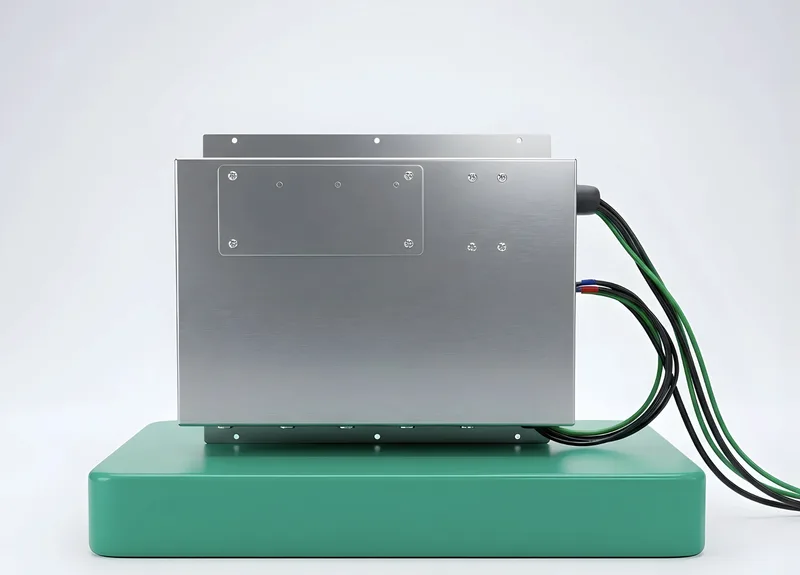
Unifies correction, filtering and voltage optimisation across multiple boards or sites — stabilising voltage that can sit high and swing with seasonal demand, and proving power factor, harmonics and kVA demand at the meter, continuously.
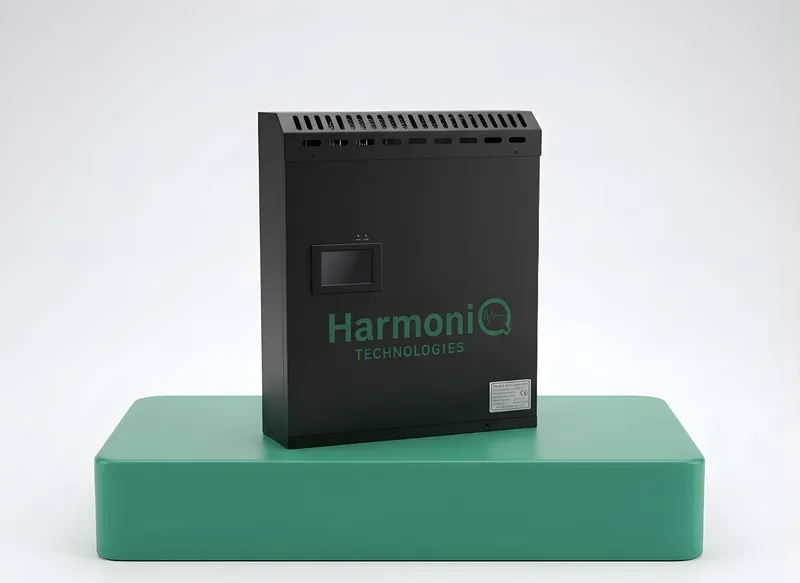
Active harmonic filtering that holds distortion within the DEWA / IEC 61000 / EN 50160 limits — the component that matters most across the UAE’s VFD-driven chillers, rectifier loads and non-linear UPS in district cooling, data halls and commercial towers, without the resonance risk of passive traps.
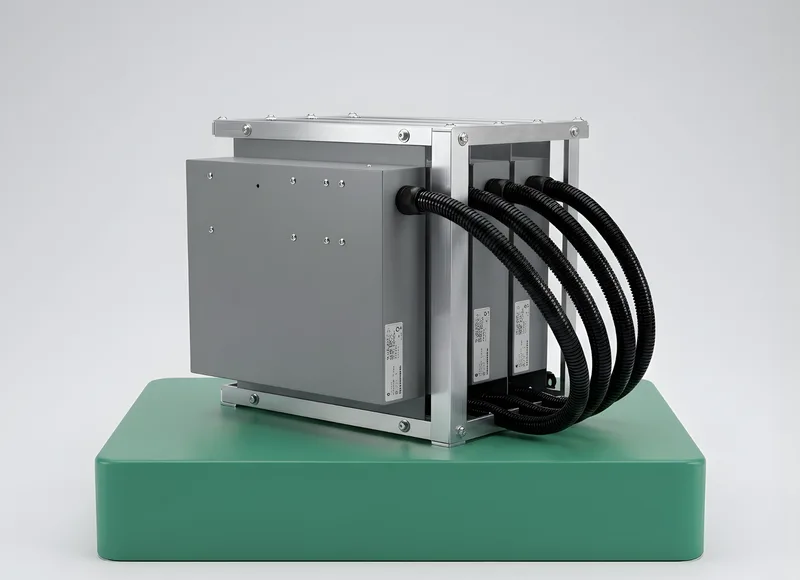
Real-time true power factor correction to 0.98+ across the whole network — clearing the power factor the emirate utilities expect, cutting the kVA demand charge, and freeing ~15–20% of transformer headroom so you can add a chiller, a production line or new load without waiting on a utility capacity upgrade.
Why not just install capacitor banks? + Read more− Close
Switched-capacitor banks correct power factor in fixed steps at the incoming feed — enough, in theory, to chase the recommended figure at the meter, which is why they are common across the region. But they respond in steps and seconds, so they lag the fast-changing chiller and motor loads typical of a UAE site and can leave you over- or under-corrected; they sit only at the boundary, so reactive current still flows through your internal network; and on a system carrying harmonics — as nearly every modern, drive-heavy Gulf facility now does — a capacitor bank can form a resonant circuit with the supply, amplifying those harmonics and, in the worst case, failing the capacitors themselves.
HarmoniQ is solid-state and dynamic: it corrects continuously rather than in steps, works across the network rather than at one point, and carries no resonance risk. Paired with active filtering, it is power factor correction and harmonic mitigation designed for a plant full of drives and inverters, not the switchgear of forty years ago.
What It’s Worth
Lower kVA, Freed Capacity, Cooler Plant — the Savings Compound
| Metric | Before | After HarmoniQ | Improvement |
|---|---|---|---|
| Power factor | 0.80 | 0.98 | Clears the expected level |
| Peak demand (kVA) | 2,800 | 2,286 | −18.4% |
| Spare connection capacity | Near limit | ~500 kVA freed | Capacity released |
| Harmonic distortion | Near / over the limit | Within DEWA / IEC 61000 | Compliance + cooler plant |
| Indicative annual saving | AED 0.9M–1.7M (~USD 250K–460K) | kVA demand + losses | |
Every site’s loads, utility tariff and connection are different — DEWA, EWEC/ADDC–AADC, SEWA and EtihadWE each bill their own way, and the figures above are illustrative of the mechanism, not a quote. Our engineers will model the exact power factor improvement, kVA reduction, losses reduced and capacity released for your specific connection — get in touch for a site assessment, or see the method on our power factor correction and demand-charge pages.