The Cost of Power
Moderately High Tariffs on a Hydro-Heavy Grid
New Zealand is a small, advanced, predominantly renewable electricity market — and one where energy cost genuinely moves the case. Commercial electricity runs at roughly NZ$0.21–0.26 per kWh, moderately high by international standards, so for a dairy plant, cold store, data centre or commercial estate the price of a kilowatt-hour is a real reason to stop wasting any. On top of the unit rate, most lines companies charge separately for poor power factor — so wasted current is billed twice over.
New Zealand’s grid is among the greenest in the developed world — around 80–87% renewable, with hydro alone supplying roughly 57–60% of generation. That makes power clean, but it does not make it cheap or risk-free: in the dry winter of 2024, low hydro storage sent the seven-day average wholesale price to about NZ$800/MWh, against a roughly NZ$180/MWh longer-run norm, and several large spot-exposed industrial users curtailed or paused production. The lesson for operators was that energy cost and price volatility are board-level concerns here — and that the most reliable defence is to use every unit efficiently.
| Who pays | Typical price | Notes |
|---|---|---|
| Commercial (commercial-weighted tariff) | ~NZ$0.21–0.26 /kWh | The rate most qualifying commercial and food-processing sites actually pay |
| Reactive-power (kVAr) charge | ~NZ$8–9 /kVA/month | Levied by most networks once power factor falls below 0.95 — on top of the unit rate |
| Dry-year wholesale spike | ~NZ$800 /MWh peak (Aug 2024) | Against a ~NZ$180/MWh longer-run norm — hydrology-driven price risk |
| Households (variable unit rate, incl. GST) | ~NZ$0.30 /kWh | National all-in average nearer ~NZ$0.39/kWh once fixed daily charges are included |
Commercial tariffs, the reactive-power (kVAr) charge and the dry-year wholesale spike are drawn from MBIE energy statistics and Electricity Authority data; the household figure is from MBIE’s Quarterly Survey of Domestic Electricity Prices — the variable unit rate is around NZ$0.30/kWh, while the national all-in average (which spreads fixed daily charges over consumption) is nearer NZ$0.39/kWh including GST as at early 2026. Figures are in New Zealand dollars (NZ$), current as of 2024–2026 and revised regularly — verify against MBIE energy prices and the Electricity Authority at the time of reading. Prices are per kWh and exclude site-specific demand and capacity charges.
How You’re Billed
A New Zealand Industrial Bill Is More Than the Energy You Use
The headline cents-per-kWh is only part of the story. A metered New Zealand site pays for the energy itself, for the lines company that delivers it, and for levies — and, critically for power quality, for the network demand it places on the grid (in kVA) and for the reactive power it draws. Those last two move directly when you correct power factor.
| Component | What it is | Cut by power quality? |
|---|---|---|
| Energy (wholesale / commodity) | The kWh you consume, at the traded price — exposed to dry-year wholesale spikes | Indirectly — lower network losses |
| Lines / network charges | The lines company’s charge for delivering power over the local network | Partly |
| Levies | Electricity Authority and Transpower transmission costs and other pass-throughs | No |
| Network demand charge (kVA) | A charge on the apparent-power demand and capacity you place on the network | Yes — lower kVA means a lower charge |
| Reactive-power charge (kVAr) | A charge on excess reactive energy once power factor falls below 0.95 (~NZ$8–9/kVA/month, varies by lines company) | Yes — power factor correction cuts it directly |
So the answer to two questions New Zealand operators often ask: yes, you are billed for network demand and capacity — through the kVA demand charge — and yes, you are billed for poor power factor, through the reactive-power (kVAr) charge once you slip below 0.95. Both fall as power factor rises towards unity, which is exactly what correction delivers.
Power Factor & Regulation
A Reactive Charge That Rewards Correction — on Most Networks
New Zealand has no single nationwide power-factor penalty, but the practical effect is much the same: across most North Island and several South Island lines companies, a site is billed for excess reactive energy (kVAr) once its power factor falls below 0.95, commonly at around NZ$8–9 per kVA per month (the exact threshold and rate vary by network). A site running at 0.85–0.90 power factor — typical for motor-, refrigeration- and drive-heavy plants — therefore pays a recurring monthly line charge that disappears the moment it is corrected to 0.98+, alongside a lower kVA demand charge.
On harmonics and supply quality, New Zealand connections follow the AS/NZS 61000 family of standards (with the EEA Power Quality Guidelines as the practical reference), enforced by the connecting lines company under its network connection standard. As variable-speed drives, rectifiers, non-linear UPS and behind-the-meter solar multiply on New Zealand sites, staying inside those limits increasingly requires active harmonic filtering — not just a one-off survey.
The reactive-power (kVAr) charge below 0.95 power factor is set per lines company and published in its pricing schedule; harmonic and voltage-quality limits follow the AS/NZS 61000 family, with the EEA (Electricity Engineers’ Association) Power Quality Guidelines as the practical reference, and connection follows each lines company’s network standard (for example Vector ESA002). Confirm the charge, threshold and limits that apply to your connection with your lines company and retailer — they vary by region and are updated periodically.
Why Power Quality Matters Here
A Clean, Hydro-Heavy Grid with Real Dry-Year Risk
Three structural forces make power quality a New Zealand boardroom issue, not just an engineering one. First, the tariff — already covered, moderately high, and paired with a direct reactive-power charge on most networks. Second, dry-year price risk: with hydro supplying roughly 57–60% of generation, a low-rainfall winter can send wholesale prices sharply higher — as in 2024, when the seven-day average reached about NZ$800/MWh and spot-exposed industrial users curtailed production. A lower, smoother, better-corrected demand softens that exposure. Third, the generation mix itself: as wind and solar grow on an already inverter-light grid, that inverter-based generation gradually raises harmonic distortion and voltage volatility at exactly the commercial and industrial sites we serve.
Reliability is a more regional story. Distribution networks lose roughly 70 to 160 customer-minutes per year depending on the lines company, and overhead-fed and remote sites are more exposed than urban ones — so in New Zealand operators are driven primarily by cost, the reactive charge and dry-year exposure, with resilience a secondary, location-specific concern rather than the day-to-day battle it is in parts of Africa or the Gulf.
The Solution
Solid-State Correction and Filtering, Network-Wide
HarmoniQ installs a coordinated, solid-state system at the low-voltage switchboard — where New Zealand sites carry their cost, where the lines company’s kVAr charge bites, and where the growing inverter share injects distortion. We deploy three products as the site requires: HarmoniQ Alpha as the integrated platform tying correction, filtering and voltage optimisation together, the HarmoniQ Delta for harmonic mitigation, and the HarmoniQ Sigma for real-time power factor correction. No switched-capacitor steps, no contactors, and no resonance risk with the harmonics already on your system.
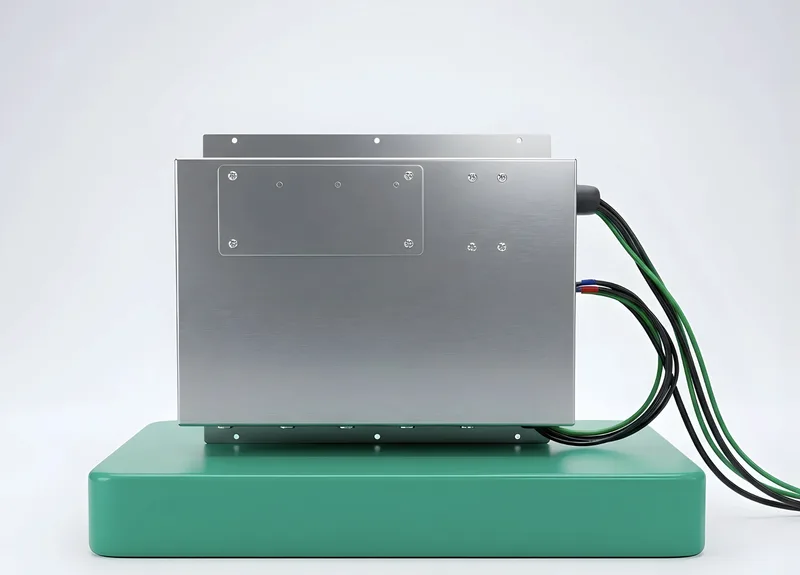
Unifies correction, filtering and voltage optimisation across multiple boards or sites — stabilising voltage at the point of use for sensitive loads in hospitals, data halls and dairy plants, with the visibility to prove power factor, reactive energy and kVA demand at the meter, continuously.
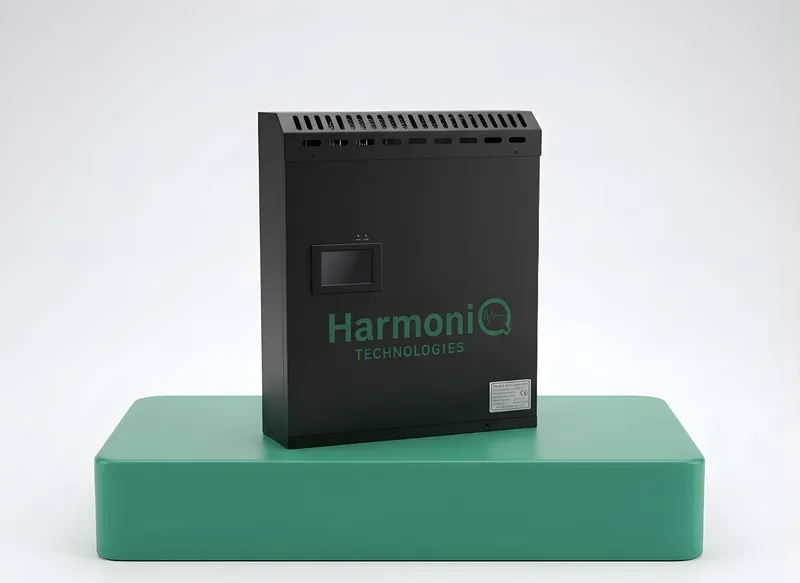
Active harmonic filtering that holds distortion within the levels the AS/NZS 61000 family expects at the connection point — critical for the VFD-driven refrigeration and pumps, rectifier loads and non-linear UPS that dominate New Zealand’s cold-chain, dairy, data-centre and commercial sites.
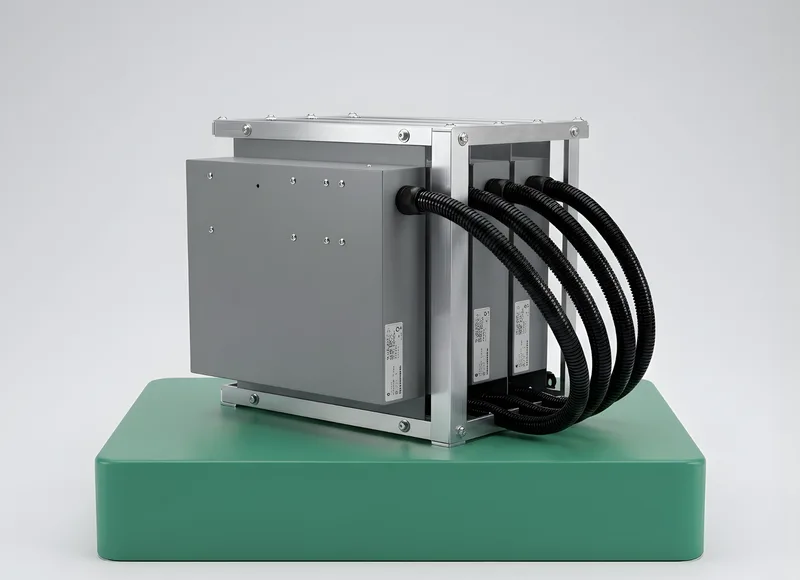
Real-time true power factor correction to 0.98+ across the whole network — clearing the 0.95 threshold to remove the lines company’s reactive-power (kVAr) charge and cut the kVA demand charge, and freeing transformer headroom so a growing site can add load without a costly network upgrade.
Why not just install capacitor banks? + Read more− Close
Switched-capacitor banks correct power factor in fixed steps at the incoming feed — enough, in theory, to lift you over the 0.95 threshold at the meter. But they respond in steps and seconds, so they lag fast-changing loads; they sit only at the boundary, so reactive current still flows through your internal network; and on a system carrying harmonics — as nearly every modern New Zealand site does, with its drives, rectifiers and inverters — a capacitor bank can form a resonant circuit with the supply, amplifying those harmonics.
HarmoniQ is solid-state and dynamic: it corrects continuously rather than in steps, works across the network rather than at one point, and carries no resonance risk. Paired with active filtering, it is power factor correction and harmonic mitigation designed for a plant full of drives and inverters, not the switchgear of forty years ago.
What It’s Worth
A Genuine Cost Case — the Savings Compound
| Lever | What changes | Effect on the bill |
|---|---|---|
| Power factor → 0.98+ | Reactive energy clears the 0.95 threshold; kVA demand falls | Reactive-power (kVAr) charge removed; demand charge cut |
| Energy & loss reduction | ~2–3% of losses reduced on a six- to seven-figure annual bill | Lower energy cost, cooler transformers & cables |
| Capacity release | ~12–18% of transformer / switchgear headroom freed | Add load or defer a network upgrade |
| Dry-year resilience | Lower, smoother demand softens exposure when wholesale prices spike | Less exposed to dry-year price volatility |
| Indicative annual saving | A material recurring sum on a site of this size — plus the capacity released | |
Every site’s loads, tariff and reactive profile are different, and the figures above are illustrative of the mechanism — not a quote. Our engineers will model the exact power factor improvement, reactive-power and kVA demand charges avoided, losses reduced and capacity released for your specific connection — get in touch for a site assessment, or see the method on our power factor correction and demand-charge pages.