The Cost of Power
A Restructured, Rising Industrial Tariff
For years Malaysian power was cheap and simple. That changed on 1 July 2025, when the Energy Commission (Suruhanjaya Tenaga) introduced a restructured tariff for Peninsular Malaysia, raising the base rate to 45.40 sen per kWh for the 2025–2027 regulatory period (RP4) — a 13.6% rise on the previous 39.95 sen average. Power is no longer a flat commodity: it is split into energy, capacity, network and retail charges, with a monthly fuel adjustment layered on top. For a factory, data centre, or commercial estate, the unit rate is no longer something to ignore — and the new structure makes every wasted kilowatt-hour, and every spike in demand, more visible and more expensive.
Unlike a flat commodity bill, the restructured tariff charges medium- and high-voltage industrial sites unbundled energy, capacity and network rates — and adds a separate charge on the maximum demand (in kW) a site places on the grid. So the old assumption that “Malaysian industrial power is cheap, efficiency doesn’t move the needle” no longer holds: every percentage point of wasted current now shows up across several line items at once.
| Who pays | Typical all-in price | Notes |
|---|---|---|
| Business / commercial (all-in) | RM0.568 /kWh (Sep 2025) | Includes power, network and all taxes and fees |
| Industry — RP4 base tariff | 45.40 sen/kWh (from Jul 2025) | Before unbundled capacity, network and demand charges |
| Industry — medium-voltage energy charge | ~48–52 sen/kWh (low voltage); ~40–45 sen/kWh (high voltage) | Reported RP4 energy-charge ranges, inclusive of network and capacity |
| Households (RP4 domestic, incl. taxes) | RM0.221 /kWh (Sep 2025) | Domestic users get the deepest relief — industry pays far more per unit |
The RP4 base tariff and bill components are from the Energy Commission (Suruhanjaya Tenaga), reported via SoyaCincau and Lowyat; the residential and business all-in unit rates are from GlobalPetrolPrices (collected September 2025); reported low- and high-voltage energy-charge ranges are from industry tariff guides. Figures are current as of June 2026 and are revised — under the new Automatic Fuel Adjustment (AFA) the variable element now moves monthly. Verify against TNB’s tariff book and the Energy Commission at the time of reading. Prices are unit rates and exclude site-specific demand and connection charges.
How You’re Billed
A Malaysian Industrial Bill Is More Than the Energy You Use
The headline sen-per-kWh is only part of the story. Under the restructured RP4 tariff, a medium- or high-voltage Malaysian site receives an itemised bill split into four components — and, critically for power quality, it pays a separate charge on the maximum demand (kW) it places on the network, plus a power-factor surcharge if its power factor falls too low. Those last two move directly when you correct power factor.
| Component | What it is | Cut by power quality? |
|---|---|---|
| Energy charge | The kWh you consume (fuel and variable operating cost) | Indirectly — lower network losses |
| Network charge | Transmission and distribution: delivering power to your site | Partly |
| Capacity & retail charges | Generation capacity and billing/customer-service cost | No |
| Maximum Demand charge (RM/kW) | A charge on the highest demand (kW) recorded in the billing period — e.g. RM45.10/kW (E1), RM89.27/kW (E2) under RP4 | Yes — lower peak demand means a lower charge |
| Power-factor surcharge | An added percentage of the bill when power factor falls below the TNB threshold | Yes — power factor correction removes it |
So the answer to two questions Malaysian operators often ask: yes, you are billed for demand — through the maximum-demand (kW) charge — and yes, you are billed for poor power factor, through TNB’s power-factor surcharge. Both fall as power factor rises towards unity and demand is smoothed, which is exactly what correction delivers. A related trap is the Connected Load Charge: TNB also bills RM8.50/kW on the shortfall when a site’s actual maximum demand stays below the demand it declared — so demand has to be managed, not just minimised.
Power Factor & Regulation
A Surcharge Below 0.85 — and Harmonics Held to IEC Limits
Malaysia does impose an explicit power-factor penalty. TNB applies a power-factor surcharge when power factor falls below 0.85 for supplies below 132 kV, and below 0.90 for supplies at 132 kV and above. For sites below 132 kV the surcharge is 1.5% of the current bill for every 0.01 below 0.85, rising to 3% for every 0.01 below 0.75. A motor- and drive-heavy plant drifting to 0.80 power factor therefore pays a recurring penalty on top of its energy and demand charges — a penalty that disappears the moment it is corrected to 0.98+.
On harmonics and supply quality, TNB references the IEC 61000 series — including IEC 61000-3-6 for assessing emission limits from distorting loads on medium- and high-voltage networks — alongside Malaysian standards such as MS 1760 on voltage dips. As variable-speed drives, rectifiers, non-linear UPS and behind-the-meter solar multiply on Malaysian sites, staying inside those limits increasingly requires active harmonic filtering — not just a one-off survey.
The power-factor surcharge thresholds (below 0.85 under 132 kV; below 0.90 at 132 kV and above) and the 1.5%/3% surcharge rates are published by TNB on its power factor and charges & penalties pages; harmonic and power-quality assessment follows the IEC 61000 series as referenced by TNB. Thresholds, surcharge rates and maximum-demand charges vary by tariff category and are updated periodically — verify the exact figures that apply to your connection with TNB and the Energy Commission (Suruhanjaya Tenaga).
Why Power Quality Matters Here
An E&E Powerhouse Facing a Data-Centre Surge
Three structural forces make power quality a Malaysian boardroom issue, not just an engineering one. First, the tariff — already covered, newly restructured and rising, with explicit demand and power-factor charges. Second, the E&E base: electrical and electronics is Malaysia’s largest export sector at a record RM601.2 billion in 2024 — some 40% of total exports — and the country handles roughly 13% of the world’s back-end semiconductor output, in precisely the kind of precision, harmonic-sensitive plant where clean power protects yield. Third, the data-centre surge: Johor has become one of South-East Asia’s fastest-growing data-centre hubs, with analysts projecting data centres could consume around 40% of the state’s electricity by 2035 — a wave of new, inverter-heavy, capacity-hungry load arriving on the grid at once.
What matters less in Malaysia is day-to-day resilience: the grid is reliable, with TNB reporting a distribution SAIDI of about 47.88 customer-minutes lost in 2024. So unlike sites in parts of Africa or the Gulf, Malaysian operators are driven by cost, the new demand and power-factor charges, harmonic compliance and scarce grid capacity — rather than by keeping the lights on.
The Solution
Solid-State Correction and Filtering, Network-Wide
HarmoniQ installs a coordinated, solid-state system at the low-voltage switchboard — where Malaysian sites carry their cost, where the maximum-demand and power-factor surcharges bite, and where E&E lines and data halls inject distortion. We deploy three products as the site requires: HarmoniQ Alpha as the integrated platform tying correction, filtering and voltage optimisation together, the HarmoniQ Delta for harmonic mitigation, and the HarmoniQ Sigma for real-time power factor correction. No switched-capacitor steps, no contactors, and no resonance risk with the harmonics already on your system.
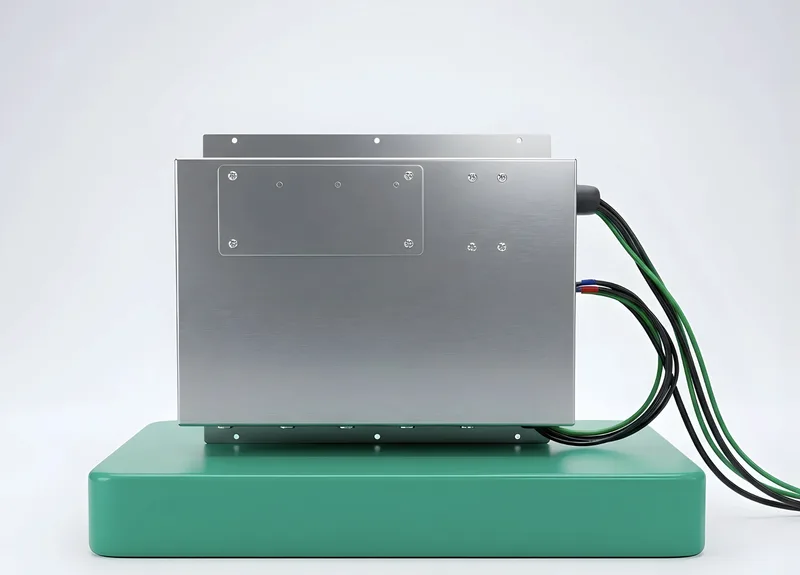
Unifies correction, filtering and voltage optimisation across multiple boards or sites — with the visibility to prove power factor, harmonics and maximum demand at the meter, continuously.
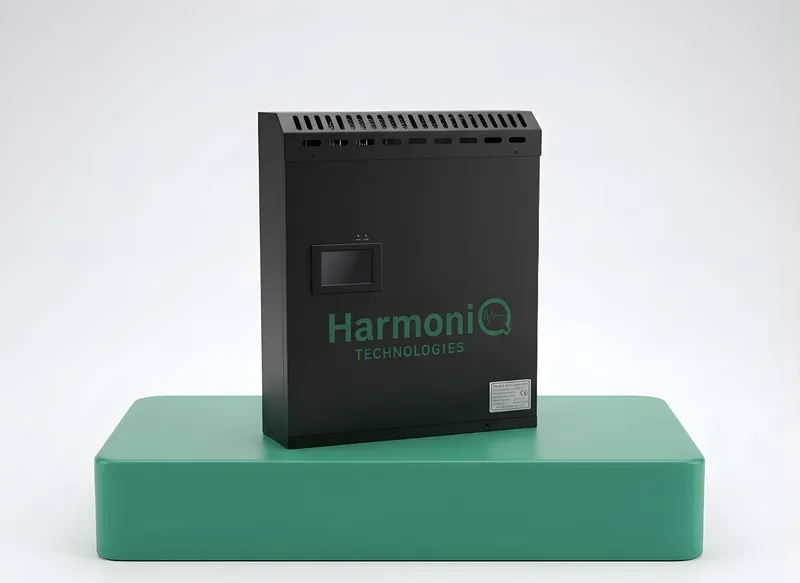
Active harmonic filtering that holds distortion within IEC 61000 limits — the component that matters most in Malaysia’s harmonic-sensitive E&E plants and inverter-heavy data centres, where drives, rectifiers, non-linear UPS and on-site solar all push harmonic levels up.
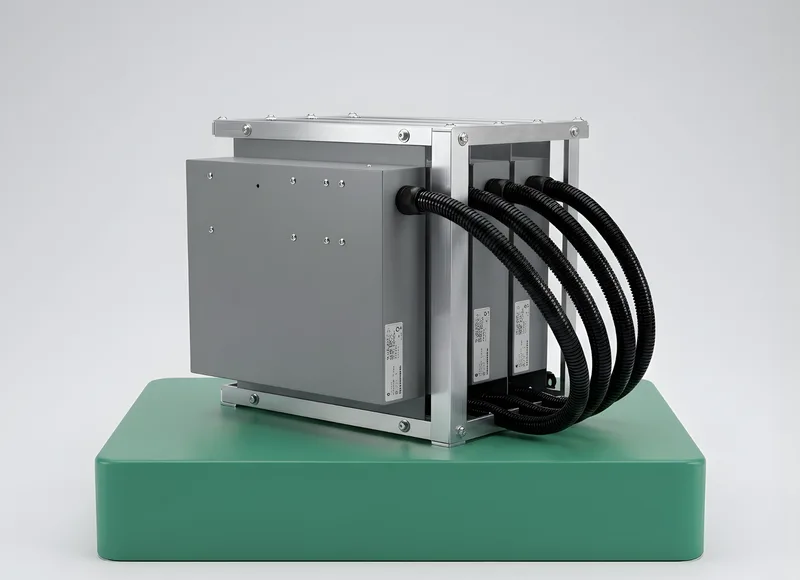
Real-time true power factor correction to 0.98+ across the whole network — clearing the 0.85 surcharge threshold to remove the TNB power-factor penalty and lowering maximum-demand (kW) charges, while freeing transformer headroom so you can add load without waiting for scarce new grid capacity.
Why not just install capacitor banks? + Read more− Close
Switched-capacitor banks correct power factor in fixed steps at the incoming feed — enough, in theory, to lift you over the 0.85 surcharge threshold at the meter. But they respond in steps and seconds, so they lag fast-changing loads; they sit only at the boundary, so reactive current still flows through your internal network; and on a system carrying harmonics — as nearly every modern Malaysian site does, with its drives, rectifiers and inverters — a capacitor bank can form a resonant circuit with the supply, amplifying those harmonics.
HarmoniQ is solid-state and dynamic: it corrects continuously rather than in steps, works across the network rather than at one point, and carries no resonance risk. Paired with active filtering, it is power factor correction and harmonic mitigation designed for a plant full of drives and inverters, not the switchgear of forty years ago.
What It’s Worth
Higher Tariff, a Real Surcharge — the Savings Compound
| Lever | What changes | Effect on the bill |
|---|---|---|
| Power factor → 0.98+ | Power factor clears the 0.85 threshold; peak demand smoothed | Power-factor surcharge removed; maximum-demand (kW) charge cut |
| Harmonic filtering to IEC 61000 | Lower distortion, cooler transformers & cables | Lower losses, longer asset life, protected E&E yield |
| Capacity release | Transformer / switchgear headroom freed | Add lines or IT load without waiting for scarce new grid capacity |
| Indicative annual saving | A material recurring sum in ringgit on a site of this size — plus the capacity released | |
Every site’s loads, tariff and reactive profile are different, and the figures above are illustrative of the mechanism — not a quote. Our engineers will model the exact power factor improvement, power-factor surcharge and maximum-demand charges avoided, losses reduced and capacity released for your specific connection — get in touch for a site assessment, or see the method on our power factor correction and demand-charge pages.