The Cost of Power
Industry Pays a Premium — and the Rate Varies by State
India does not have one electricity price; it has dozens. Every state’s Electricity Regulatory Commission (SERC) issues its own tariff order, so what a factory pays in Maharashtra differs from Tamil Nadu, Gujarat or Karnataka. But one pattern holds nationwide: industry pays a clear premium over households. The all-in business rate averaged ₹9.89 per kWh in September 2025, against roughly ₹6.49 per kWh for residential users. For a factory, data centre or commercial estate, the price of a kilowatt-hour is the single biggest reason to stop wasting any.
Unlike households — which are often cross-subsidised — industrial and commercial consumers carry the higher end of the tariff, and they are also the country’s largest consuming block, at about 41.8% of electricity sold in FY2023–24. So the familiar argument that “industrial power is cheap, efficiency doesn’t move the needle” does not hold here: every percentage point of wasted current is charged at the premium industrial rate, and in many states is amplified by the way demand is billed.
| Who pays | Typical all-in price | Notes |
|---|---|---|
| Industry / business (national average) | ₹9.89 /kWh (Sep 2025) | About USD 0.105; energy plus network, taxes and duty |
| Industry — HT example (Maharashtra HT I) | ₹8.36 /kWh (FY2024–25) | State HT energy charge; demand billed separately in kVA |
| Commercial / SME | Often ₹7–16 /kWh | Varies sharply by state, slab and demand |
| Households (residential) | ~₹6.49 /kWh (Sep 2025) | Often cross-subsidised; state slabs range from ~₹2 to ~₹13/kWh |
The national business and household figures are from GlobalPetrolPrices (September 2025); the Maharashtra HT I example is from the MERC tariff order for MSEDCL (FY2024–25, via Mercom India); the consumption share and state slab ranges are from IBEF (FY2023–24, citing CEA) and published SERC tariff orders. Reviewed June 2026 against CEA, MERC and state SERC sources; the cited figures are the latest published (2024–2025) and are revised regularly — rates and structures vary materially by state, so verify against your own state DISCOM / SERC tariff order at the time of reading. Prices are unit rates and exclude site-specific demand and capacity charges.
How You’re Billed
In India, You’re Billed on kVA — and Penalised for Poor Power Factor
The headline rupee-per-unit is only part of the story, and in India a uniquely important part is missing from it. Most state DISCOMs bill High-Tension and large industrial consumers not just for the energy (kWh) they use, but for the maximum demand they place on the grid, measured in kVA — the contract demand or sanctioned load. Because kVA captures apparent power, not just useful power, a site with poor power factor is billed for demand it never usefully consumes. Several states (Maharashtra among them) go further and bill energy itself in kVAh rather than kWh, building the power-factor penalty directly into every unit.
| Component | What it is | Cut by power quality? |
|---|---|---|
| Energy charge (kWh or kVAh) | The units you consume, at the state HT/industrial rate | Under kVAh billing, yes — directly |
| Network & wheeling, electricity duty, FAC | Delivery charges, state duty and fuel-adjustment cost | Indirectly — lower network losses |
| Demand charge (per kVA of maximum demand) | A monthly charge on the kVA contract / maximum demand you reserve | Yes — correcting power factor lowers kVA demand |
| Power-factor penalty / incentive | A surcharge below ~0.90 PF and a rebate for high PF (set per state) | Yes — correction removes the penalty and earns the incentive |
| Time-of-Day (ToD) energy charge | Higher rates in peak hours, lower in solar hours | Indirectly — via lower losses and demand |
So the answer to two questions Indian operators often ask: yes, you are billed for kVA — through the maximum-demand charge, and in some states through kVAh energy billing — and yes, you are billed for poor power factor, through an explicit penalty below roughly 0.90. Both fall as power factor rises towards unity, which is exactly what correction delivers — and in many states high power factor is rewarded on top.
Power Factor & Regulation
A 0.90 Threshold That Penalises — and Rewards — Across States
India is one of the clearest power-factor regimes in the world, because the rule is written into state tariff orders rather than buried in network charges. The thresholds vary by state but the shape is remarkably consistent. In Maharashtra, MSEDCL levies a penalty when power factor falls below 0.90 (lead or lag) and pays an incentive for power factor above 0.95, on a kVAh-billing basis that makes poor power factor visible on every bill. In Tamil Nadu, HT consumers are required to maintain 0.90 lag, with a disincentive (compensation) for falling short and an incentive for bettering it. The practical effect everywhere is the same: a site running at 0.85 power factor pays measurably more — in penalties and in inflated kVA demand — than the same site corrected to 0.98+, which instead earns a rebate.
On harmonics, Indian connections fall under the CEA (Technical Standards for Connectivity to the Grid) Regulations, 2007, which set limits on voltage and current harmonics for distribution systems and bulk consumers and align them with the IEEE 519 standard (with CEA amendments moving the limits towards IEEE 519-2014). As variable-speed drives, rectifiers, UPS systems, EV charging and behind-the-meter solar multiply on Indian sites, staying inside those limits increasingly requires active harmonic filtering — not just a one-off survey.
The power-factor penalty / incentive and the kVA maximum-demand charge are set per state in the SERC tariff order and the relevant DISCOM’s schedule of charges — the 0.90 penalty and 0.95 incentive cited here are from MSEDCL (Maharashtra) kVAh-billing material, and the 0.90-lag requirement from the TANGEDCO / TNERC HT tariff (Tamil Nadu). Thresholds, penalty rates and incentive bands vary materially between states. Harmonic and voltage-quality limits follow the CEA (Technical Standards for Connectivity to the Grid) Regulations, 2007, aligned with IEEE 519. Confirm the exact thresholds, charges and limits that apply to your connection with your state DISCOM / SERC and supplier — they vary by state and are updated periodically.
Why Power Quality Matters Here
A Fast-Growing, Manufacturing-Led, Increasingly Inverter-Heavy Grid
Three structural forces make power quality an Indian boardroom issue, not just an engineering one. First, the billing — already covered: a kVA demand charge and an explicit power-factor penalty that together punish poor power quality on every monthly bill. Second, growth: India is the world’s fastest-growing major electricity market, with demand up about 5.8% in 2024 and peak demand climbing from 250 GW in 2024 to a record 270.82 GW in May 2025 — driven by exactly the manufacturing expansion that “Make in India” is accelerating, from metals and cement to electronics and new supply chains. Adding load on an existing connection, without tripping into a higher kVA demand band, is increasingly valuable. Third, the generation mix is tilting towards inverter-based solar and wind, which raises harmonic distortion and reactive-power volatility at the commercial and industrial sites we serve.
And unlike high-cost Western grids, resilience still matters in India. Continuity of supply has improved sharply — to about 23.4 hours a day in urban areas and 22.6 hours in rural areas in 2023–24 — but outages and voltage dips remain common enough that a cleaner, better-regulated internal network protects sensitive production as well as cutting the bill.
The Solution
Solid-State Correction and Filtering, Network-Wide
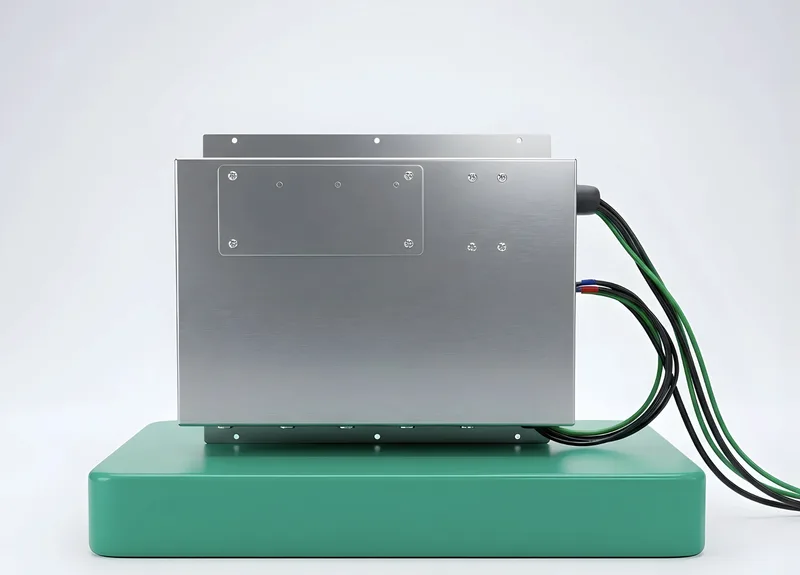
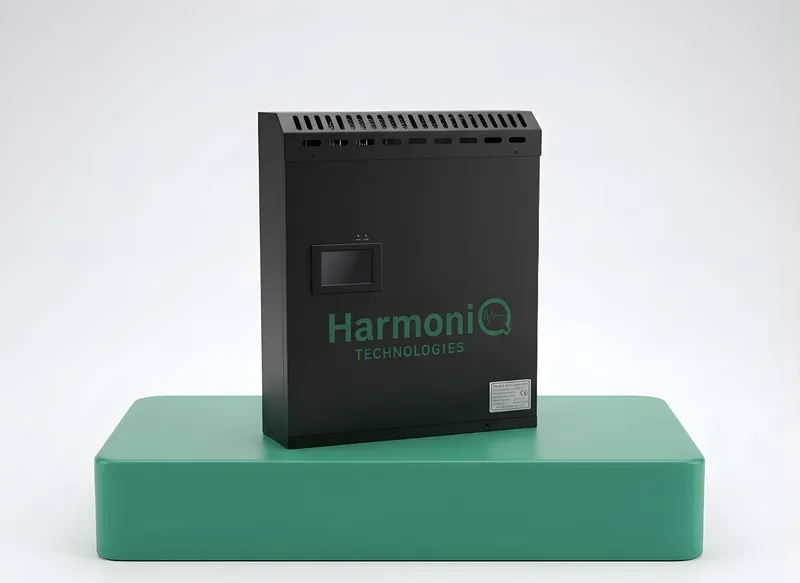
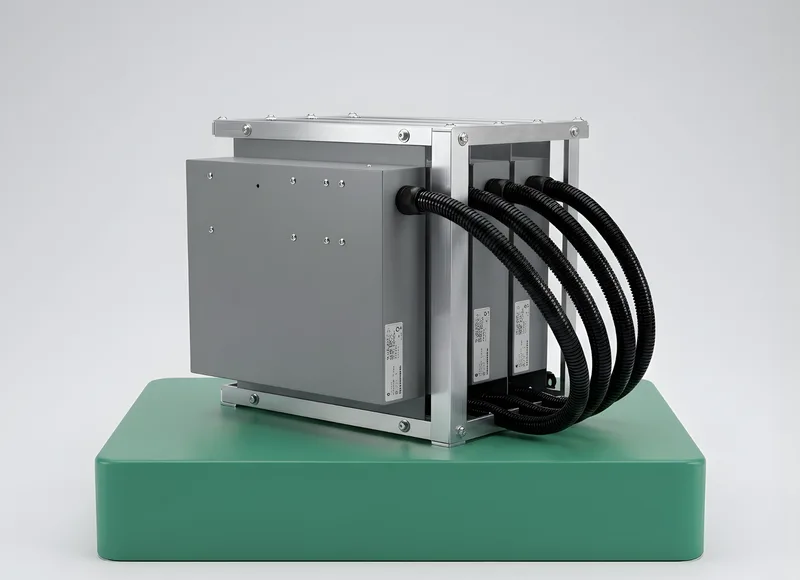
HarmoniQ installs a coordinated, solid-state system at the low-voltage switchboard — where Indian sites carry their cost, where the kVA demand charge and 0.90 power-factor penalty bite, and where the inverter-heavy grid injects distortion. We deploy three products as the site requires: HarmoniQ Alpha as the integrated platform tying correction, filtering and voltage optimisation together, the HarmoniQ Delta for harmonic mitigation, and the HarmoniQ Sigma for real-time power factor correction. No switched-capacitor steps, no contactors, and no resonance risk with the harmonics already on your system.
Unifies correction, filtering and voltage optimisation across multiple boards or sites — with the visibility to prove power factor, reactive energy and kVA maximum demand at the meter, continuously.
Active harmonic filtering that holds distortion within the CEA / IEEE 519 limits — the component that matters most in India’s increasingly inverter-heavy environment, where drives, rectifiers, UPS systems, EV charging and on-site solar all push harmonic levels up.
Real-time true power factor correction to 0.98+ across the whole network — clearing the 0.90 threshold to remove the power-factor penalty, earning the high-PF incentive, and cutting the kVA maximum-demand charge (and kVAh units where states bill that way), while freeing transformer headroom so you can add load without a higher demand band.
Why not just install capacitor banks? + Read more− Close
Switched-capacitor banks correct power factor in fixed steps at the incoming feed — enough, in theory, to lift you over the 0.90 threshold at the meter. But they respond in steps and seconds, so they lag fast-changing loads; they sit only at the boundary, so reactive current still flows through your internal network; and on a system carrying harmonics — as nearly every modern Indian site does, with its drives, rectifiers and inverters — a capacitor bank can form a resonant circuit with the supply, amplifying those harmonics.
HarmoniQ is solid-state and dynamic: it corrects continuously rather than in steps, works across the network rather than at one point, and carries no resonance risk. Paired with active filtering, it is power factor correction and harmonic mitigation designed for a plant full of drives and inverters, not the switchgear of forty years ago.
What It’s Worth
A kVA Penalty, a Real Incentive — the Savings Compound
| Lever | What changes | Effect on the bill |
|---|---|---|
| Power factor → 0.98+ | Clears the 0.90 threshold; kVA maximum demand falls | Penalty removed, demand charge cut, incentive earned |
| Harmonic filtering to CEA / IEEE 519 | Lower distortion, cooler transformers & cables | Lower losses, longer asset life |
| Capacity release | Transformer / switchgear headroom freed | Add load without moving into a higher kVA demand band |
| Indicative annual saving | A material recurring sum on a site of this size — plus the capacity released | |
Every site’s loads, state tariff and reactive profile are different, and the figures above are illustrative of the mechanism — not a quote. Our engineers will model the exact power factor improvement, the kVA demand and power-factor penalty avoided, the incentive earned, losses reduced and capacity released for your specific connection — get in touch for a site assessment, or see the method on our power factor correction and demand-charge pages.