The Cost of Power
Tariffs That Bite — and Keep Rising
Colombian electricity is no longer cheap, and it is getting dearer. Commercial and industrial tariffs have risen sharply since 2023, and a moderate-size business now pays roughly US$0.13–0.16 per kWh, with taxes and contributions pushing the all-in figure as high as ~US$0.23 per kWh on some bills. Prices are materially higher on the Caribbean coast than in the interior. National consumption runs at around 79 TWh and is growing about 3% a year. For a factory, a cold chain, a data centre or a commercial estate, the price of a kilowatt-hour is climbing — and that is the single biggest reason to stop wasting any.
Colombia runs a liberalised, unbundled power market: dispatch and the wholesale market are operated by XM, while tariffs are regulated by the Comisión de Regulación de Energía y Gas (CREG). The era when Colombian operators could treat electricity as a small, stable line item is over. Every percentage point of wasted current is now charged at a rate that keeps climbing — and, as the next sections set out, the bill also carries an explicit charge for reactive energy and a real exposure to the brownouts of a rainfall-dependent grid.
| Who pays | Typical price | Notes |
|---|---|---|
| Commercial / business (energy & network) | ~US$0.13–0.16/kWh | Before some taxes; varies by region and distributor |
| Commercial / business (all-in) | up to ~US$0.23/kWh | Including taxes and contributions on some bills |
| Caribbean coast | materially higher | Higher network costs and losses than the interior |
| National consumption | ~79 TWh/yr | Growing roughly 3% a year |
Colombia’s power market is liberalised and unbundled: the wholesale market and dispatch are run by XM, and tariffs are regulated by CREG. The figures here are current as of 2025–2026 and are revised periodically; tariffs vary widely by region, voltage level and distributor, and are materially higher on the Caribbean coast. Prices are stated in US dollars and are unit rates that exclude site-specific charges. Verify the current numbers against CREG and your own distribution company at the time of reading. Figures reviewed June 2026.
How You’re Billed
A Colombian Industrial Bill Is More Than the Energy You Use
The headline price per kWh is only part of the story. A commercial or industrial site pays for the energy itself (the wholesale market cost), for the transmission and distribution networks that deliver it, for national and local taxes and contributions — and, critically for power quality, an explicit charge for excess reactive energy once power factor falls too low. That last component moves directly when you correct power factor.
| Component | What it is | Cut by power quality? |
|---|---|---|
| Energy (Generación) | The wholesale market cost of the energy consumed (kWh), traded through XM | Indirectly — lower network losses |
| Transmission & distribution | Network charges for delivering power over the national and regional grid | Partly |
| Commercialisation, losses & restrictions | Retail, recognised network losses and system restriction costs passed through to the tariff | Partly — lower losses on your side |
| Taxes & contributions | VAT (IVA) and the regulated contribution / public-lighting and other local charges | No |
| Reactive-energy charge | A charge applied under CREG rules once power factor falls too low — you are billed for excess reactive energy | Yes — power factor correction removes it directly |
So the answer to the question Colombian operators often ask: yes, you are billed for poor power factor. Under CREG rules a reactive-energy charge applies once power factor falls too low — excess reactive energy is metered and billed — so correcting power factor delivers a direct bill saving, not merely compliance. It falls as power factor rises towards unity, which is exactly what correction delivers.
Power Factor & Regulation
Excess Reactive Energy Is Billed — and Harmonics Are Capped
Colombia bills low power factor directly. Under CREG’s commercial rules, a site that draws too much reactive energy relative to its active energy is charged for the excess — a reactive-energy charge applies once power factor falls too low. The exact numeric threshold is set in the regulation and at your distributor, but the principle is simple and financial: the more reactive current your motors, drives and transformers pull, the larger the charge. A motor- and drive-heavy plant therefore pays a recurring reactive-energy charge that disappears the moment power factor is corrected to 0.98+ — a direct saving on the bill, not just a tick in a compliance box.
On harmonics and supply quality, Colombian practice references the international standards through RETIE, the national technical regulation for electrical installations: harmonic-distortion limits follow IEEE 519 and the IEC 61000 series, with low-voltage assemblies built to IEC 61439. As variable-speed drives, refrigeration compressors, rectifier loads and non-linear UPS multiply across manufacturing, cold chain, retail and data centres — and as solar and the wind farms of La Guajira add inverter-driven sources to the mix — staying inside those limits increasingly requires active harmonic filtering, not just a one-off survey.
The charge for excess reactive energy is set in CREG’s commercial regulation; harmonic and installation requirements are referenced through RETIE, drawing on IEEE 519 and the IEC 61000 series, with LV assemblies to IEC 61439. The exact power-factor threshold, the reactive-energy formula and the measurement window should be verified with CREG and your distribution company, as the precise figures and thresholds that apply to your connection can vary. Figures reviewed June 2026.
Why Power Quality Matters Here
Biting Tariffs, a Hydro-Exposed Grid, and a Coast With Continuity Problems
Two forces make power quality a Colombian boardroom issue, and they pull together rather than apart: cost and resilience. On cost, the tariff — already covered — is biting and rising, and carries an explicit reactive-energy charge, so every wasted unit costs more this year than last. On resilience, the structural risk is the generation mix itself: Colombia is hydro-dominated, around 65–70% of generation, and rainfall-dependent. When the rains fail, the system tightens fast. In the 2024 El Niño drought, reservoirs fell to roughly 30% of usable capacity; Colombia halted electricity exports to Ecuador and narrowly avoided national rationing. National SAIDI — the average interruption a customer sees — is elevated versus OECD peers, and the Caribbean coast has chronic power-quality and continuity problems. The 2026–27 supply–demand balance is forecast structurally tighter than 2024, so the brownout exposure is not a one-off — it is the baseline.
That is why voltage stabilisation is a genuine revenue-protection line here, not a theoretical one. A hydro-exposed grid under stress sags and browns out; the drives, refrigeration compressors and UPS on your board are exactly the loads that trip, overheat or fail when it does. Holding voltage steady at the low-voltage switchboard — while correcting power factor and filtering harmonics — lets a site ride through those sags and brownouts, avoiding the downtime and spoiled product they cause. The case is strongest for cold-chain and Caribbean-coast sites, where an interruption is not just lost production but ruined stock.
The Solution
Solid-State Correction, Filtering and Voltage Stabilisation, Network-Wide
HarmoniQ installs a coordinated, solid-state system at the low-voltage switchboard — where Colombian sites carry their cost, where the reactive-energy charge bites, and where a hydro-exposed grid delivers the sags and brownouts that take loads down. We deploy three products as the site requires: HarmoniQ Alpha for voltage conditioning and stabilisation — carrying real weight here alongside the Sigma, given the resilience exposure, the HarmoniQ Delta for harmonic mitigation, and the HarmoniQ Sigma for real-time power factor correction. No switched-capacitor steps, no contactors, and no resonance risk with the harmonics already on your system.
Voltage conditioning and stabilisation at the point of use — holding voltage steady to ride through the sags and brownouts a hydro-exposed grid produces, protecting cold-chain and Caribbean-coast loads from downtime and spoiled product, with the visibility to prove power factor, harmonics and reactive energy at the meter, continuously.
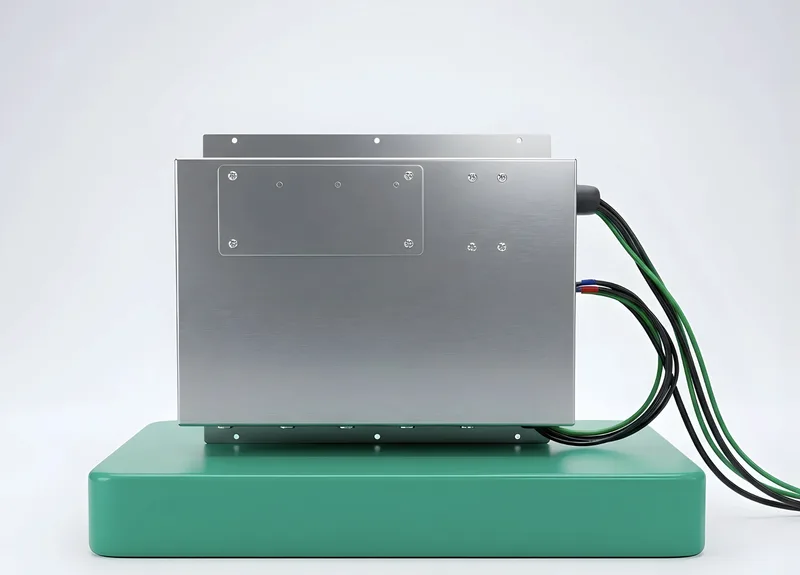
Active harmonic filtering that holds distortion within the IEEE 519 and IEC 61000 limits referenced through RETIE — the component that matters most where the drives, refrigeration compressors, rectifiers and non-linear UPS common in Colombian factories, cold chains and data centres, and the growing inverter-based solar and wind, all push harmonic levels up.
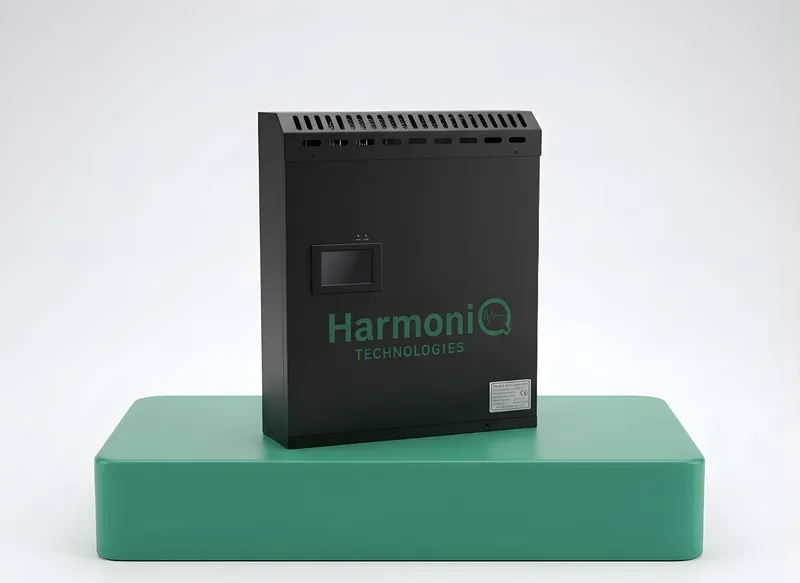
Real-time true power factor correction to 0.98+ across the whole network — removing CREG’s charge for excess reactive energy and the losses that go with it, and freeing transformer headroom so you can add load without waiting on a strained, rainfall-dependent grid.
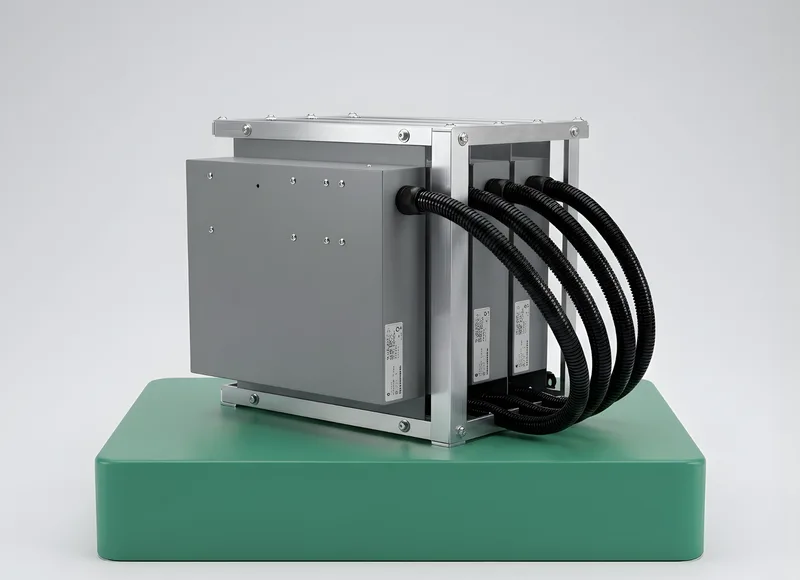
Why not just install capacitor banks? + Read more− Close
Switched-capacitor banks correct power factor in fixed steps at the incoming feed — enough, in theory, to clear the reactive-energy charge at the meter. But they respond in steps and seconds, so they lag fast-changing loads; they sit only at the boundary, so reactive current still flows through your internal network; and on a system carrying harmonics — as nearly every modern Colombian site does, with its drives, refrigeration compressors and inverters — a capacitor bank can form a resonant circuit with the supply, amplifying those harmonics. They also do nothing to hold voltage steady when a hydro-exposed grid sags or browns out.
HarmoniQ is solid-state and dynamic: it corrects continuously rather than in steps, works across the network rather than at one point, stabilises voltage through grid sags, and carries no resonance risk. Paired with active filtering, it is power factor correction, harmonic mitigation and voltage stabilisation designed for a plant full of drives and refrigeration on a rainfall-dependent grid — not the switchgear of forty years ago.
What It’s Worth
Biting Tariffs, a Real Surcharge and Avoided Downtime — the Value Compounds
| Lever | What changes | Effect on the bill |
|---|---|---|
| Power factor → 0.98+ | Excess reactive energy cleared under CREG rules | Reactive-energy charge removed; lower losses |
| Harmonic filtering to IEEE 519 / IEC 61000 | Lower distortion, cooler transformers & cables | Lower losses, longer asset life |
| Voltage stabilisation | Loads ride through grid sags and brownouts | Avoided downtime and spoiled product — strongest for cold chain |
| Indicative annual value | A material recurring sum on a site of this size — the bill saving plus the downtime and product losses avoided | |
Every site’s loads, tariff and reactive profile are different, and the figures above are illustrative of the mechanism — not a quote. Our engineers will model the exact power factor improvement, the reactive-energy charge avoided, the losses reduced, the capacity released and — on cold-chain and Caribbean-coast sites — the downtime and spoiled product avoided, for your specific connection — get in touch for a site assessment, or see the method on our power factor correction and voltage optimisation pages.