The Cost of Power
A Gulf Market — but Business Pays the Un-Subsidised Rate
Bahrain runs the smallest grid in the Gulf, but it carries the region’s densest cluster of banks, trading floors and commercial towers. What sets it apart from its neighbours is the tariff: where most of the Gulf shields business behind heavy subsidy, in Bahrain every commercial and industrial account pays the un-subsidised rate. The single authority, the Electricity & Water Authority (EWA), charges a non-subsidised business tariff of 32 fils per kWh (about USD 0.085), raised in January 2026 — dearer than Qatar and distinctive among the cheap-power Gulf markets. So the case here is broader than at a subsidised neighbour: alongside the usual capacity and grid-code levers, there is a genuine, real energy saving on top, because the kilowatt-hour you stop wasting is one you actually pay full price for.
Because business pays full price, the value of correcting power factor in Bahrain works on three fronts at once. Reactive and distorted current inflates the kVA your connection has to carry, eating transformer capacity you have already paid for; it must be kept inside EWA’s grid-code power factor requirement as a condition of connection; and — the part that softens at a subsidised neighbour but not here — the wasted current shows up in real network losses on an un-subsidised tariff. Every percentage point of wasted current costs, and on the island it costs on the energy line too.
| Who pays | Typical tariff | Notes |
|---|---|---|
| Commercial & industrial | 32 fils/kWh (~USD 0.085) | Non-subsidised; raised in January 2026; every business account pays this single rate |
| Banks, offices & commercial towers | 32 fils/kWh (~USD 0.085) | The signature load — trading floors, IT and HVAC in Manama and Bahrain Bay |
| Households (citizens, lifeline) | Far lower, tiered domestic rates | Subsidised lifeline rates for citizens — irrelevant to business customers |
The 32-fils-per-kWh business tariff is EWA’s non-subsidised commercial and industrial rate, raised in January 2026 and applied to every commercial and industrial account; the domestic lifeline rates for citizens are far lower but do not apply to business customers. The Bahraini dinar is divided into 1,000 fils and pegged to the US dollar. Figures are current as of 2025–2026 and are revised periodically — verify against the Electricity & Water Authority (EWA) and its Electricity Distribution Directorate at the time of reading. All figures are unit rates and exclude standing charges and other fees.
How You’re Billed
On an Un-Subsidised Tariff, Wasted Current Hits Every Line
A metered Bahrain business pays for the energy it uses, at the full un-subsidised rate — and, critically for power quality, the capacity its connection has to carry and the network losses driven by reactive and distorted current. Because the tariff is not subsidised, the loss component is not the rounding error it is in the cheapest Gulf markets: it is real money on the energy line. And because EWA assesses power factor as a condition of connection, low power factor is also a compliance question, not just a cost one.
| Component | What it is | Cut by power quality? |
|---|---|---|
| Energy (consumption) | The kWh you consume, at the full un-subsidised 32-fils business rate | Yes — lower network losses on a tariff you pay in full |
| Connection capacity (kVA) | The apparent power your transformer and switchgear must carry | Yes — lower kVA frees capacity you have already paid for |
| Grid-code power factor | EWA’s minimum power factor, assessed as a condition of connection | Yes — correction keeps you compliant |
So the answer to the question Bahrain operators ask: unlike a subsidised neighbour, yes, poor power factor costs you real energy here — the wasted current shows up as losses on a tariff you pay in full — and yes, it constrains the capacity your connection can carry, and must stay inside EWA’s grid-code requirement. All three improve as power factor rises towards unity, which is exactly what correction delivers.
Power Factor & Regulation
The EWA Grid Code — a Connection Requirement, Not a Metered Penalty
Bahrain’s electricity sector runs through a single authority, the Electricity & Water Authority (EWA), with connections assessed by its Electricity Distribution Directorate. EWA’s Regulations for Electrical Installations require equipment to be selected so that the overall power factor is not below specified minimums, with all materials to GCC / IEC / BS standards on a 400 V ±6%, 50 Hz system — checked by the Directorate as a condition of connection. This is a grid-code and connection requirement rather than a metered reactive-energy penalty: there is no published per-kVArh charge in Bahrain, so the lever is keeping the connection compliant and freeing the capacity that low power factor wastes, not avoiding a line on the bill. A commercial tower running at 0.82–0.88 power factor — typical for office, IT and HVAC loads — therefore sits below where the grid code wants it and carries more kVA than it needs, both of which correction to 0.98+ resolves.
On harmonics and equipment, Bahrain connections follow the GCC / IEC / BS standards, with IEC 61439 for low-voltage assemblies and the IEC 61000 series for EMC and harmonics. As variable-speed-driven chillers, rectifier loads and non-linear UPS dominate the island’s cooling, data-centre and commercial sites — and with renewables barely started, at roughly 18 MW installed at the end of 2024 — staying inside those limits increasingly requires active harmonic filtering, not just a one-off survey.
The minimum power factor requirement, the GCC / IEC / BS material standards and the 400 V ±6%, 50 Hz network parameters are drawn from EWA’s Regulations for Electrical Installations, assessed by the Electricity Distribution Directorate as a condition of connection; harmonic and equipment limits follow the IEC 61000 and IEC 61439 series. A specific power-factor figure and any metered reactive-energy charge are not published — treat this as a grid-code and connection requirement. Confirm the limits that apply to your connection with the Electricity & Water Authority (EWA) and its Electricity Distribution Directorate — they are revised periodically.
Why Power Quality Matters Here
A Banking Capital, an Un-Subsidised Tariff, and a Buildings-Heavy Grid
Three structural forces make power quality a Bahrain boardroom issue, not just an engineering one — and here, unusually for the Gulf, one of them is the tariff. First, capacity and the grid code: reactive and distorted current inflates the kVA your connection carries and must stay inside EWA’s power factor requirement, so freeing transformer headroom on the connection you already have has direct value. Second, the un-subsidised tariff: because business pays 32 fils in full, the network losses that low power factor drives are real energy spend — a stronger per-site cost case than the cheapest Gulf markets, where the subsidy hides it. Third, the shape of the grid: national generation reached about 19 TWh in 2024, and the addressable load skews hard to buildings — roughly 47% residential, 36% commercial and services, and 17% industry — so banks, offices, malls and cooling dominate the picture, not heavy industry. The signature cluster is the financial and commercial towers of Manama, Bahrain Bay, the financial harbour, Seef and the diplomatic area, where trading-floor, IT and HVAC loads typically run at 0.82–0.88 power factor.
What matters less in Bahrain is resilience. The EWA grid is among the most reliable anywhere — customer interruption runs at roughly 4.4 minutes a year, against around 116 minutes internationally, with average restoration near 43 minutes — so “avoid the outage” is a weak angle on the island. Bahraini operators are driven by capacity, grid-code compliance and, distinctively, a real energy saving, rather than by keeping the lights on. Beyond the financial towers, the same logic applies to malls and hypermarkets, hotels, healthcare, data centres, district cooling, universities, cold stores and logistics, airport low-voltage distribution, water and wastewater pumping, and the light manufacturing in the industrial parks at Hidd and Salman Industrial City — food, packaging, plastics, building materials and switchgear.
The Solution
Solid-State Correction and Filtering, Network-Wide
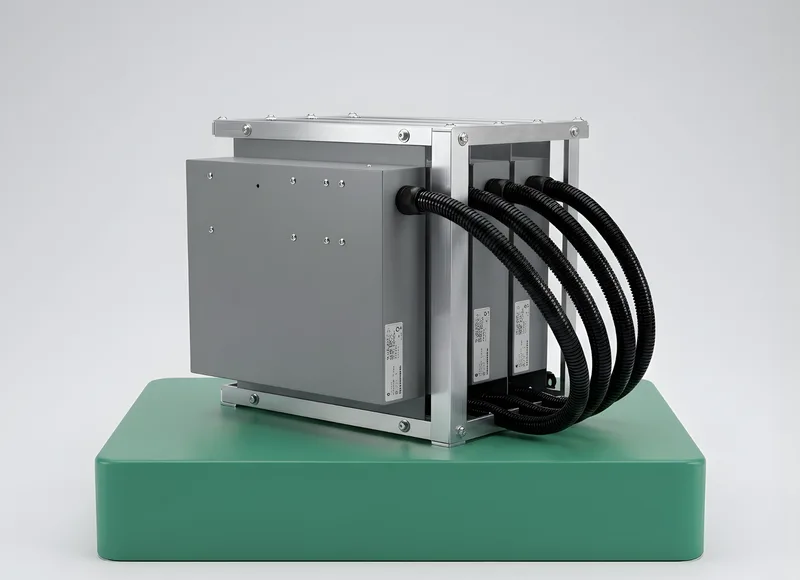
HarmoniQ installs a coordinated, solid-state system at the low-voltage switchboard — where Bahrain sites carry their load, where the un-subsidised tariff makes losses bite, where capacity constrains a growing tower, and where EWA grid-code compliance is assessed. We deploy three products as the site requires: HarmoniQ Alpha as the integrated platform tying correction, filtering and voltage optimisation together, the HarmoniQ Delta for harmonic mitigation, and the HarmoniQ Sigma for real-time power factor correction. No switched-capacitor steps, no contactors, and no resonance risk with the harmonics already on your system.
Unifies correction, filtering and voltage optimisation across multiple boards or sites — with the visibility to prove power factor, reactive current and kVA demand at the meter, continuously. The natural fit for the criticality-led tail: data halls, hospitals and sensitive trading-floor and IT environments.
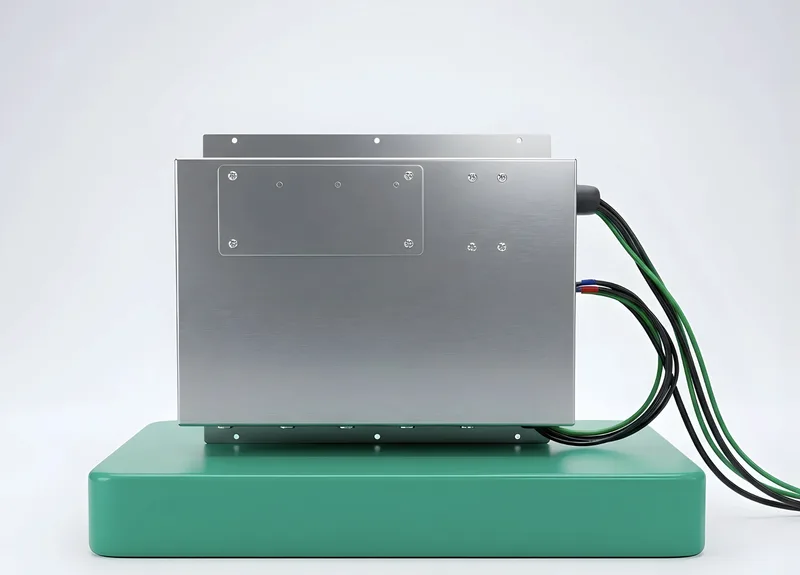
Active harmonic filtering that holds distortion within the IEC 61000 limits referenced by the GCC / IEC / BS standards — the component that matters most for the island’s VFD-driven chillers, rectifier loads and non-linear UPS, cutting transformer and neutral heating and easing nuisance trips in high-ambient Bahrain switchrooms.
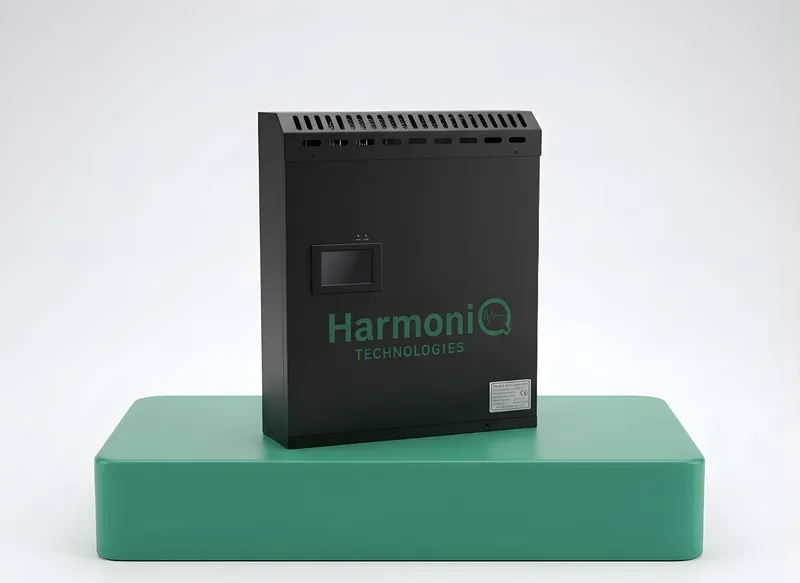
Real-time true power factor correction to 0.98+ across the whole network — meeting the EWA grid-code requirement, freeing roughly 15–20% of transformer and switchgear capacity so a growing tower can add load without a costly upgrade, and cutting the network losses you pay for in full on Bahrain’s un-subsidised tariff. It tracks the load thousands of times a second, so correction holds as chillers cycle, lifts run and trading floors and IT load swing through the day.
Why not just install capacitor banks? + Read more− Close
Switched-capacitor banks correct power factor in fixed steps at the incoming feed — enough, in theory, to lift you over the grid-code line, which is why they are common across the region. But they respond in steps and seconds, so they lag fast-changing loads and can leave you over- or under-corrected; they sit only at the boundary, so reactive current still flows through your internal network; and on a system carrying harmonics — as nearly every Bahrain commercial and industrial site does, with its drives, rectifiers and chillers — a capacitor bank can form a resonant circuit with the supply, amplifying those harmonics and, in the worst case, failing the capacitors themselves in the island’s high ambient temperatures.
HarmoniQ is solid-state and dynamic: it corrects continuously rather than in steps, works across the network rather than at one point, and carries no resonance risk. Paired with active filtering, it is power factor correction and harmonic mitigation designed for a modern tower full of drives and chillers, not the switchgear of forty years ago.
What It’s Worth
Capacity, Compliance — and, on This Grid, a Real Energy Saving
| Metric | Before | After HarmoniQ | Improvement |
|---|---|---|---|
| Power factor | 0.85 | 0.98 | +15.3% |
| EWA grid-code power factor | Below requirement | Comfortably compliant | Within grid code |
| Peak demand (kVA) | 2,000 | 1,735 | −13.3% |
| Spare connection capacity | Near limit | ~265 kVA freed | Capacity released |
| Network losses (paid in full) | Carried on the bill | Reduced | Real energy saved |
| Where the value lands | Capacity released + grid-code compliance + a real energy saving on the un-subsidised tariff | capacity + compliance + energy | |
Where the saving comes from on an un-subsidised tariff — worked example + Read more− Close
Take a commercial tower carrying a peak of 2,000 kVA at a power factor of 0.85. The real power doing the work is about 1,700 kW; the rest is reactive current that still has to flow through the transformer, switchgear and cables. Correcting to 0.98 drops the apparent power to roughly 1,735 kVA for the same real load — freeing about 265 kVA of capacity on the connection you already have, headroom a growing tower would otherwise have to buy.
That same reduction in current is where the energy saving lives. Carrying less reactive and distorted current means lower resistive losses in your transformer and cables — and because Bahrain’s business tariff is un-subsidised at 32 fils per kWh, those avoided losses are a real reduction on the energy line, not a rounding error hidden by a subsidy. It is a modest lever next to capacity and compliance, but on this grid it is real money — a stronger per-site case than the cheapest Gulf markets. Your exact numbers depend on your tariff, load profile and starting power factor — this is the mechanism, not a quote.
Every site’s loads, tariff and reactive profile are different, and the figures above are illustrative of the mechanism — not a quote. Our engineers will model the exact power factor improvement, capacity released, network losses reduced on the un-subsidised tariff and EWA grid-code compliance for your specific connection — get in touch for a site assessment, or see the method on our power factor correction and demand-charge pages.