In brief
- Equipment life is set by temperature: every 10 °C above rating halves insulation life, so a motor designed for 20 years, run 20 °C hot, lasts about five.
- Low power factor, harmonic distortion and current imbalance all make heat. At power factor 0.75, an 800 kW load makes 60% more resistive heat than at 0.95, for the same output.
- At 20 °C above rating, a plant replaces its motors four times as fast, and each stoppage can cost more than the motor. More maintenance catches failures; it does not slow the rate.
- Correcting power quality removes the cause, the excess heat. That is where our 2–4× extension in downstream equipment life comes from: the Arrhenius rule, run in reverse.
Every electrical asset in an industrial facility has a rated lifespan. A motor is designed for 20 years. A dry-type transformer for 25. Cable insulation for 30 or more. These numbers appear in manufacturer specifications, asset management databases and capital replacement schedules.
But the actual lifespan of electrical equipment is governed not by the nameplate, not by the maintenance schedule and not by the quality of installation. It is governed, overwhelmingly, by temperature.
The relationship between temperature and insulation life is not linear, not approximate and not debatable. It is described by the Arrhenius equation, a fundamental law of chemical kinetics, and codified in IEEE and IEC standards that have been in use for over half a century. The rule is simple: for every 10 °C increase above rated temperature, the life of electrical insulation is halved.
01The rule that governs equipment life
The Arrhenius equation, first published by Svante Arrhenius in 1889, describes how the rate of a chemical reaction increases with temperature. In electrical insulation, the “reaction” is thermal degradation: the slow, irreversible breakdown of polymer chains that makes insulation brittle, cracked and, in the end, failed.
The pointThe equation is exponential, so the relationship accelerates. A 10 °C rise does not reduce life by 10%. It reduces it by approximately 50%.
Two standards formalise the principle:
- IEEE Std 1 (General Principles for Temperature Limits in the Rating of Electrical Equipment) sets the thermal rating framework for electrical apparatus, defining the maximum allowable temperature for each insulation class.
- IEC 60085 (Electrical Insulation — Thermal Evaluation and Designation) classifies insulation materials by their maximum continuous operating temperature, each class marking the threshold beyond which accelerated ageing begins.
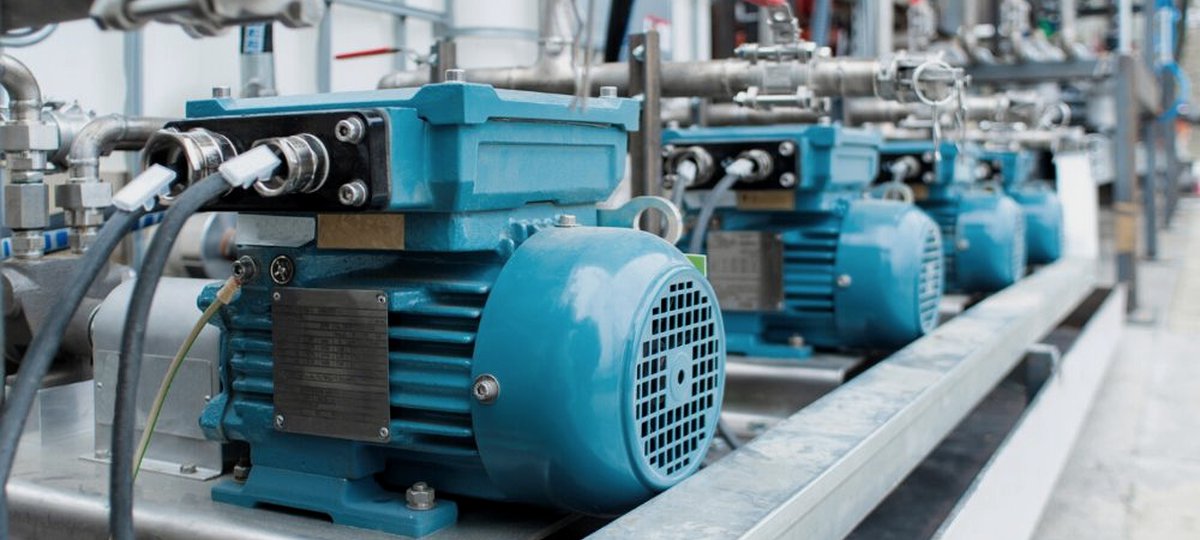
Consider a 150 kW induction motor with Class F insulation, rated for continuous operation at a winding temperature of 155 °C and designed to last about 20 years. Run it at 165 °C, just 10 °C above its rating, and its insulation life drops to about 10 years. At 175 °C it falls to roughly 5. Drag the curve to see it for yourself.
The motor does not fail immediately. It does not trigger an alarm. It simply ages at two or four times the expected rate, and the failure budgeted for year 20 arrives in year 5.
02Where the heat comes from
Temperature rise in electrical equipment is not random. It is driven by measurable, predictable phenomena, and poor power quality amplifies them.
Reactive current and I²R losses
Power factor is the ratio of useful power (kW) to the total apparent power (kVA) drawn from the supply. When it is low, the facility draws more current than it needs to deliver the same work. Resistive heating in any conductor rises with the square of the current, so even a modest increase in current produces a disproportionate increase in heat.
| Metric | PF 0.95 | PF 0.75 | Difference |
|---|---|---|---|
| Active power (useful work) | 800 kW | 800 kW | — |
| Apparent power | 842 kVA | 1,067 kVA | +27% |
| Line current (3-phase) | 1,215 A | 1,540 A | +325 A |
| Relative I²R heating | 1.00× | 1.60× | +60% heat |
At power factor 0.75 the facility generates 60% more resistive heat in every cable, busbar, terminal and winding carrying that current, while producing exactly the same output. That heat accumulates in insulation and raises operating temperatures across the whole electrical infrastructure.
Harmonic distortion
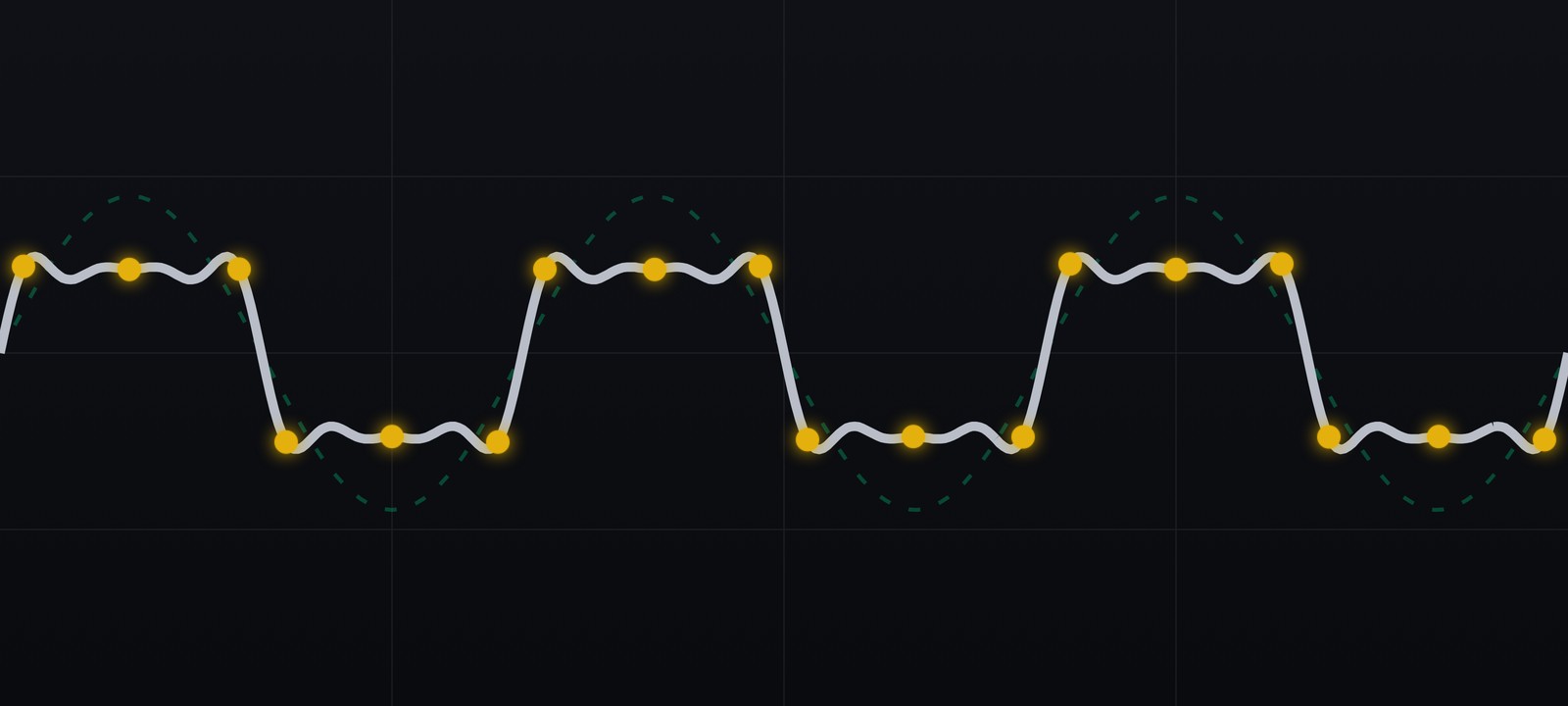
Non-linear loads (variable-frequency drives, rectifiers, UPS systems, LED lighting) inject harmonic currents into the network. They cause losses beyond those of the fundamental: excess eddy-current and hysteresis losses in transformer cores, and stray flux that induces local hotspots in motor windings.
Current imbalance
Unbalanced phase loading forces the neutral to carry current that would cancel in a balanced system, and it creates negative-sequence currents in motors: counter-rotating magnetic fields that make heat without making torque.
In most industrial plants these factors do not act alone. They compound.
03What 20 °C costs you
IEC 60085 sorts insulation into thermal classes, and each class sets a maximum continuous temperature at which the insulation is expected to reach its design life. Take that life as 20 years, as for the motor above, and the rule gives every class the same ladder.
| Insulation class | Rated temperature | Life at rating | Life at +10 °C | Life at +20 °C |
|---|---|---|---|---|
| Class A | 105 °C | 20 years | 10 years | 5 years |
| Class B | 130 °C | 20 years | 10 years | 5 years |
| Class F | 155 °C | 20 years | 10 years | 5 years |
| Class H | 180 °C | 20 years | 10 years | 5 years |
The pattern is identical across the classes. The rule does not care whether insulation is rated for 105 °C or 180 °C. What matters is the exceedance: how far above its rating the equipment actually runs.
Now put it in capital terms.
Worked exampleTake a hypothetical plant running 40 motors across its compressors, pumps, fans and conveyors. At rated temperature, on a 20-year life, it replaces two a year on average. At 20 °C above rating, on a 5-year life, it replaces eight a year: four times the capital spend, on motors alone.
Replacement is often the smaller part of the cost. An unplanned motor failure stops a line, and the bill for that stoppage, in lost output, expedited parts, emergency labour and spoiled product, can dwarf the price of the motor. Multiply it by a failure rate that has quadrupled, and the exposure stops being a maintenance line and becomes a business risk.
The first 10 °C of excess temperature doubles the replacement rate. The second 10 °C doubles it again.
A plant running 20 °C above rating is not spending twice as much on replacement. It is spending four times as much, before a single hour of unplanned downtime is counted.
04The thermal camera doesn't lie
Thermal imaging is the most immediate way to reveal what poor power quality does to equipment life. An infrared survey of an industrial electrical system tells a story no spreadsheet can.
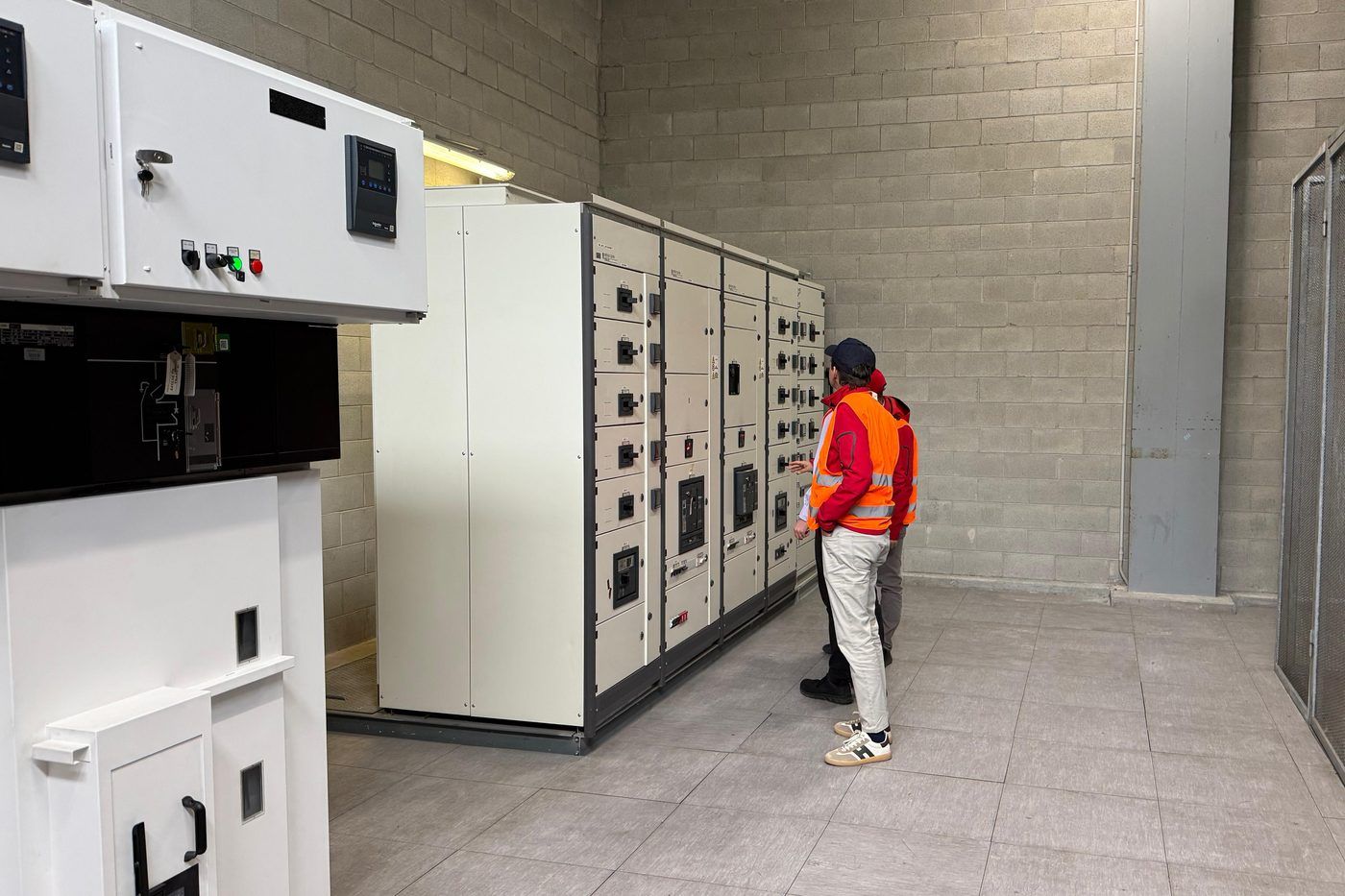
In switchgear and motor control centres, thermal cameras reveal hotspots at connection points, busbars and breaker contacts that are invisible to the naked eye. A cable termination running well above the sections beside it points to excessive current. Switch the view below on and off.
- 1Drives feeder
- +18.0 °C
- 2Neutral bar
- +20.0 °C
- 3Busbar joint
- +14.0 °C
Insulation life · drives feeder
5.7 years
of 20, by the Arrhenius rule
HarmoniQ off Every hot spot is electricity you pay for, turned into heat
A thermal image of an industrial electrical system is a photograph of money leaving the business. Every hotspot is a countdown timer on an asset that will fail before its time.
The value of thermal imaging goes beyond diagnosis. It provides the baseline against which power quality correction can be measured: a survey before and a survey after, at the same load points, is evidence that is hard to dispute.
05Beyond motors: transformers, cables and switchgear
Motors get the attention because they fail visibly and disruptively. But the rule applies to every component that depends on insulation, which is to say nearly everything in an electrical system.
Transformers
For oil-filled power transformers with standard paper insulation, IEC 60076-7 takes a winding hot-spot temperature of 98 °C as its reference, and the rate of ageing doubles for every 6 °C above it. At a hot spot of 110 °C, just 12 °C over, the insulation is ageing four times as fast as intended. Harmonic currents add eddy-current and stray losses in the windings and the structure, which is why IEEE C57.110 sets out how far a transformer must be derated when it supplies a distorted load. Under heavy distortion, it can safely carry noticeably less than its nameplate rating.
Cables
A cable's ampacity, the current it can safely carry, is set by the highest continuous temperature its insulation can stand. As its surroundings warm, or as excess current heats the conductor, the cable has to be derated or replaced with a larger cross-section. An XLPE cable rated for 90 °C loses roughly 5% of its rating for every 5 °C the surrounding air rises above 30 °C. In a tray beside heat-producing equipment, grouped with other loaded cables, the deratings compound.
Switchgear and contactors
Thermal cycling, the repeated heating and cooling as loads switch on and off, speeds up mechanical wear in contactors, circuit breakers and relays. Conductors expand and contract at every connection, loosening terminations over time. Contact resistance rises, which makes more heat, which loosens them further. That feedback loop is a classic route to busbar and switchgear failure.
Heat does not degrade one component in isolation. When power quality is poor, the motor windings, the cables feeding them, the contactors switching them, the transformer supplying them and the switchgear protecting them all run above their thermal ratings: all ageing faster, all converging on failure in the same compressed window. It is why plants with chronic power-quality problems see failures in clusters rather than one at a time.
- Hot-spot rise that doubles a transformer paper's rate of ageing
- 6 °C
- Paper ageing at a 110 °C hot spot, against the 98 °C reference
- 4×
- XLPE cable rating lost, roughly, for every 5 °C the air warms
- 5%
06The maintenance illusion
The natural response to rising failures is a bigger maintenance budget: more frequent vibration analysis on motors, more regular oil sampling on transformers, tighter inspection cycles on switchgear, and predictive programmes built on sensors, analytics and condition-monitoring software.
The pointThese are sensible investments, in isolation. But they share one limitation: they detect symptoms without touching the cause.
Vibration analysis will tell you a motor bearing is deteriorating. It will not tell you that the bearing is deteriorating because the motor runs 20 °C hotter than it should, because the current feeding it is heavily distorted, because nobody has ever addressed the site's power quality. Oil sampling will find the dissolved gases that mark thermal degradation in a transformer. It will not explain that the degradation is happening because the transformer is carrying harmonic load above its design hot-spot temperature.
The programme catches a failure before it becomes a catastrophe, which has value. But it does not extend the life of the asset, and it does not slow the replacement rate. Spending more on predictive maintenance without fixing the power quality is like replacing tyres early, again and again, without fixing the wheel alignment. The diagnosis is right, the intervention is misdirected, and the cost persists.
07Quantifying the capex impact
The calculation
For a real plant, the arithmetic is the one done for the 40 motors, repeated class by class. List each asset class with its quantity and replacement cost, and divide by its life at the temperature it actually runs, not the one on its nameplate: life halves with every 10 °C for motor insulation, and with every 6 °C for transformer paper. Motors, distribution transformers, contactors and starters, cable sections and capacitor banks all belong on the list.
Then add what the replacement figure leaves out:
- Unplanned downtime: production lost while a failed asset is found, sourced and replaced.
- Expedited parts and emergency labour: the premium paid for urgency.
- Maintenance: the predictive programmes that grow as failures climb.
The result is a capital figure, not an energy figure, and it belongs in the capital plan. It is easy to miss, because it is spread across maintenance, capex and lost output, and rarely totalled in one place.
08The bottom line
The Arrhenius rule is physics, not theory. It does not negotiate, and it does not care whether a plant holds an ISO 55001 asset-management certification, runs a world-class maintenance programme or has a generous capital budget. If the insulation runs above its rating, the asset's life shortens: every degree, every hour, every asset.
The uncomfortable truth for many industrial plants is that the biggest single factor in the life of their electrical equipment is not the quality of what they buy, the rigour of their maintenance or the skill of their electricians. It is the quality of the power flowing through their network.
Low power factor, harmonic distortion and current imbalance create a thermal environment that silently ages every insulated component in the system. The cost appears on no single line. It arrives as motors replaced ahead of schedule, transformers rewound early, contactors failing in clusters and lines stopping without warning.
Correcting the cause
Power-quality correction goes after the cause, the excess heat, rather than the symptoms.
That is where our figure of a 2–4× extension in downstream equipment life comes from: the Arrhenius rule, run in reverse. It also moves maintenance from reactive and predictive towards genuinely preventive.
Every degree of unnecessary heat is money leaving the business. The Arrhenius equation tells you exactly how much.
09Four steps to quantify and eliminate thermal risk
- Take a thermal baseline Commission a combined power-quality and thermal-imaging survey. Measure power factor, harmonic distortion and current imbalance at the main incomer and at each major distribution board, and capture thermal profiles of every critical asset at the same time: motors, transformers, MCCs, switchgear and cable runs. Establish the gap between rated and actual operating temperatures.
- Quantify the exposure Apply the Arrhenius rule to the measured exceedances. Work out each asset class's remaining life at current conditions against rated conditions, and turn the difference into annual replacement cost, downtime risk and maintenance spend. Build the case in capital terms, not energy terms.
- Correct the cause Remove the power-quality problems that make the heat: correct the power factor, bring harmonic current within the IEEE 519 limits for the site, and balance the phases. HarmoniQ works where each problem sits, with the Alpha at the load, the Delta at the drives and the Sigma at the incomer, and corrects power factor to 0.98+.
- Verify with a second survey Repeat the thermal survey a few weeks after correction, at the same load points and similar loading. Record the fall in temperature at each point, recalculate expected asset life at the new temperatures, and use the before-and-after data to update replacement schedules, adjust maintenance intervals and report the result.
10The standards behind the rule
Three standards carry the Arrhenius relationship into engineering practice and define the thermal classes used across electrical insulation design.
IEC 60085: thermal evaluation and designation
The primary international standard for classifying electrical insulation by its thermal endurance. IEC 60085 defines the thermal classes printed on motor and dry-type transformer nameplates. The four common on motors are Class 105 (A), Class 130 (B), Class 155 (F) and Class 180 (H), with higher classes above them. For each class, the maximum continuous temperature is the point at which insulation life is rated at its nominal value under the Arrhenius model. Above it, life halves for every 10 °C.
IEEE Std 1: temperature limits in the rating of electrical equipment
The IEEE counterpart to IEC 60085, setting the temperature limits behind equipment ratings wherever IEEE standards govern, principally North America. It defines thermal class designations, sets out how temperature-rise limits map to equipment ratings, and gives the framework within which motor and transformer makers assign thermal life. It adopts the Arrhenius relationship as the governing model for insulation ageing.
IEEE Std 117: thermal evaluation of motor insulation systems
The test procedure that puts the rule to work on random-wound AC motors. Sample insulation systems, built into small test windings called motorettes, are aged at several temperatures well above their rating until they fail. Their lives are plotted against temperature on an Arrhenius graph and extended down to service temperature, which is how a motor's insulation system earns its thermal class. It is the Arrhenius rule measured rather than assumed.
Sources and further reading
- Arrhenius, S. (1889), “Über die Reaktionsgeschwindigkeit bei der Inversion von Rohrzucker durch Säuren”, Zeitschrift für physikalische Chemie, vol. 4, pp. 226–248.
- IEEE Std 1-2021, IEEE Standard for General Principles for Temperature Limits in the Rating of Electrical Equipment, Institute of Electrical and Electronics Engineers.
- IEEE Std 117, IEEE Standard Test Procedure for Thermal Evaluation of Systems of Insulating Materials for Random-Wound AC Electric Machinery, Institute of Electrical and Electronics Engineers.
- IEC 60085:2007, Electrical Insulation: Thermal Evaluation and Designation, International Electrotechnical Commission.
- IEC 60076-7:2018, Power Transformers, Part 7: Loading Guide for Mineral-Oil-Immersed Power Transformers, International Electrotechnical Commission.
- IEEE Std C57.110-2018, IEEE Recommended Practice for Establishing Liquid-Immersed and Dry-Type Power and Distribution Transformer Capability When Supplying Nonsinusoidal Load Currents.
- IEEE Std C57.91-2011, IEEE Guide for Loading Mineral-Oil-Immersed Transformers and Step-Voltage Regulators.
- Bonnett, A. H. and Yung, C. (2008), “Increased Efficiency Versus Increased Reliability”, IEEE Industry Applications Magazine, vol. 14, no. 1, pp. 29–36.
- NEMA MG 1-2016, Motors and Generators, National Electrical Manufacturers Association.
- Dugan, R. C. et al. (2012), Electrical Power Systems Quality, 3rd ed., McGraw-Hill Education.