
Power Quality for Mining & Extraction
The conveyors, pumps, fans and compressors that keep a mine running waste electricity before it reaches them, and HarmoniQ stops that waste at its source, without stopping production.
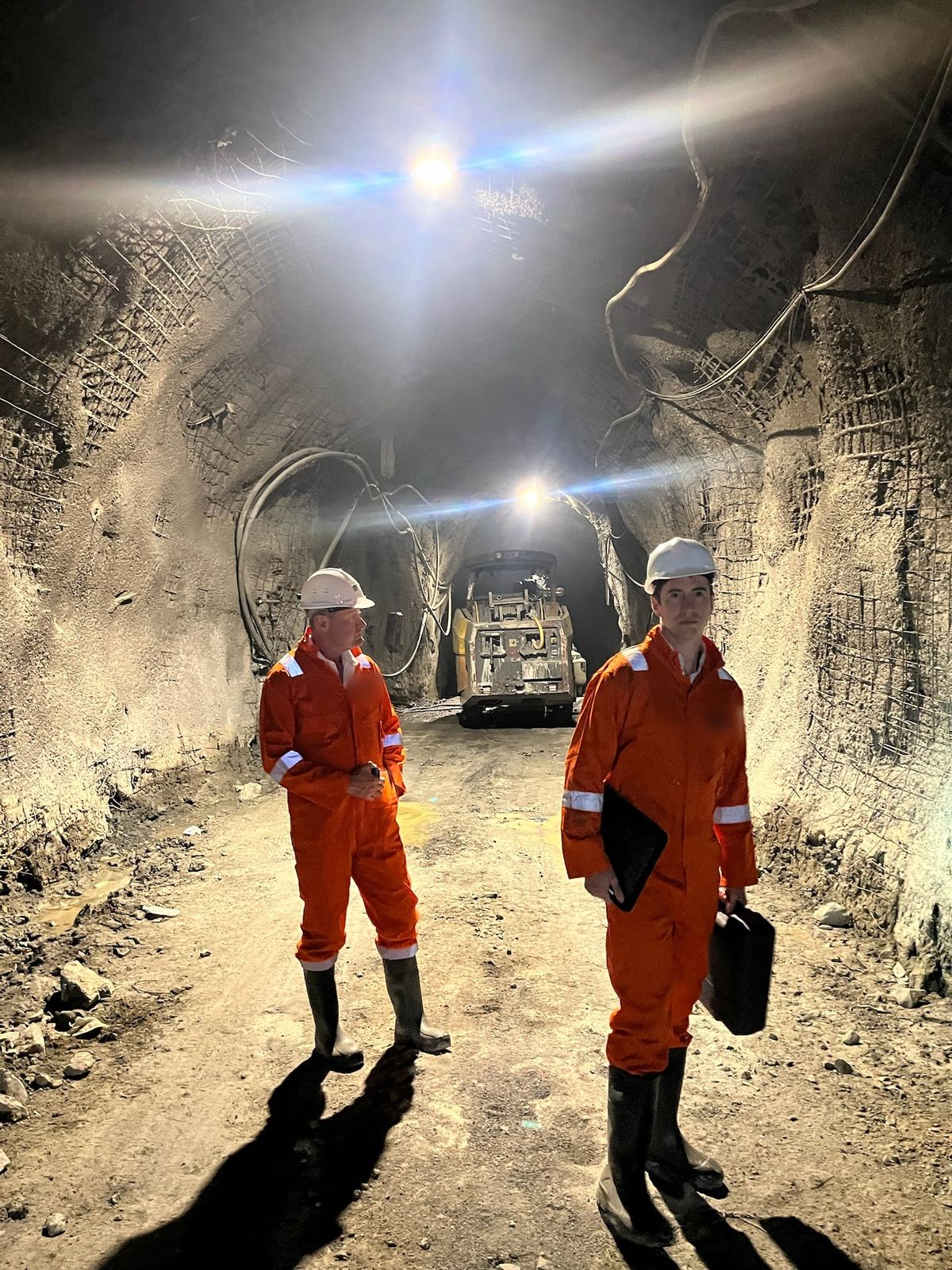
Your Electricity Bill Is Lying to You
Behind the mills and crushers, your mine runs conveyor drives, pump stations, dewatering pumps, ventilation fans, compressed air, processing auxiliaries and camp power around the clock. Every one of them draws distorted or reactive current, and part of every kilowatt-hour you pay for never does useful work. It becomes heat, in your cables, your transformers and your motor windings.
It doesn't appear on your bill as a line of its own. It shows up as higher consumption, power-factor penalties, capacity charges and equipment that ages faster than it should. The main drives on mills, crushers and hoists are often medium-voltage, and those are outside HarmoniQ's range: this page is about the low-voltage side of the site.
10–20%
Typical saving in kilowatt-hours on the low-voltage loads of a mine, by preventing the losses before they occur
Where the Waste Starts in a Mine
Three problems account for most of it, and each has a unit that sits where the problem starts.
Harmonic distortion
Conveyor and pump drives
Variable-speed drives on conveyors, pumps and fans draw current in sharp pulses. The 5th and 7th harmonics ripple through the low-voltage network, heating cables, transformers and motor windings.
FittedHarmoniQ Delta, at the drives
Reactive power
Motors and compressors
Induction motors on conveyors, pumps, fans and compressors draw current that does no work but still has to be supplied, inflating the apparent power you are billed for and the capacity you have to reserve.
FittedHarmoniQ Alpha at each machine, HarmoniQ Sigma at the incomer
Phase imbalance
Camp and workshop loads
Camp power, workshops and single-phase auxiliaries leave the three phases uneven. Uneven phases leave some cables carrying more than their share and set up counter-rotating fields in your motors: heat without torque.
FittedHarmoniQ Alpha, at the load
Same Machines. Less Power.
With the waste prevented on the low-voltage side, the same mine makes the same output on fewer kilowatt-hours, with power-factor penalties gone and capacity charges lower too. Where medium-voltage drives carry much of the load, the saving is smaller, and our engineers will say so first.
- Energy savings · kWh
- 10–20%
- Power factor
- 0.98+
- Equipment life · Arrhenius
- 2–4×
- Operational disruption
- 0
What We Hear, and the Reality
We hear
“Our grid connection is weak. There's nothing we can do about power quality.”
The reality
Distorted and reactive current does more harm on a weak supply, so it matters more there, not less. HarmoniQ stops both where they start, so less of it has to be carried by the supply, and the on/off test shows the result at your own meter.
We hear
“We already have harmonic filters on our mills.”
The reality
Those filters treat the mills. HarmoniQ works on the low-voltage loads they do not reach: conveyors, pumps, fans and compressors. It complements your existing filters rather than replacing them.
We hear
“Power quality is a minor issue next to our fuel and processing costs.”
The reality
Electricity is part of that cost, and this part can be cut without changing the process. HarmoniQ prevents the waste on the low-voltage loads, and the on/off test shows the kilowatt-hours saved at your own meter.
Three Steps. Zero Disruption.
01 · Assess
Measure the network
Our engineers measure your low-voltage network, from the conveyors to the camp, and show you where energy is being wasted, before anything is fitted.
02 · Install
Fit alongside your circuits
Each unit goes in where its problem starts, connected in parallel, with production running.
03 · Prove
Test it on and off
The on/off test proves the saving at your own meter, before any annual figure is quoted.
See What HarmoniQ Can Do for Your Mine
Our engineers will measure your site and show you exactly where energy is being wasted, and how much of it HarmoniQ can prevent.