
In brief
- Every early replacement of a motor, transformer or cable repeats the carbon, materials and waste of making one, and few sustainability reports count it.
- Insulation life is set by temperature: by the Arrhenius rule, every 10 °C cooler roughly doubles it. Harmonic current, reactive current and phase imbalance all add heat.
- Double equipment life and a fleet needs half the replacements; quadruple it and it needs a quarter. That is copper, steel, embodied carbon and waste that never happen.
- The benefit shows up in Scope 3 capital goods, in GRI disclosures and at the top of the waste hierarchy. By the same rule, HarmoniQ extends downstream equipment life 2–4×.
Corporate sustainability programmes spend a great deal of effort on energy consumption: LED retrofits, building management systems, renewable energy procurement. These are visible, measurable and convenient, and they make excellent slides in an annual sustainability report.
But in many industrial facilities there is a category of environmental impact that rarely reaches an ESG strategy meeting: the embodied carbon and waste of replacing equipment before its time.
Every time a motor, transformer, cable run or switchgear assembly is replaced early, the full environmental cost of making, transporting and installing its replacement is paid again. The raw materials, copper, steel, aluminium, insulation resins and, in permanent-magnet motors, rare-earth magnets, must be mined, smelted, machined and shipped. The old equipment must be taken out, dismantled, and recycled or scrapped.
The question this article asks is simple: what if the existing equipment lasted two, three or even four times as long? Not through heroic maintenance or wishful thinking, but through a well-understood mechanism: reducing the heat that shortens equipment life in the first place.
The mechanism is power-quality correction. The science is the Arrhenius equation, applied to the ageing of insulation. The ESG implications are substantial, and almost entirely overlooked.
01The hidden environmental cost of equipment replacement
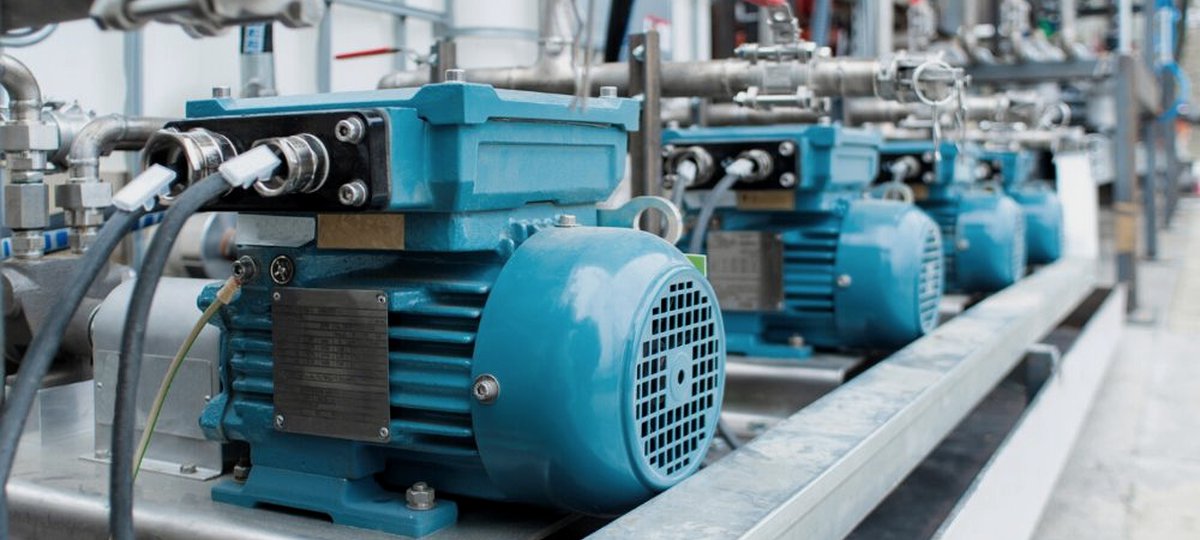
To see the scale of the opportunity, consider the embodied impact of a single piece of industrial electrical equipment: a 200 kW three-phase induction motor, a workhorse of manufacturing.
A motor of this rating is a substantial machine. Its stator and rotor laminations are electrical steel, its windings copper, its rotor bars aluminium and its insulation a system of resins and varnishes, all inside a heavy cast frame. Making it means smelting steel, refining copper, machining, vacuum-impregnating the windings, assembling and testing: energy-intensive steps, much of their energy still from fossil fuels.
The emissions from every one of those steps, from the mine to the test bay, are the motor’s cradle-to-gate footprint: carbon emitted before the motor ever turns. Where a manufacturer publishes an environmental product declaration for a motor, that is the figure it states.
Now scale it to a facility. A mid-sized manufacturing plant may run dozens of motors, from a few kilowatts to several hundred, alongside distribution transformers, kilometres of copper cable, switchgear and distribution boards. The copper and steel in its electrical infrastructure are counted in tonnes.
Each replacement cycle brings not only the embodied carbon of new manufacture, but the emissions of transport, often intercontinental, of installation, with cranes, specialist labour and commissioning, and of disposing of the old equipment. Recycling, valuable as it is, returns only part of the material in end-of-life equipment. The rest is lost to slag, landfill or lower-grade uses.
The pointThe environmental cost of equipment replacement is real, large and recurring. Every year of additional service life puts it off, and every doubling of life halves it.
02How power quality affects equipment life
The failure mechanism that heat controls is insulation degradation. Steel rarely wears out; what ages is the insulation separating energised conductors from the frame and from each other. Motors also wear at their bearings, and often fail there, but the insulation is the part whose life is set by temperature. When it breaks down, the result is a short circuit, and the equipment is rewound at significant cost or scrapped.
The rate at which insulation degrades is governed primarily by temperature. Svante Arrhenius described how temperature drives the rate of a chemical reaction in 1889, and electrical engineers have relied on the relationship for decades. Two standards codify it:
- IEEE Std 1-2021, IEEE Standard for General Principles for Temperature Limits in the Rating of Electrical Equipment, sets the thermal rating framework behind equipment ratings wherever IEEE standards govern.
- IEC 60085:2007, Electrical Insulation: Thermal Evaluation and Designation, classifies insulation systems by their thermal endurance.
The practical rule drawn from the Arrhenius equation is widely known as the 10-degree rule:
The Arrhenius rule
For every 10 °C reduction in operating temperature, the thermal life of electrical insulation roughly doubles. Every 10 °C increase halves it.
The 10 °C interval is a rule of thumb, and the true figure varies with the material: the paper in an oil-filled transformer halves its life every 6 °C, under IEC 60076-7. The exponential law beneath it is not in doubt. Decades of accelerated ageing tests on Class B, F and H insulation systems have characterised it, and it is documented in IEEE Std 101, the IEC 60216 series and Dakin’s 1948 paper on thermal degradation.
The relationship is exponential, so each further 10 °C of reduction doubles the life again. Exhibit 1 sets out the multiples for a hypothetical insulation system that lasts 15 years at the temperature it runs today.
Bars to one scale, 0 to 4×. Each 10 °C taken out doubles the thermal life, so 3× takes about 16 °C (10 × log2 3). Years are for a hypothetical insulation system with 15 years of thermal life at its present temperature; bearings and other wear set their own limits.
The practical upper bound is set by ambient temperature, by load-dependent heating, and by the fact that insulation also ages in other ways, mechanical, chemical and electrical, which take over at very long timescales.
The question, then, is what sets the operating temperature of industrial electrical equipment. Load and ambient temperature set the baseline. Three power-quality problems add to it.
1. Harmonic distortion
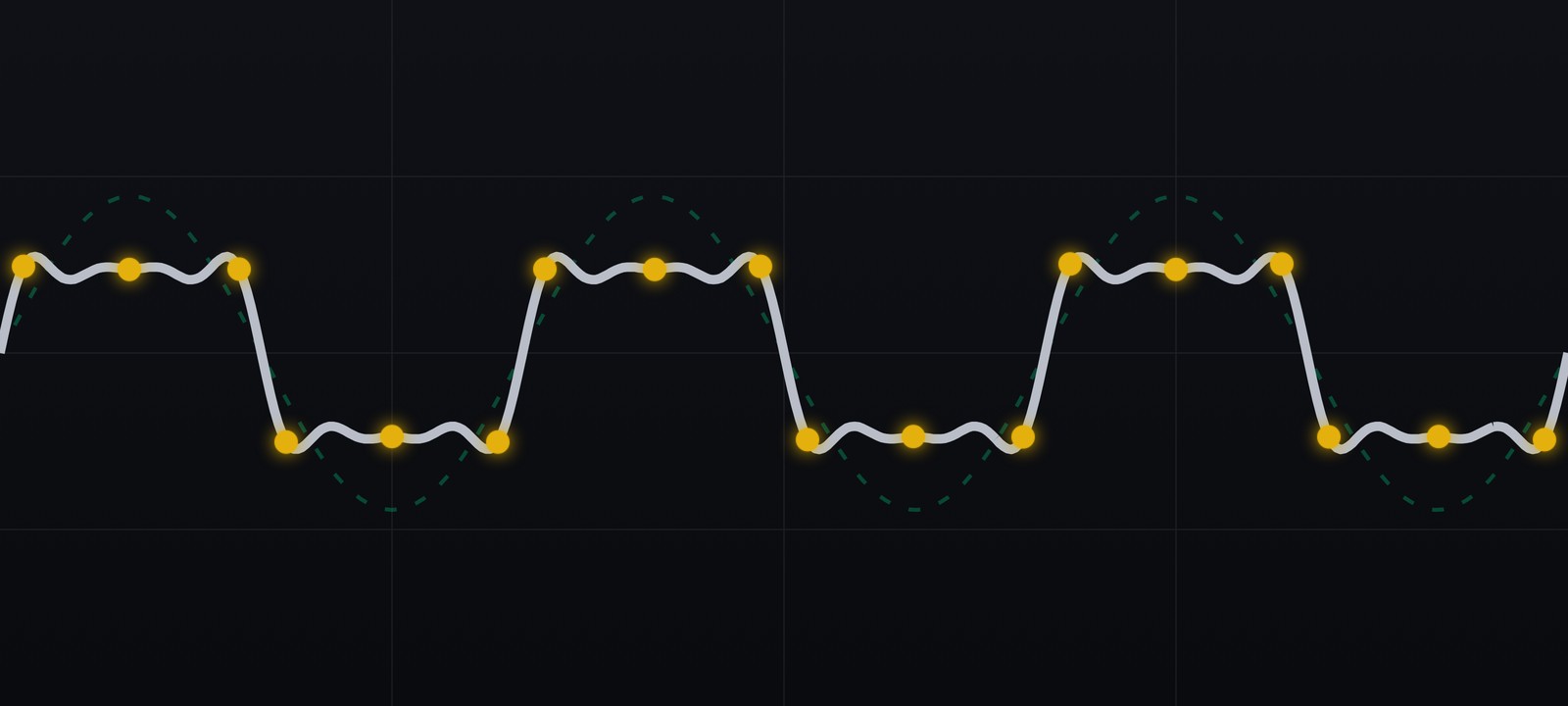
Non-linear loads, variable-speed drives, rectifiers, switch-mode power supplies and LED drivers, draw current in distorted waveforms that contain harmonics: multiples of the 50 or 60 Hz fundamental. Those harmonic currents flow through the whole distribution system and add heat in three ways:
- More I²R loss. Total RMS current rises with harmonic content. Current with 30% THD carries about 4.4% more RMS current than its fundamental alone, √(1 + 0.3²), and so about 9% more resistive heat.
- Skin and proximity effects. Higher-frequency current crowds towards the surface of a conductor and induces losses in the conductors beside it, so a cable’s resistance at the 5th harmonic, 250 or 300 Hz, is higher than at the fundamental, noticeably so in the large conductors of an industrial installation. At the 11th it is higher again.
- Eddy-current loss in windings. A winding’s eddy-current loss rises with the square of the harmonic order, so per unit of current the 5th harmonic makes 25 times the eddy-current loss of the fundamental. That is the weighting IEEE C57.110 applies to transformers.
IEEE C57.110 sets out how to calculate the extra heating that harmonics cause in a transformer, through a harmonic loss factor, and how far to derate it. Under heavy current distortion, the winding hot spot can run well above its rated temperature for a sinusoidal load, and by the Arrhenius rule 10 °C of excess at least halves the insulation’s life.
2. Power factor and reactive current
A facility at a power factor of 0.70 draws about 43% more current from the supply than one at unity, for the same useful load: 1 ÷ 0.70 is 1.43. The extra current is reactive. It does no useful work, but it makes real resistive heat in every cable, connection, busbar and winding it flows through, and since that heat rises with the square of the current, it is about twice the heat: 1.43² is 2.04.
3. Phase imbalance
When the three phases are unevenly loaded, the neutral carries current that would cancel in a balanced system, and three-phase motors see negative-sequence current. It sets up a magnetic field turning against the rotor, which induces rotor currents at about twice the supply frequency: heat in the rotor, with no torque to show for it.
In most industrial plants these three problems do not act alone. They compound, and the heat they add together is the heat the Arrhenius rule counts against the equipment’s life.
A motor that fails at year 12 is not wearing out. It is being cooked: by harmonic current, reactive current and phase imbalance, all of which can be corrected.
03The conservative case: 2× life extension
Before the higher cases, it is worth establishing what is conservatively achievable: the baseline even the most sceptical engineer should accept.
A 2× extension needs a 10 °C reduction in operating temperature. That is a single Arrhenius doubling, supported by decades of laboratory and field data. The more harmonic and reactive current a site carries today, the more heat there is to take out.
Worked exampleTake a hypothetical mid-sized manufacturing facility: 50 motors of various ratings, about 3 MW installed in total, four distribution transformers and 12 km of distribution cabling, running at an average current THD of 15% and a power factor of 0.82, unremarkable figures for a site with a moderate share of variable-speed drives. Suppose its motors’ insulation lasts 15 years at the temperature it runs today. Take 10 °C out, and the rule gives 30. Over 60 years of operation, the plant then buys 100 motors rather than 200: a hundred motors never manufactured.
To put that in carbon, multiply the motors not made by each one’s cradle-to-gate footprint: from the manufacturer’s EPD where there is one, and otherwise from average data for the motor’s mass and materials, as the GHG Protocol’s Scope 3 guidance allows. The same goes for the copper, the steel and the end-of-life waste each one would have brought.
The count is deliberately narrow. It covers motors only, leaving out the transformers, cables and switchgear whose insulation ages by the same rule, and it says nothing about the electricity itself. The same correction cuts the kilowatt-hours a site draws, and those come off its Scope 2 emissions every year, on top.
The conservative case is not speculative. It is the direct consequence of taking 10 °C out of equipment whose life is thermally limited.
Why 2× matters even if 4× is achievable
Sceptics will argue that real equipment life depends on much more than heat: mechanical wear, contamination, electrical transients, the quality of maintenance. That is true, and it is exactly why the 2× case is the conservative baseline. Even if correcting power quality left every other ageing mechanism untouched, the thermal ageing of insulation alone follows the rule, and anything beyond 2× is upside.
For a sustainability report, the 2× case is the defensible place to start: a single doubling, under a rule codified in IEEE and IEC standards.
04The higher case: 3–4× life extension
The 2× case applies to facilities with moderate power quality problems. But many industrial facilities operate in significantly worse conditions.
Facilities with large populations of variable-speed drives, welding equipment or heavy rectifier loads can carry heavily distorted current, and there harmonic heating adds far more to operating temperatures than it does on a clean supply.
Where correction takes 20 °C out, the rule gives a 4× extension. That is the upper bound worth claiming in a sustainability report: beyond it, bearing wear, shaft fatigue and contamination begin to limit useful life, whatever the state of the insulation.
| Case | Heat taken out | Life multiple | Insulation life | Motors per 60 years | Motors never made |
|---|---|---|---|---|---|
| As it runs today | — | 1× | 15 years | 200 | — |
| Conservative | 10 °C | 2× | 30 years | 100 | 100 |
| Moderate | About 16 °C | 3× | 45 years | 67 | 133 |
| Higher | 20 °C | 4× | 60 years | 50 | 150 |
Motors are counted at the average rate, the 50-motor fleet times 60 years, divided by its life, so the moderate case’s 67 is 50 × 60 ÷ 45. The range matters, because it lets a sustainability team choose the case that fits its site. The worse a site’s power quality today, the more heat there is to take out, and the further towards 4× it can go. Whichever case is reported, it should rest on measurement:
- Measure current THD, power factor and phase balance at the incomer and the main boards, before and after correction.
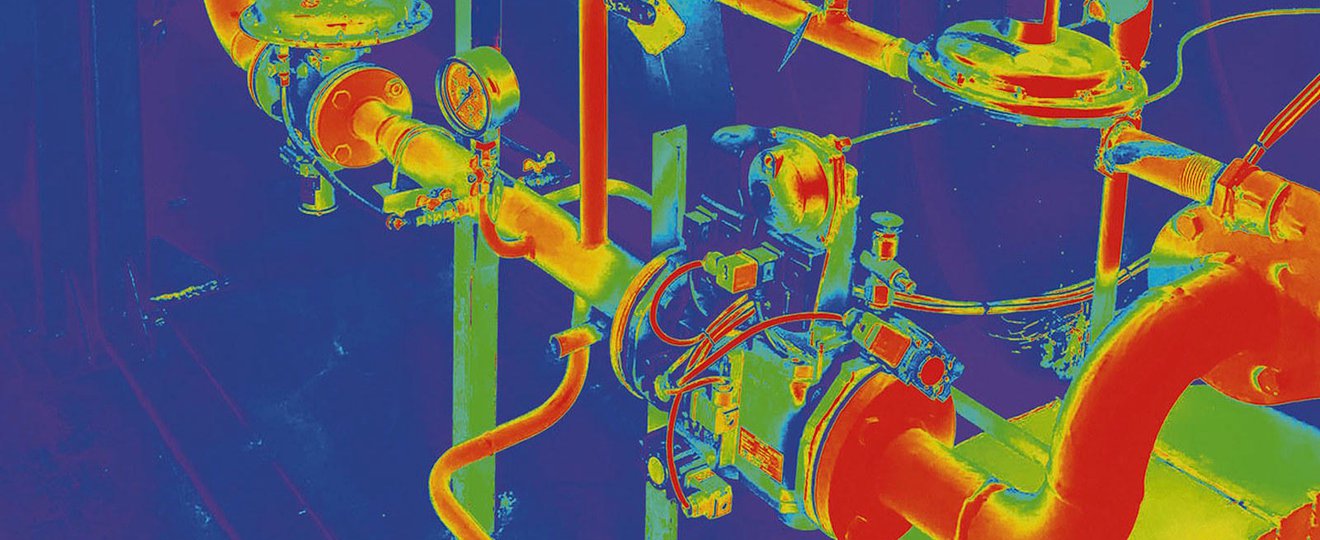
- Survey winding and conductor temperatures with a thermal camera at the same load points, at similar loading, before and after.
- Apply the rule to the measured fall in temperature, class by class, and report the multiple it gives.
The point for ESG reporting is that even the conservative 2× case halves the equipment a site has to replace, and with it the emissions and waste of making it. The 3× and 4× cases are upside for sites with worse power quality, backed by the same physics.
05ESG reporting implications
Equipment life extension maps onto several of the major ESG reporting frameworks. The alignment is direct, but it takes some understanding of where each framework captures the impact.
Scope 3, Category 2: capital goods
Under the GHG Protocol’s Corporate Value Chain (Scope 3) Standard, Category 2, Capital Goods, covers the cradle-to-gate emissions of the capital equipment a company buys. Motors, transformers, switchgear and cables are capital goods, and the standard counts each one’s emissions in full in the year it is bought, rather than spreading them over its life.
Many industrial organisations report Scope 1, their direct emissions, and Scope 2, the emissions of the energy they buy, but treat Scope 3 as optional or estimate it crudely. Category 2 is often among the least reported, because it needs life-cycle data for every piece of equipment bought. Yet for a capital-intensive manufacturer it can be a material share of Scope 3.
Extending equipment life 2× halves how often it is bought, and with it the Category 2 emissions those purchases add. IFRS S2 includes Scope 3 among its required disclosures, as does ESRS E1 under the EU’s Corporate Sustainability Reporting Directive (CSRD), which makes equipment life a lever a reporting company can quantify and audit.
GRI Standards
The Global Reporting Initiative addresses equipment life extension through three of its standards:
- GRI 301: Materials. Longer equipment life reduces the copper, steel, aluminium and insulation resin consumed per unit of output over time, which Disclosure 301-1, materials used by weight or volume, reports.
- GRI 306: Waste. Every replacement avoided is waste never generated. Disclosures 306-3, waste generated, and 306-5, waste directed to disposal, fall by the mass of equipment that would otherwise have been scrapped.
- GRI 305: Emissions. The embodied carbon avoided belongs in Disclosure 305-3, other indirect (Scope 3) GHG emissions.
SASB and the TCFD
SASB’s industry standards, now maintained by the ISSB, include metrics on energy management, waste and materials efficiency for capital-intensive sectors, and equipment life extension contributes to all three. Under the TCFD’s framework, which IFRS S2 carries forward, longer equipment life is a transition opportunity in the resource-efficiency category: less capital spent on replacement equipment, and lower emissions intensity with it.
The EU Taxonomy and the CSRD
The EU Taxonomy Regulation names the transition to a circular economy as one of its six environmental objectives, and counts increasing the durability of products among the ways an activity can contribute to it. Whether a given measure is Taxonomy-aligned turns on the technical screening criteria in its delegated acts, so that is a question for the reporting company and its advisers. Either way, equipment life extension is the kind of action ESRS E5, the CSRD’s standard on resource use and the circular economy, asks companies to describe.
06The circular economy angle
The waste hierarchy, set in law by the EU Waste Framework Directive and followed widely beyond it, ranks the ways of handling waste by environmental preference. Prevention comes first, then preparing for re-use, then recycling, then other treatment such as energy from waste, with disposal last. Prevention is universally acknowledged as the most effective, yet it gets the least attention in practice, because it is harder to measure and less visible than a recycling programme.
| Level | What it means for a motor |
|---|---|
| Prevention Life extension | Keep it in service longer, so no replacement is made |
| Preparing for re-use | Repair, rewind or refurbish it, and put it back to work |
| Recycling | Strip it for its copper, steel and aluminium, to be remelted |
| Other treatment | Energy from waste: rarely relevant, as a motor is mostly metal |
| Disposal | Landfill: the least preferred |
Equipment life extension is the purest form of waste prevention open to an industrial facility. It does not recycle the motor or remanufacture the transformer. It removes the need for a replacement in the first place. In the language of the circular economy, it keeps the product in use for longer: the highest-value circular strategy.
The waste hierarchy puts prevention before recycling. Extending equipment life is not recycling or re-use. It is prevention, the top of the hierarchy, and it needs no change to the equipment itself and no operational disruption. It needs better electricity.
The Ellen MacArthur Foundation’s model of the circular economy names maintaining and prolonging use as a core strategy for keeping technical materials in circulation. Power-quality correction achieves it passively: by removing the electrical stress that speeds up ageing, it lets equipment last longer without any physical work on the equipment itself.
The distinction is worth emphasising. Most circular-economy strategies act on the product: redesigning it for longevity, setting up take-back schemes, creating remanufacturing processes. Equipment life extension through power quality acts on the environment the product works in. It is a systemic intervention rather than a product-level one, and it benefits the equipment across a network at once.
The material impact at scale
The International Energy Agency estimates that electric motor-driven systems account for between 43% and 46% of all global electricity consumption, and the industrial motor fleet behind them runs to hundreds of millions of machines, every one of them made of copper, steel and aluminium.
If even a fraction of that installed base achieved a 2× life extension, the fall in demand for copper and steel, and in the emissions of making motors, would be substantial. Analyses of the circular economy, such as the Ellen MacArthur Foundation’s Completing the Picture, count keeping products in use for longer among the main levers on the emissions that materials carry.
The impact at any one facility can be worked out from its equipment inventory, its operating conditions and its measured power quality.
Beyond motors: transformers, cables and switchgear
The analysis above focuses on motors because they are the most numerous and most studied category of industrial electrical equipment. But the Arrhenius relationship applies to anything whose life is limited by its insulation:
- Distribution transformers hold large masses of copper or aluminium and core steel, and oil-filled ones insulating oil as well. IEC 60076-7 gives the thermal ageing model for oil-immersed transformers, and IEC 60076-12 for dry-type ones, and both follow Arrhenius kinetics.
- Power cables are insulated with XLPE or PVC, and both degrade with heat. IEC 60287 sets a cable’s current rating from its maximum conductor temperature, so reducing the current, by correcting power factor and harmonics, lowers the conductor temperature and extends the life of its insulation.
- Switchgear and contactors run hotter on harmonic current, which speeds both contact erosion and insulation ageing. Reducing harmonic content extends contact life and stretches the intervals between overhaul and replacement.
Counted across the whole electrical infrastructure, not just the motors, the embodied carbon and waste that a 2× extension avoids is larger again.
07The bottom line
The ESG case for equipment life extension rests on three pillars, each supported by established science and standards:
- The physics is settled. The Arrhenius relationship between temperature and insulation life is one of the most thoroughly validated in electrical engineering, codified in IEEE Std 1, IEC 60085 and IEC 60216, and applied across every insulation class. A 10 °C reduction doubles life; a 20 °C reduction quadruples it.
- The power quality connection is direct. Harmonic distortion, reactive current and phase imbalance cause measurable extra heating in motors, transformers, cables and switchgear. Take that heat out, and the rule gives the life back.
- The ESG impact is material. The embodied carbon, raw materials and waste avoided by doubling or quadrupling equipment life are substantial for a single facility, and very large across the world’s motor fleet.
How HarmoniQ extends equipment life
HarmoniQ removes the harmonic current, reactive current and phase imbalance that make the heat. By the Arrhenius rule, that is the basis of its 2–4× extension in downstream equipment life.
At the load
HarmoniQ Alpha
Fitted at each machine, it cleans the current where it is drawn, so every cable upstream carries less of it and runs cooler.
At the drives
HarmoniQ Delta
Fitted at the drives panel, it cleans the current where the drives distort it, before it spreads to the feeder, busbar and transformer.
At the incomer
HarmoniQ Sigma
At the main switchgear, it corrects reactive current where the network meets the grid, so the supply and the meter see cleaner current.
All three are shunt-connected, outside the main power path, so they install with zero operational disruption and no change to the machines themselves. The same correction means 10–20% fewer kWh for the same output, so the energy a site no longer draws comes off its Scope 2 emissions too.
For sustainability teams looking for emission-reduction levers that need no operational disruption and no change in behaviour, equipment life extension through power-quality correction holds an unusual position. It delivers genuine, measurable, standards-aligned reductions in emissions and waste, while also cutting energy consumption and operating costs.
The most sustainable equipment is the equipment that does not need to be replaced. The way there is better power quality.
Sources and further reading
- Arrhenius, S. (1889), “Über die Reaktionsgeschwindigkeit bei der Inversion von Rohrzucker durch Säuren”, Zeitschrift für physikalische Chemie, vol. 4, pp. 226–248.
- IEEE Std 1-2021, IEEE Standard for General Principles for Temperature Limits in the Rating of Electrical Equipment, Institute of Electrical and Electronics Engineers.
- IEC 60085:2007, Electrical Insulation: Thermal Evaluation and Designation, International Electrotechnical Commission.
- IEC 60216 series, Electrical Insulating Materials: Thermal Endurance Properties, International Electrotechnical Commission.
- IEEE Std 101, IEEE Guide for the Statistical Analysis of Thermal Life Test Data, Institute of Electrical and Electronics Engineers.
- Dakin, T. W. (1948), “Electrical Insulation Deterioration Treated as a Chemical Rate Phenomenon”, AIEE Transactions, vol. 67, no. 1, pp. 113–122.
- IEEE Std C57.110-2018, IEEE Recommended Practice for Establishing Liquid-Immersed and Dry-Type Power and Distribution Transformer Capability When Supplying Nonsinusoidal Load Currents.
- IEC 60076-7:2018, Power Transformers, Part 7: Loading Guide for Mineral-Oil-Immersed Power Transformers, and IEC 60076-12:2008, Part 12: Loading Guide for Dry-Type Power Transformers, International Electrotechnical Commission.
- IEC 60287 series, Electric Cables: Calculation of the Current Rating, International Electrotechnical Commission.
- GHG Protocol (2011), Corporate Value Chain (Scope 3) Accounting and Reporting Standard, World Resources Institute and World Business Council for Sustainable Development.
- GHG Protocol (2013), Technical Guidance for Calculating Scope 3 Emissions, World Resources Institute and World Business Council for Sustainable Development.
- ISO 14025:2006, Environmental Labels and Declarations: Type III Environmental Declarations, Principles and Procedures, ISO, Geneva.
- Global Reporting Initiative, GRI 301: Materials 2016, GRI 305: Emissions 2016 and GRI 306: Waste 2020.
- IFRS Foundation (2023), IFRS S2 Climate-related Disclosures, International Sustainability Standards Board.
- Commission Delegated Regulation (EU) 2023/2772, European Sustainability Reporting Standards: ESRS E1, Climate change, and ESRS E5, Resource use and circular economy.
- Regulation (EU) 2020/852, on the establishment of a framework to facilitate sustainable investment (the EU Taxonomy Regulation), Article 13.
- Directive 2008/98/EC, on waste (the EU Waste Framework Directive), Article 4: the waste hierarchy.
- Ellen MacArthur Foundation and Material Economics (2019), Completing the Picture: How the Circular Economy Tackles Climate Change.
- International Energy Agency (2011), Energy-Efficiency Policy Opportunities for Electric Motor-Driven Systems, IEA Energy Papers No. 2011/07, OECD Publishing, Paris.