In brief
- Electric vehicles, heat pumps, data centres and green hydrogen are arriving on the electricity system together, as electricity takes over work long done by burning fuel.
- Almost all of the new load draws current through power electronics, in pulses rather than smooth sine waves, so harmonic distortion rises with it.
- Networks built decades ago for steady, linear load now face more demand, more distortion and longer queues to connect, and their rising cost reaches industrial sites through network charges.
- With HarmoniQ, a facility typically uses 10–20% fewer kWh for the same output, with power factor corrected to 0.98+, and frees apparent power on the connection it already has.
Something fundamental is shifting in the global energy system. For most of its history, electricity has carried only a minority of the energy the world uses; the rest still arrives as fuel, burned directly in engines, boilers and furnaces. That is now changing, and it is not going to stop.
The International Energy Agency’s outlooks have electricity taking a larger share of final energy in every scenario, displacing fuel burned directly in transport, heating and industrial processes at a scale never attempted before.
This is not a distant scenario. The acceleration is already under way. Electric car sales rose 35% in 2023. Heat pumps are replacing fossil-fuel boilers in homes and buildings across Europe. The IEA expects that electricity use by data centres could double by 2026, and electrolysers for green hydrogen are scaling up from a small base. Each of these trends alone would be significant. Together, they represent a structural change in the demand side of the electricity system.
For industrial facilities, from factories and processing plants to logistics hubs and commercial buildings, this change brings challenges most energy managers have not yet fully accounted for: higher grid charges, more competition for connection capacity, deteriorating power quality and rising exposure to the cost of peak demand. And, critically, a sharper need to make the most of the electricity they already buy.
This article examines the electrification megatrend, what it means for the electrical infrastructure industrial facilities depend on, and why power quality is becoming a strategic concern rather than a technical afterthought.
01The electrification megatrend
Global electricity demand has grown for decades, but the next phase is different in kind. The IEA’s World Energy Outlook 2023 has demand climbing steadily to mid-century under stated policies, and faster still in its net-zero pathway, where electricity becomes the main lever for decarbonisation across nearly every sector of the economy.
The growth is not driven by population or economic expansion alone. It comes from the deliberate substitution of electricity for fossil fuels in sectors that have historically burned them directly. The four largest drivers are well documented, but their combined scale is often underestimated.
Electric vehicles
Almost 14 million new electric cars were registered worldwide in 2023, 35% more than in 2022, according to the IEA’s Global EV Outlook 2024. The electricity needed to charge them is substantial: a single rapid charger running at 150 kW draws as much power as a small factory.
Heat pumps
The electrification of heating is accelerating across Europe, North America and parts of Asia, and net-zero pathways depend on it. A home heat pump adds a few kilowatts of peak demand; commercial and industrial units draw far more. At scale, and concentrated in the coldest hours, the combined load on distribution networks is substantial.
Data centres and artificial intelligence
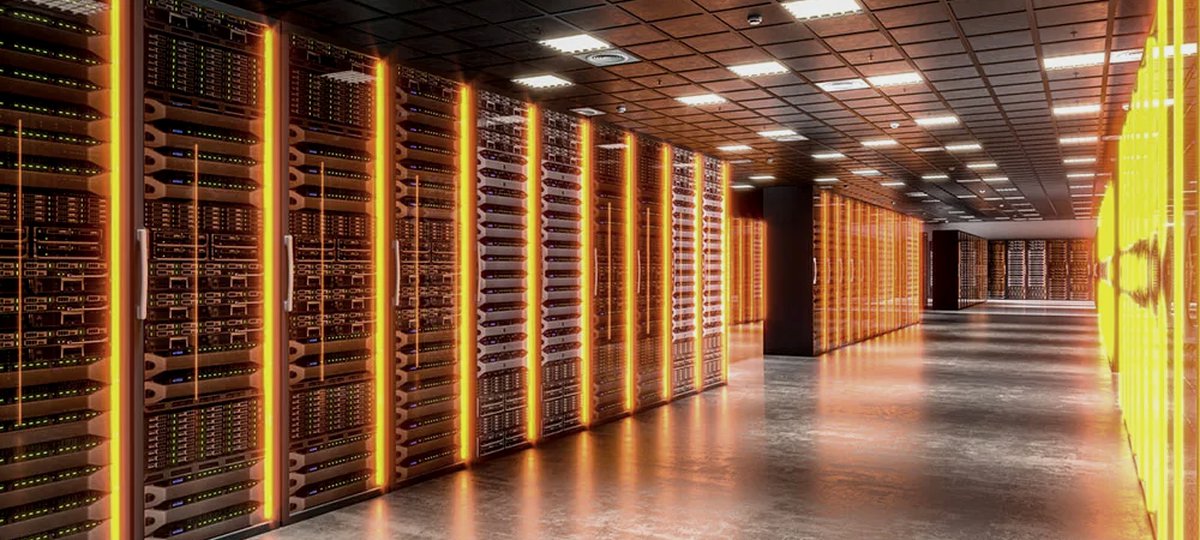
The IEA estimates that data centres, cryptocurrency and artificial intelligence used about 460 TWh of electricity in 2022, almost 2% of global demand. By 2026 that could pass 1,000 TWh, at the top of the IEA’s range, as the computing behind artificial intelligence grows.
Green hydrogen and electrolysis
Electrolytic hydrogen is the emerging giant of electricity demand. A gigawatt-scale electrolyser plant draws as much power as a large aluminium smelter, and net-zero pathways, IRENA’s among them, rely on hydrogen at a scale that would need vast amounts of dedicated renewable electricity. The near-term pipeline is far smaller, but the direction is set.
| Driver | Where it stands | How it draws power |
|---|---|---|
| Electric vehicles | Almost 14 million electric cars sold in 2023, 35% more than in 2022 (IEA) | Through a rectifier, on board the car or in a rapid charger |
| Heat pumps | Replacing fossil-fuel boilers across Europe, North America and parts of Asia | Variable-speed compressors fed by inverters |
| Data centres and AI | About 460 TWh in 2022, almost 2% of world demand; could pass 1,000 TWh by 2026 (IEA) | Switched-mode power supplies, often behind a double-conversion UPS |
| Green hydrogen | Small today; central to net-zero pathways, IRENA’s among them | High-power rectifiers feeding the electrolyser stacks |
The aggregate picture is clear. The world is not merely adding electricity consumption at the margin. It is rewiring its energy system around electricity as the main carrier, and every new load on the list draws its power through power electronics, a point section 03 returns to.
02What this means for industrial facilities
For industrial and commercial facilities, the megatrend has consequences that reach well beyond rising energy costs. It is reshaping the conditions under which they buy and use electricity.
Higher grid charges and competition for capacity
As total demand rises, transmission and distribution networks must expand, and the expansion is paid for through network charges on connected customers: TNUoS and DUoS in the UK, Netzentgelte in Germany. Many of these charges are set by capacity or by peak demand, so they fall hardest on sites that draw high peak loads, and as the investment cycle intensifies they are likely to keep rising.
At the same time, connection capacity is becoming scarce. In Great Britain, the queue of projects waiting to connect to the transmission network passed 700 GW in 2024, most of it generation and storage, and National Grid ESO has offered some projects connection dates more than ten years away. Similar bottlenecks are emerging in Germany, the Netherlands, Ireland and parts of the United States. For an industrial site, securing more capacity, or even keeping the allocation it has, is becoming a strategic question.
- Waiting to join Great Britain’s transmission network, 2024 (National Grid ESO)
- 700+ GW
- How far off some offered connection dates now are
- 10+ years
Power quality degradation
This is the dimension most energy managers have not yet fully grasped. The megatrend is not simply adding more load to the grid. It is adding a different type of load: one that distorts the current waveform and injects harmonic currents into the network.
EV chargers, heat pump inverters, data centre power supplies and electrolysers all use power electronics to convert electricity. They are non-linear loads: they draw current in pulses rather than smooth sine waves. Every rapid charger, every variable-frequency drive and every switching power supply adds harmonic distortion, and as the share of non-linear load rises, so does the harmonic content every connected facility shares.
Rising exposure to the cost of peak demand
Utilities and system operators are adding time-of-use tariffs, demand-side response and capacity mechanisms to manage the gap between demand and available supply. Facilities that cannot reduce or shift their demand at peak face rising costs. The UK’s Capacity Market and schemes like it are designed to pass the cost of peak demand to the consumers who create it.
The duck curve and grid strain
The “duck curve”, first charted by the California Independent System Operator, CAISO, shows a structural problem on grids with a lot of solar. At midday, solar output pushes net demand down to very low levels. As the sun sets, net demand climbs steeply to an evening peak, just as solar output falls away and electrified heating, cooking and EV charging rise together.
The steep evening ramps stress generation, transmission and distribution alike. For industrial facilities, the duck curve means wider gaps between peak and off-peak prices and a costlier evening peak. It is no longer confined to California: the same shape appears wherever solar grows fast.
03The power quality dimension
Power quality covers several measurable characteristics of an electricity supply: voltage level and variation, frequency, harmonic distortion, power factor and transient events. On a network of predominantly linear loads, such as resistive heaters, incandescent lighting and synchronous motors, power quality is naturally high. The voltage waveform is clean, current is drawn as a sine wave, and power factor is close to unity.
The electrification megatrend is steadily eroding those conditions.
The proliferation of non-linear loads
Non-linear loads draw current in a pattern that does not follow the sinusoidal shape of the supply voltage. They include:
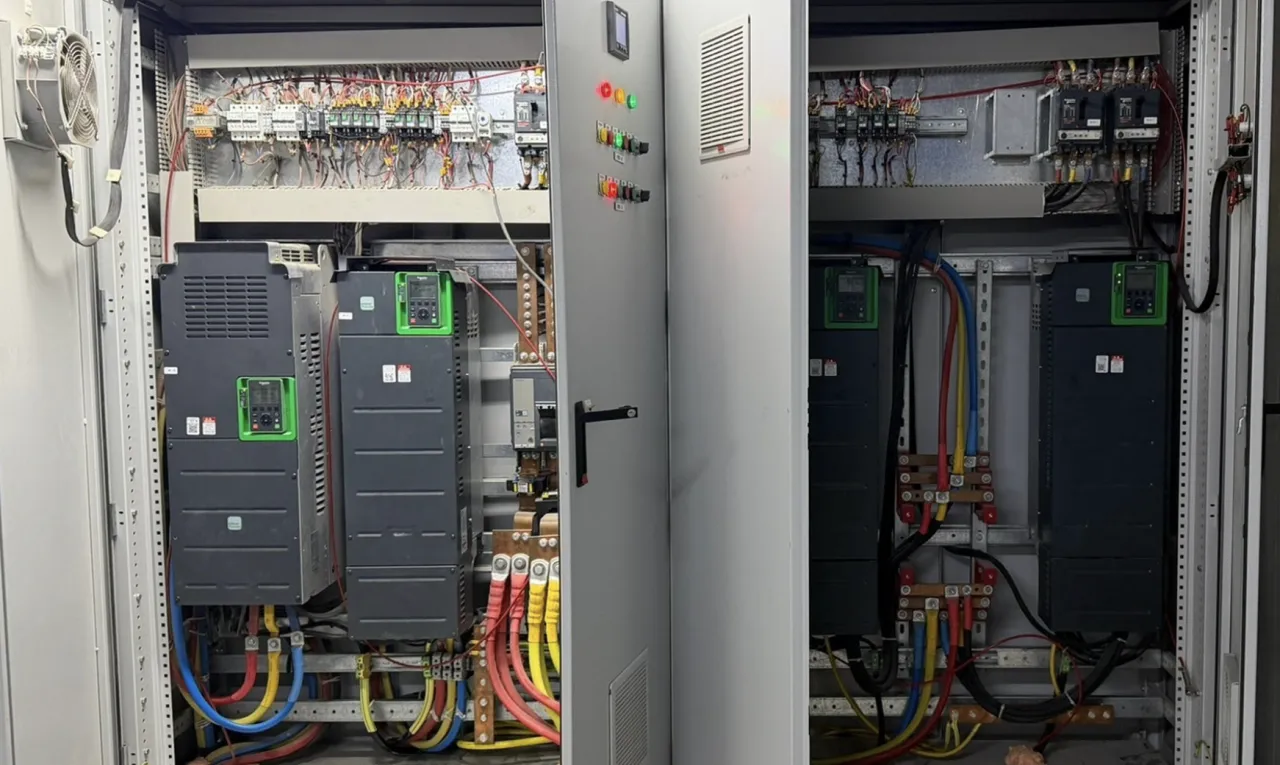
- Variable-frequency drives. On the motors, compressors, pumps and fans of virtually every industrial facility, and the most common source of harmonics in industry, as our article on drives explains.
- Switched-mode power supplies. In data centres, IT equipment, LED lighting and consumer electronics, and now the dominant form of power conversion in commercial buildings.
- EV chargers. An AC charger feeds a rectifier on board the car, and a DC rapid charger carries its own. Either way, a rectifier draws harmonic current from the network.
- Heat pump inverters. Modern heat pumps run variable-speed compressors from inverters, each one a source of harmonic distortion.
- Electrolysers. PEM and alkaline electrolysers run from high-power rectifiers, which draw harmonic current, particularly at the 5th, 7th, 11th and 13th harmonics in a six-pulse design.
IEEE 519, the standard for harmonic control in electric power systems, sets its limits at the point of common coupling. It limits voltage THD to 8% on low-voltage systems, and current distortion, measured as total demand distortion, to between 5% and 20%, depending on how large the site’s load is relative to the short-circuit strength of its supply. Sites with a high concentration of non-linear load often measure current distortion well above the limit that applies to them.
The consequences of harmonic distortion
Harmonic distortion is not an abstract technical concern. It has direct, measurable consequences for the electrical equipment in a facility:
- Higher I²R losses. Harmonic currents flow through cables, transformers and busbars, making heat without doing useful work. At 20% current THD, the RMS current is 2% above the fundamental and the I²R heat 4% higher, before skin effect adds more at the higher frequencies. That heat is metered, in kilowatt-hours.
- Transformer derating. Harmonic currents raise a transformer’s winding eddy-current and stray losses out of proportion, so a transformer feeding non-linear load has to be derated below its nameplate to stay within its temperature limits, by the method IEEE C57.110 sets out, which our article on harmonics works through.
- Motor and bearing wear. Harmonic voltages at a motor’s terminals add heat and set up parasitic torques, and motors fed from drives can carry bearing currents that pit their races.
- Capacitor bank failure. Capacitors used for power factor correction are particularly exposed. On a network with non-linear load, a bank can resonate with the supply at a harmonic frequency, amplifying voltage and current until it fails, with a risk of fire and unplanned downtime.
- Nuisance tripping and control interference. Protection and control systems calibrated for sinusoidal conditions can misread distorted ones, causing spurious shutdowns and process interruptions.
04Grid infrastructure under pressure
The megatrend is colliding with grid infrastructure that, in many regions, was designed and built for a different era.
Much of the distribution backbone in Europe and North America was built decades ago, for one-way power flow, predictable load profiles, mostly linear loads and modest growth. It was not designed for two-way flow from distributed solar, the irregular demand of EV charging, the harmonic-rich loads of modern power electronics or the compound growth now emerging.
The age and condition of the network
The American Society of Civil Engineers graded US energy infrastructure C− in its 2021 report card. Across Europe, network operators face investment programmes on a scale not seen for decades to make room for the energy transition. This ageing infrastructure is now being asked to carry loads it was never designed for, with a power quality profile it was never designed to handle.
Thermal limits and capacity headroom
Electrical infrastructure has a finite thermal capacity. Cables, transformers and switchgear are rated for a maximum continuous current on the assumption that the load is sinusoidal and the power factor close to unity. When conditions depart from those assumptions, as they increasingly do, the effective capacity of the infrastructure falls.
A distribution transformer serving a street where many homes have added an electric car and a heat pump may find its thermal limits exceeded on winter evening peaks, even though its nameplate rating looks adequate. The harmonic current from chargers and heat pump inverters adds heating in its windings and structural parts that the original design did not allow for.
For industrial facilities, the grid’s constraints are not abstract. They show up as tighter connection terms, rising network charges and, at the most constrained points, limits on when and how much a site may draw. A facility on a network crowded with non-linear load also sees more distortion arriving at its own boards from outside.
The compounding effect
The challenge is not any single factor in isolation. It is the compounding effect of all of them at once: rising demand, ageing infrastructure, more harmonic current, power factor pulled down by distortion, and tightening supply margins. Each factor amplifies the others. More non-linear loads mean more harmonics. More harmonics mean more heat. More heat means less usable capacity. Less usable capacity means tighter margins, and tighter margins mean higher costs and lower reliability. The cycle reinforces itself, and it is accelerating.
05The efficiency imperative
In a world of abundant, cheap and reliable electricity, the efficiency of consumption is a secondary concern. That world no longer exists.
When supply is constrained, network charges are rising, new connection capacity can take a decade to secure and the quality of the supply itself is degrading, using the electricity you already buy efficiently becomes a first-order strategic priority. This is the central insight the megatrend is forcing on industrial energy management:
The pointThe cheapest and most reliable kilowatt-hour is the one you do not need to draw from the grid in the first place.
The efficiency gap in industrial electricity
Despite decades of investment in energy efficiency, most industrial facilities still run with significant electrical losses that go unmeasured and unmanaged. They are distinct from process or thermal efficiency. They are electrical losses: energy consumed by the electrical system itself before it ever reaches the point of productive use.
Their sources are well documented in electrical engineering, and poorly understood in energy management practice:
- Reactive current. Current that flows back and forth between inductive loads and the grid, doing no useful work but heating every cable and connection it passes through.
- Harmonic losses. Harmonic currents flowing through conductors rated for the fundamental, making excess heat and ageing insulation faster.
- Phase imbalance losses. Unequal loading of the three phases, which drives current in the neutral, makes the phase voltages unequal and adds I²R loss.
In a facility with poor power factor, significant harmonic distortion and phase imbalance, these losses add up. They are kilowatt-hours that appear on the bill, are paid for at the full tariff and produce nothing.
With electricity costs rising and supply tightening, this efficiency gap is one of the largest opportunities a facility has for immediate, measurable improvement in its energy performance.
06What forward-thinking facilities are doing
The most sophisticated industrial energy managers are not waiting for the megatrend to overwhelm their facilities. They are acting on their electrical systems now: freeing headroom, cutting costs and extending the life of their infrastructure before the pressure builds further. The measures fall into four categories, each addressing a different side of the challenge.
- Continuous power quality monitoring You cannot manage what you do not measure. Leading facilities fit power quality analysers at the point of common coupling and the major distribution boards, for real-time visibility of power factor, harmonic distortion (THD-v and THD-i), voltage levels, phase balance and transients. The monitoring sets the baseline every later improvement is measured against, and gives early warning of deteriorating conditions, whether from load changes inside the site or events on the grid.
- Harmonic mitigation With the share of non-linear load growing in every facility, harmonic mitigation is moving from a specialist concern to a baseline requirement. Active filters, passive tuned filters and multi-pulse rectifiers bring current distortion down to levels that protect equipment, extend its life and meet the standards: IEEE 519 at the connection, and IEC 61000-3-12 for the equipment itself. Mitigation works best close to the sources, before distortion spreads through the site, as our article on correction at the meter explains.
- Reactive power management and power factor correction Correcting power factor above the utility’s threshold removes reactive power penalties, reduces demand charges in kVA-billed markets, frees capacity in cables and transformers, and cuts I²R losses across the whole distribution system. Modern correction goes beyond fixed capacitor banks to dynamic compensation that tracks the load in real time, without adding the resonance risk that fixed capacitors bring to harmonic-rich networks.
- Integrated correction at the source The most advanced facilities combine power factor correction, harmonic mitigation and phase balancing in one coordinated system, rather than treating each problem in isolation. Corrected where each problem starts, the site draws less total current from the grid for the same productive output. The result is lower energy consumption, lower kVA demand and longer equipment life.
With HarmoniQ
HarmoniQ removes reactive power, harmonic distortion and phase imbalance where they start, so a facility typically uses 10–20% fewer kWh for the same output.
At the load
HarmoniQ Alpha
Fitted at each machine, it cleans the current where it is drawn, so every cable upstream carries less of it and runs cooler.
At the drives
HarmoniQ Delta
Fitted at the drives panel, it cleans the current where the drives distort it, before it spreads to the feeder, busbar and transformer.
At the incomer
HarmoniQ Sigma
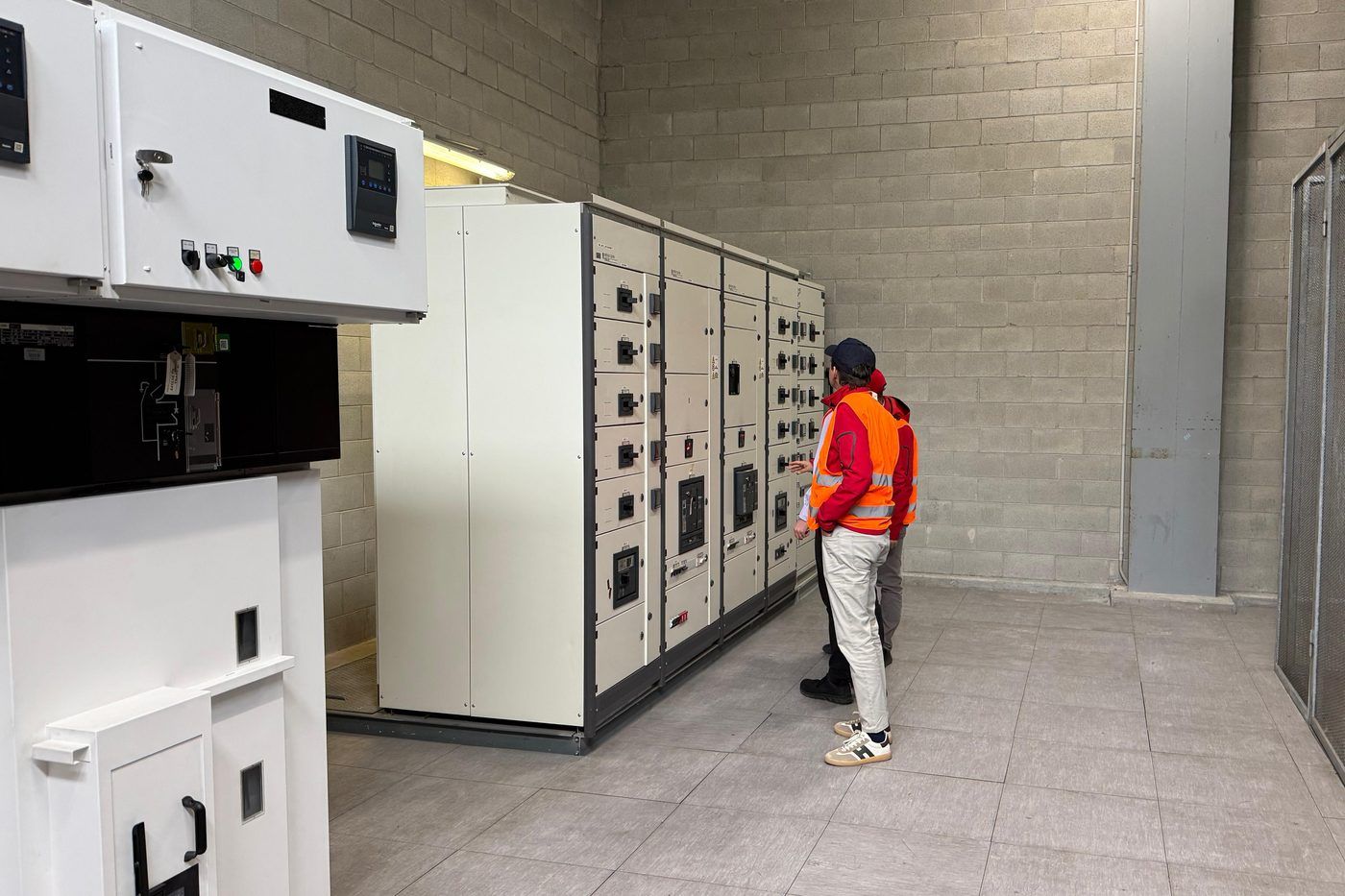
At the main switchgear, it corrects reactive current where the network meets the grid, so the supply and the meter see cleaner current.
Each unit improves power factor where it sits, and HarmoniQ as a system corrects the site to 0.98+ and balances its phases. All three are shunt-connected, each installed in parallel, where its problem starts, so they go in with zero operational disruption. Cooler cables, transformers and motors last longer: downstream equipment life is extended 2–4×. And the apparent power HarmoniQ frees lets a site lower its agreed capacity, or add electrified load on the connection it already has.
It works on low-voltage AC networks, up to 600 V: the motors, compressors, pumps and fans that do most of an industrial site’s work.
The strategic dimension
These measures are not merely technical improvements. Against the megatrend, they are strategic investments that decide how competitively a facility can operate in an increasingly constrained electrical environment.
A facility that corrects its power quality frees apparent power on the connection it already has: room for new load without waiting for an upgrade, wherever its capacity is agreed in kVA. Where capacity is agreed in kW, correction frees headroom in the site’s own transformer, cables and switchgear, though not more capacity from the grid. It lowers exposure to kVA demand and capacity charges. It extends the life of electrical assets by reducing thermal stress. And it adds less distortion to the shared network that every connected facility depends on.
In a world where new grid connections take years to secure and cost a great deal to build, the ability to do more with existing electrical infrastructure is not a marginal advantage. It is a competitive necessity.
07Looking ahead
The electrification megatrend is not a forecast. It is an observable, measurable phenomenon that is already reshaping electricity markets, grid infrastructure and the operating environment of every industrial facility. The IEA, IRENA and the other major energy research institutions agree on the direction. The only uncertainty is the speed.
For industrial energy managers, the implication is clear. The electricity system of the next two decades will bring higher demand, tighter supply margins, rising costs and more distortion. Facilities that prepare now, by measuring their power quality baseline, dealing with harmonic distortion, correcting reactive power and cutting electrical losses, will be materially better placed than those that wait.
The electrification of everything is not coming. It is here. The question is whether your facility’s electrical infrastructure is ready for it.
Sources and further reading
- International Energy Agency (2023), World Energy Outlook 2023, IEA, Paris.
- International Energy Agency (2024), Global EV Outlook 2024, IEA, Paris.
- International Energy Agency (2024), Electricity 2024: Analysis and Forecast to 2026, IEA, Paris.
- International Renewable Energy Agency (2023), World Energy Transitions Outlook 2023: 1.5 °C Pathway, IRENA, Abu Dhabi.
- National Grid ESO (2024), Connections Reform: Overview and Consultation, Warwick, UK.
- American Society of Civil Engineers (2021), 2021 Report Card for America’s Infrastructure: Energy, ASCE, Reston, VA.
- IEEE Std 519-2022, IEEE Standard for Harmonic Control in Electric Power Systems, Institute of Electrical and Electronics Engineers.
- IEEE Std C57.110-2018, IEEE Recommended Practice for Establishing Liquid-Immersed and Dry-Type Power and Distribution Transformer Capability When Supplying Nonsinusoidal Load Currents.
- IEC 61000-3-12, Electromagnetic compatibility, Part 3-12: Limits for harmonic currents produced by equipment connected to public low-voltage systems with input current over 16 A and up to 75 A per phase, International Electrotechnical Commission.