In brief
- Energy efficiency reduces the energy equipment needs. Power quality optimisation reduces the energy lost delivering it. They address different losses, so their savings add together rather than compete.
- Efficiency programmes meet diminishing returns, while a different loss persists in the same facilities: power factor, harmonics and imbalance turn part of the electricity drawn into heat.
- The variable-frequency drive shows why both are needed: it cuts the energy its motor uses, and adds harmonic current that wastes energy in the network feeding it.
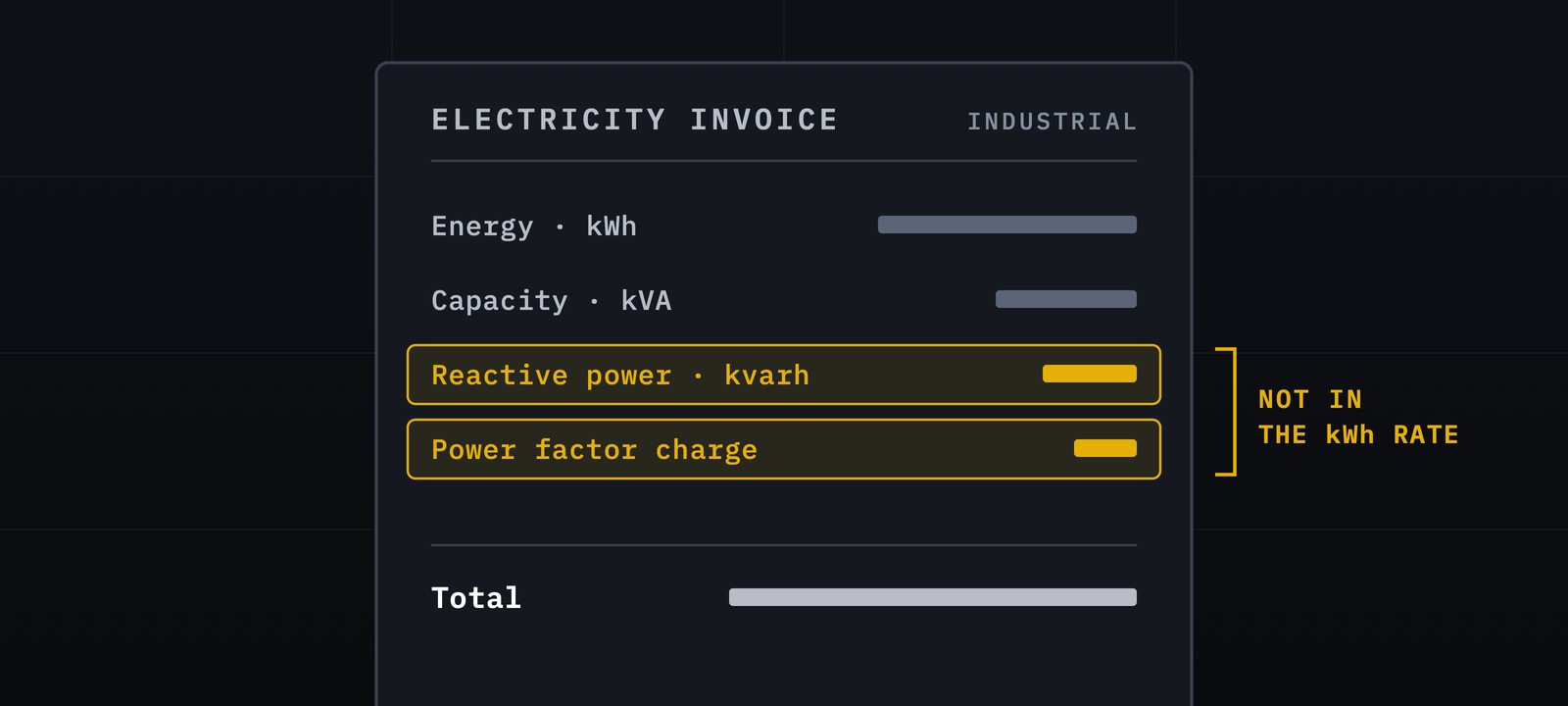
- Most audits do not measure that waste, and ISO 50001 does not ask for it. Measure it, and with HarmoniQ three invoice lines move: 10–20% fewer kWh, power-factor penalties eliminated and capacity charges reduced.
Over the past two decades, energy efficiency has become the dominant framework for industrial energy management.
Facilities around the world have invested heavily in LED lighting, variable-frequency drives, high-efficiency motors, building insulation, HVAC optimisation and process improvements. These are well-understood measures with proven returns, supported by mature standards such as ISO 50001 and by government incentives in nearly every major industrial economy.
And yet, after all this investment, a significant share of the electricity a typical industrial facility draws from the grid is still wasted. Not because the equipment is inefficient, but because the electrical system itself turns part of it into heat in cables, transformers and motors. This waste has a name: poor power quality. And it is almost entirely invisible to the energy efficiency programmes that dominate corporate energy strategy.
The distinction matters more than most energy managers realise. Energy efficiency and power quality optimisation are complementary disciplines that address different sources of energy loss. Treating them as interchangeable, or ignoring one entirely, leaves a substantial part of the savings untouched. This article explores what each discipline does, why both are necessary, and how to build an energy strategy that captures the full range of savings available.
01The energy efficiency playbook
The modern energy efficiency toolkit is well established and widely adopted, and industrial facilities have been at the centre of the effort. The standard playbook is familiar to any energy manager:
- Lighting retrofits. Replacing fluorescent and high-intensity discharge fittings with LEDs, which give the same light for a fraction of the energy. It is among the most widely adopted efficiency measures of all.
- Variable-frequency drives (VFDs). Electronic speed control for motors that used to run at full speed, with their output throttled mechanically. A drive matches the motor’s speed to the demand on it, and because a fan’s or pump’s power varies with the cube of its speed, a fan slowed to 80% draws only about half the power.
- High-efficiency motors. Replacing IE1 and IE2 motors with IE3 premium or IE4 super-premium units. The gain per motor is modest, a few percentage points of efficiency, but motor-driven systems use about two-thirds of the electricity consumed in industry, so the aggregate impact is substantial.
- HVAC optimisation. Upgrading chillers, boilers, air-handling units and building management systems, with economiser cycles, demand-controlled ventilation and heat exchangers that reuse the warmth in exhaust air.
- Process optimisation. Redesigning manufacturing processes to use less energy per unit of output: heat integration, putting waste heat back to use, compressed-air improvements, and production scheduling that keeps peak demand down.
- ISO 50001 energy management systems. A systematic framework for monitoring, targeting and continuously improving energy performance. Certification has spread steadily through industry since the standard was first published in 2011.
These measures work. They are technically proven, financially attractive and supported by a vast ecosystem of consultants, contractors, equipment suppliers and government programmes. The question is not whether they are effective. The question is whether they are sufficient.
02The diminishing returns problem
Most industrial facilities in developed economies have already captured the easy efficiency wins. The LED retrofit is done. The VFDs are on the large motors. The building management system has been upgraded. ISO 50001 is in place, and the energy team is running out of projects that clear the internal hurdle rate.
This is not a failure of the energy efficiency approach. It is a natural consequence of its success. The law of diminishing returns applies to energy efficiency as it does to any optimisation: the first round of projects is cheap and quick, each later round costs more for less, and the last few points of improvement take significant capital expenditure, often a rebuild of core processes.
Progress has slowed globally too. The International Energy Agency’s Energy Efficiency 2023 estimated that global energy intensity, a proxy for efficiency gains, improved by 1.3% in 2023, down from 2% in 2022, when its pathway to net zero needs more than 4% a year to 2030.
- Improvement in global energy intensity in 2023, the IEA’s estimate
- 1.3%
- The same measure in 2022
- 2%
- Needed every year to 2030 on the IEA’s net-zero pathway
- Over 4%
Inside a facility the pattern is plain: the easy gains have been made, and the hard ones take far more effort for each unit of improvement. Meanwhile, a different category of energy loss persists in the same facilities, one that efficiency measures do not address at all.
Consider a hypothetical manufacturing facility that has completed a comprehensive energy efficiency programme. It has VFDs on all its major motors, LED lighting throughout, an optimised compressed-air system and ISO 50001. Its energy intensity has improved year after year, and the energy manager is justifiably proud of the achievement.
But a power quality audit of the same facility finds a power factor of 0.82, heavy harmonic distortion from the very drives it installed, and significant current imbalance across the phases. These conditions turn part of the electricity the facility draws into heat in its cables, transformers, switchgear and loads: heat that does no useful work. This waste appears in no efficiency report. ISO 50001 does not capture it, and nothing in the efficiency playbook addresses it.
Worked exampleSay the audit measures a displacement power factor of 0.82 and 22% current THD. The true power factor is 0.82 ÷ √(1 + 0.22²), about 0.80, so every cable carries about 1.25 times the current the work alone needs, and makes about 1.56 times the I²R heat.
It is the missing half of the energy strategy.
03What power quality optimisation actually is
Power quality optimisation is a distinct engineering discipline. It focuses on the waste in the electrical system itself, rather than the energy consumed by the end-use equipment. The distinction is fundamental: energy efficiency makes the load more efficient; power quality optimisation makes the delivery of electricity to the load more efficient.
Four parameters define the power quality profile of an electrical installation.
1. Power factor
Power factor is the ratio of active power (kW), the power that does useful work, to apparent power (kVA), the total the grid must deliver. At a power factor of 1.0, every amp drawn from the grid is productive. At 0.80, reactive current, which adds at right angles to the working current, lifts the total to 1 ÷ 0.80 = 1.25 times what the work alone needs. Reactive power sustains the magnetic fields in motors and transformers. It oscillates between supply and load, occupying grid capacity, heating conductors and raising the apparent demand the utility meter registers.
Power factor correction compensates for the reactive component, reducing apparent power demand without changing the useful energy the load consumes. The result: lower kVA demand charges, an end to reactive power penalties, and lower I²R losses in cables and transformers.
2. Harmonic distortion
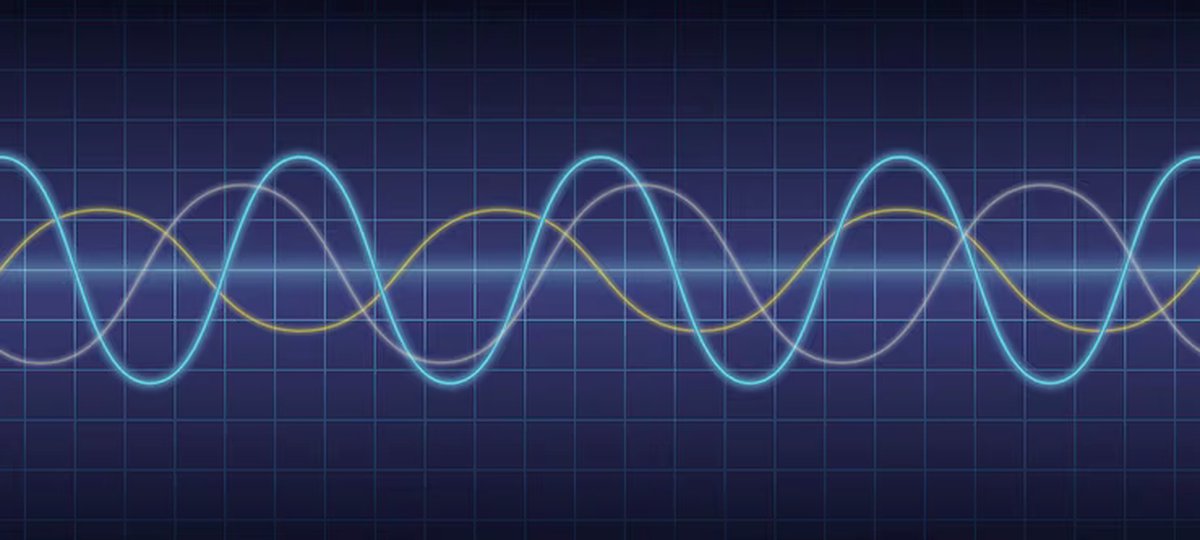
Harmonics are currents at whole multiples of the fundamental 50 or 60 Hz, drawn by non-linear loads: VFDs, rectifiers, switch-mode power supplies, LED drivers, arc furnaces and UPS systems. They flow through the electrical system without doing useful work, and they make heat, vibration and electromagnetic interference. IEEE 519-2022 limits voltage distortion at the point of common coupling to 8% THD on systems up to 1 kV, and 5% from 1 kV to 69 kV, and sets current-distortion limits scaled to the size of the load against the strength of the supply.
Harmonic mitigation reduces or removes these currents, lowering losses in transformers, cables and switchgear. Transformers suffer most. The eddy-current loss in a transformer winding grows with the square of the harmonic order, so the 5th counts 25 times and the 7th 49 times, which is why IEEE C57.110 derates transformers that carry distorted current.
3. Voltage
Supply voltage that sits consistently above nominal makes some loads draw more energy than they need: older lighting, for one, and induction motors running lightly loaded. Correcting it is a job on the supply side: a tap change on the site’s own transformer, or a voltage optimisation unit in series with the supply. Either saves energy only on loads that draw more at a higher voltage, and many modern loads, drives and LED drivers among them, regulate their own voltage and do not.
HarmoniQ doesn’t control voltage. Removing the waste current means the voltage at your boards varies less, as a side effect, but a supply that runs high still needs a tap change. Our explainer on what voltage optimisation does sets out the difference.
4. Load balancing
In a three-phase system, unequal loading of the phases raises losses, sends current through the neutral where there is one, and cuts the effective capacity of transformers and cables. For the same total current, unequal phases make more I²R heat than equal ones, and the most heavily loaded phase sets the limit for the whole circuit.
Load balancing evens out the current drawn on each phase, reducing neutral current and equalising the thermal loading of conductors and equipment.
The VFD paradox: when efficiency creates waste
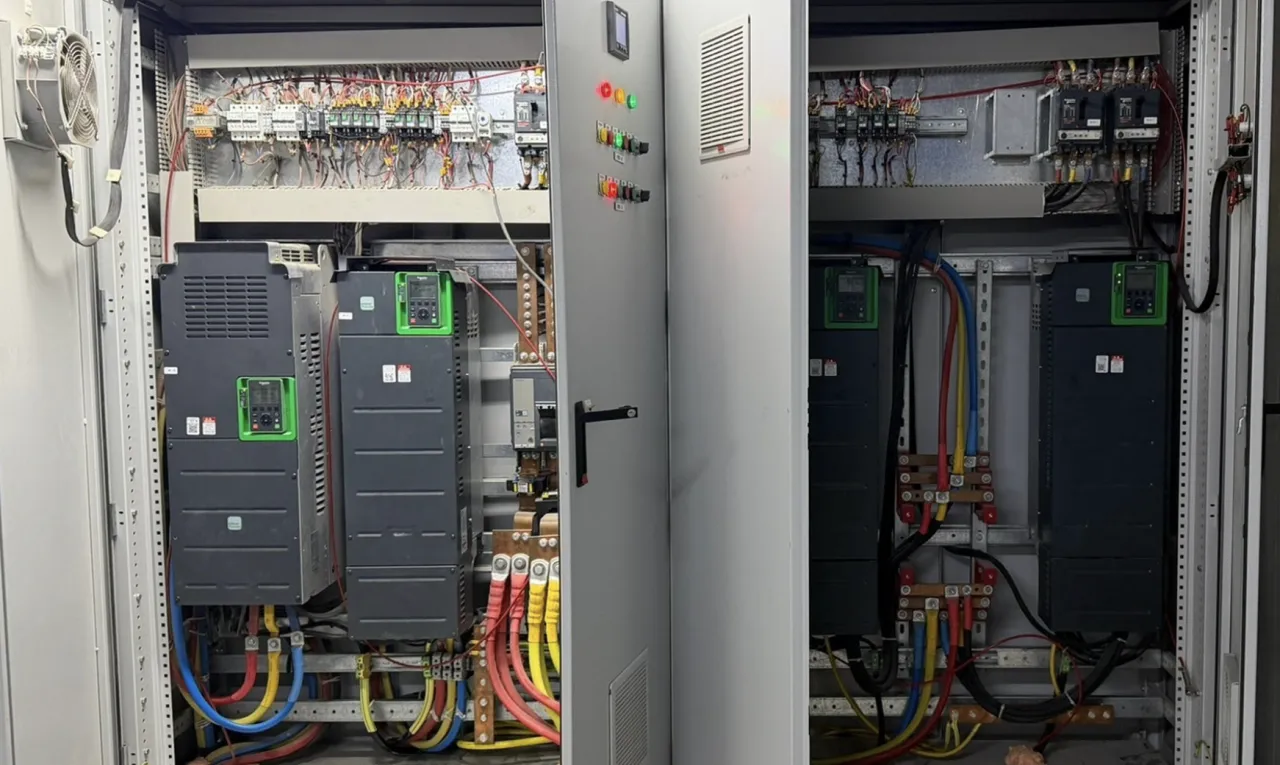
Variable-frequency drives are among the most effective energy efficiency technologies available, sharply cutting the energy a fan or pump uses. But they are also among the largest sources of harmonic distortion in modern industrial facilities. A six-pulse drive draws its current in pulses, injecting 5th, 7th, 11th and 13th harmonic currents into the electrical system, and its input current is heavily distorted unless the line side is treated. Our article on drive harmonics works through the figures.
These harmonics increase losses in transformers, cables and upstream equipment. They cause additional heating, and they can interfere with sensitive control systems and metering. In effect, the VFD reduces the energy its motor consumes while increasing the energy wasted in the distribution system.
This is not an argument against VFDs: they remain essential. It is an argument for pairing them with harmonic mitigation. An efficiency measure that degrades power quality illustrates precisely why both disciplines are needed.
04Why they are complementary, not competing
Energy efficiency and power quality optimisation work on different parts of the energy flow and address different physical phenomena. Understanding the distinction is critical to building a complete energy strategy.
Energy efficiency reduces kWh: the useful energy the end-use equipment consumes. A more efficient motor turns a higher share of its electrical input into mechanical work. An LED luminaire gives the same light for less electrical input. A VFD matches motor speed to the demand on it, so energy is not spent against unnecessary mechanical resistance.
Power quality optimisation reduces kVA and kvar, the apparent and reactive power the grid must deliver, and the real losses, in kWh, that poor waveform quality causes. It does not change how much useful energy the equipment needs. It changes how cleanly and efficiently that energy is delivered.
| Dimension | Energy efficiency | Power quality optimisation |
|---|---|---|
| What it addresses | Energy consumed by end-use equipment | Energy wasted in the electrical distribution system |
| Primary metric | kWh, active energy | kVA, kvar, THD, power factor, phase balance |
| Key interventions | LEDs, VFDs, high-efficiency motors, insulation, process redesign | Power factor correction, harmonic mitigation, load balancing |
| Bill components affected | kWh energy charges | kVA demand charges, reactive power penalties, kWh losses, capacity charges |
| Reference standards | ISO 50001, ASHRAE 90.1, IEC 60034-30 | IEEE 519, IEC 61000, EN 50160, IEEE 1159 |
| Who owns it | Energy manager, facilities team, sustainability team | Electrical engineer or power systems specialist, and often nobody |
| Status in most facilities | Actively managed, well funded, measured | Largely unmeasured, unfunded and unmanaged |
The two approaches are not competing for the same savings. They add together. A facility that has cut its consumption through efficiency measures and then corrects its power quality does not lose its efficiency gains: it adds a further reduction on top. The efficiency programme reduced how much energy the equipment needs. The power quality programme reduces how much is lost delivering it.
The pointEfficiency reduces what you use. Power quality reduces what you waste.
Consider water distribution. Energy efficiency is like fitting low-flow taps that reduce the water needed. Power quality optimisation is like repairing the leaks in the pipes. Both reduce the total drawn from the main, and neither makes the other unnecessary: a system with low-flow taps but leaking pipes still wastes a significant share of the resource it is trying to conserve.
05The measurement gap
Perhaps the most significant barrier to power quality optimisation in industrial facilities is neither technical nor financial. It is informational. Most organisations simply do not measure the parameters that would reveal the opportunity.
You cannot improve what you do not measure. And most industrial energy programmes measure kWh religiously while ignoring kVA, kvar, THD and power factor entirely. It is like tracking fuel economy while ignoring the oil leak under the engine.
The typical energy audit, whether run internally or by a third-party consultant, focuses overwhelmingly on energy consumption (kWh) and energy intensity (kWh per unit of output). It benchmarks facilities against industry averages, and finds ways to reduce consumption through equipment upgrades, operational changes and behavioural programmes. These are valuable activities.
But the standard audit frameworks, ISO 50002 and ASHRAE’s Level I to III procedures, give power quality little attention. The blind spots are consistent:
- Power factor may be noted if it appears on the utility bill, but it is rarely measured at the distribution boards, where the true picture emerges.
- Total harmonic distortion is almost never measured in a standard energy audit. It takes a power quality analyser, and expertise in reading the results.
- The voltage profile is usually assumed to be nominal unless the facility has reported problems. Systematic monitoring over time is uncommon.
- Current imbalance between the phases is rarely assessed. Many facilities do not know how their phases are loaded.
Typically measured
What energy audits measure
- kWh consumption: active energy use and intensity
- Temperature and HVAC: thermal performance and set points
- Lighting levels: lux and fitting efficiency
- Equipment load profiles: motor loads, compressed air, process data
Typically missed
What they miss
- Total harmonic distortion: waveform quality and the harmonic spectrum
- True power factor: kVA demand and reactive power
- Voltage profile: its level and variation over time
- Current and phase balance: imbalance and neutral current
The result is a systemic blind spot. Energy managers decide on the data available to them, and that data covers only half the problem. The kWh data is excellent. The kVA data is absent.
ISO 50001: comprehensive on efficiency, silent on power quality
ISO 50001 is the gold standard for energy management systems. It gives a rigorous framework for establishing energy baselines, setting targets, implementing improvements and monitoring results, and it has driven significant savings at facilities worldwide.
But a close reading shows a striking omission. ISO 50001 is built around energy use and consumption: the kWh drawn by equipment and processes. It does not require power quality to be measured. Nothing in it prompts an organisation to adopt power factor, harmonic distortion or voltage quality as energy performance indicators, or to ask whether the electrical distribution system is itself a source of energy loss.
This is not a criticism of the standard. ISO 50001 was designed for energy efficiency, and it does that job well. But it means a facility with a fully mature ISO 50001 system can be running with significant, quantifiable power quality waste that lies entirely outside its energy management programme.
The gap compounds. Because power quality is not measured, it is not reported. Because it is not reported, it does not enter the capital plan. Because it is not in the capital plan, it is never addressed. And because it is never addressed, the waste continues, year after year, invisible to the very systems designed to eliminate energy waste.
What a power quality audit measures
A comprehensive power quality audit measures the parameters that standard energy audits miss:
- Power factor at every distribution board
- The harmonic spectrum, across the full range of orders
- The voltage profile, over at least seven days
- Current imbalance across all three phases
- Transient events that stress equipment
The output is a quantified map of where electrical energy is being wasted, and how much of the facility’s electricity bill comes from poor power quality rather than productive consumption. It can reveal savings that conventional energy management cannot see.
06Building a complete energy strategy
The case for bringing power quality into energy management rests on three arguments: the technical, that the two disciplines address different loss mechanisms; the financial, that their savings add together; and the strategic, that efficiency gains are plateauing while power quality remains untouched.
The technical integration
A complete energy strategy treats the electrical system as two connected domains: the loads, where energy is used, and the distribution system, where it is delivered. Energy efficiency improves the first; power quality optimisation improves the second. Both must be measured, managed and improved.
In practice, that means widening the scope of energy management to include:
- Power quality baselines. Measuring power factor, THD, the voltage profile and phase balance alongside kWh, at the point of common coupling and at the major distribution boards, with analysers that meet IEC 61000-4-30 Class A.
- Integrated energy performance indicators. Adding kVA demand, power factor and THD to the existing kWh-based EnPIs, and tracking them monthly alongside energy intensity, so the energy team sees degradation and opportunity as they arise.
- Power quality in the audit scope. Requiring every energy audit, internal or third-party, to include a power quality assessment. The extra measurement costs little, and it can reveal savings that none of the remaining efficiency projects would find.
- Unified project evaluation. Judging efficiency and power quality projects in the same capital framework, on the same financial criteria. A project that cuts kVA demand charges competes for capital on the same terms as one that cuts kWh: both deliver bottom-line savings.
The financial case
For a facility that has already worked through the standard efficiency playbook, what remains on the efficiency side tends to be small and expensive: process redesign, or equipment replaced before the end of its life. The power quality opportunity has usually never been measured at all, so it is still whole, and it reaches the bill on three separate lines.
With HarmoniQ
A facility typically uses 10–20% fewer kWh for the same output, and saves up to 25% of its total bill where power-factor penalties fall away and capacity charges come down too.
At the load
HarmoniQ Alpha
Fitted at each machine, it cleans the current where it is drawn, so every cable upstream carries less of it and runs cooler.
At the drives
HarmoniQ Delta
Fitted at the drives panel, it cleans the current where the drives distort it, before it spreads to the feeder, busbar and transformer.
At the incomer
HarmoniQ Sigma
At the main switchgear, it corrects reactive current where the network meets the grid, so the supply and the meter see cleaner current.
HarmoniQ removes harmonic distortion, reactive power and phase imbalance close to where each arises. All three units are shunt-connected, outside the main power path, and install with zero disruption to production. Every unit improves power factor where it sits; together they correct it to 0.98+, without adding the resonance risk a capacitor bank brings.
The energy line is the one HarmoniQ’s performance guarantee is written against: kWh at your own meter, never the bill. And equipment that runs cooler lasts longer: a 2–4× extension of downstream equipment life.
None of it shows in the energy efficiency programme, because it sits in the half of the electrical system that programme does not measure.
The strategic imperative
As energy efficiency matures and its rate of improvement slows, organisations under pressure to meet decarbonisation and cost targets need new sources of savings. Power quality optimisation is a largely untapped one. It requires no change to production processes. It does not reduce output or comfort. It does not depend on behavioural change. It simply removes waste from the electrical system that should not have been there in the first place.
For organisations reporting Scope 2 greenhouse gas emissions, the case is stronger still. The heat that wasted current leaves in cables, transformers and motors is metered in kilowatt-hours, billed, and reported as emissions under both the location-based and the market-based methods of Scope 2 accounting. Preventing that waste reduces reported emissions with no change to production volume: a decarbonisation gain that needs no trade-offs.
Policy points the same way. The EU’s recast Energy Efficiency Directive, (EU) 2023/1791, writes the “energy efficiency first” principle into EU law, and the US Department of Energy’s Better Buildings initiative works with industry to cut energy intensity. Power quality optimisation is an efficiency measure in the full sense: fewer kWh for the same output. The question is whether energy managers will widen their view to see it.
| Phase | Energy efficiency: reducing use | Power quality optimisation: reducing waste |
|---|---|---|
| 1. Measure | kWh sub-metering, energy-intensity benchmarking, load profiling | Power factor, THD, voltage profile, phase balance, kVA demand analysis |
| 2. Identify | Equipment upgrades, process improvements, operational changes | Reactive power sources, harmonic producers, phase imbalance |
| 3. Implement | LEDs, VFDs, motor replacements, BMS upgrades, insulation | Power factor correction, harmonic mitigation, load balancing |
| 4. Verify | M&V under IPMVP, kWh tracking, intensity metrics | Power quality monitoring, kVA trending, THD compliance, demand-charge tracking |
| Combined outcome | A lower total energy cost that covers both consumption and waste: the complete savings opportunity | |
07Where to start
For energy managers bringing power quality into their programme, the starting point is simple: measure it. Commission a power quality assessment that quantifies power factor, harmonic distortion, the voltage profile and phase balance across the facility. Then translate the results into money: the demand-charge impact, reactive power penalties, kWh lost to poor waveform quality, and what it all means for equipment life.
The data will tell the story. For a facility that has pursued efficiency diligently for a decade or more, the finding can be both surprising and welcome: a substantial source of savings that was there all along, hidden in a part of the electrical system nobody was looking at.
Energy efficiency has delivered extraordinary results over the past twenty years, and it will remain essential. But for facilities seeking the next step change in energy performance, the opportunity is not to push efficiency harder into diminishing returns. It is to open the other door, the one marked power quality, and find that part of the energy budget has been leaking through the electrical system all along.
The most effective energy strategy addresses both what you use and what you waste. Most organisations have mastered the first. The second is waiting.
Sources
- International Energy Agency (2023), Energy Efficiency 2023, IEA, Paris.
- Waide, P. and Brunner, C.U. (2011), Energy-Efficiency Policy Opportunities for Electric Motor-Driven Systems, IEA Energy Papers, OECD/IEA, Paris.
- IEC 60034-30-1:2014, Rotating electrical machines, Part 30-1: Efficiency classes of line operated AC motors (IE code), International Electrotechnical Commission.
- ISO 50001:2018, Energy management systems: Requirements with guidance for use, ISO, Geneva.
- ISO 50002:2014, Energy audits: Requirements with guidance for use, ISO, Geneva; and ASHRAE (2011), Procedures for Commercial Building Energy Audits, 2nd ed.
- IEEE Std 519-2022, IEEE Standard for Harmonic Control in Electric Power Systems, Institute of Electrical and Electronics Engineers.
- IEEE Std C57.110-2018, IEEE Recommended Practice for Establishing Liquid-Immersed and Dry-Type Power and Distribution Transformer Capability When Supplying Nonsinusoidal Load Currents.
- IEC 61000-4-30:2015+AMD1:2021, Electromagnetic compatibility (EMC), Part 4-30: Testing and measurement techniques, Power quality measurement methods, International Electrotechnical Commission.
- World Resources Institute and World Business Council for Sustainable Development (2015), GHG Protocol Scope 2 Guidance.
- Directive (EU) 2023/1791 of the European Parliament and of the Council of 13 September 2023 on energy efficiency (recast), Official Journal of the European Union.